


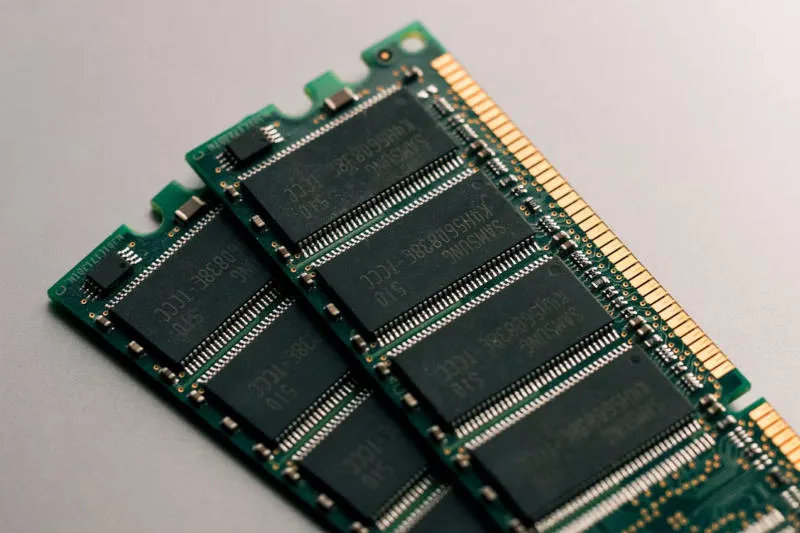
Next-generation memories for promising artificial intelligence systems must be more efficient and reliable. Chinese scientists have made a breakthrough in this direction, demonstrating a new structure that can withstand about 10 billion rewrite cycles, a hundred times higher than the previous limit.
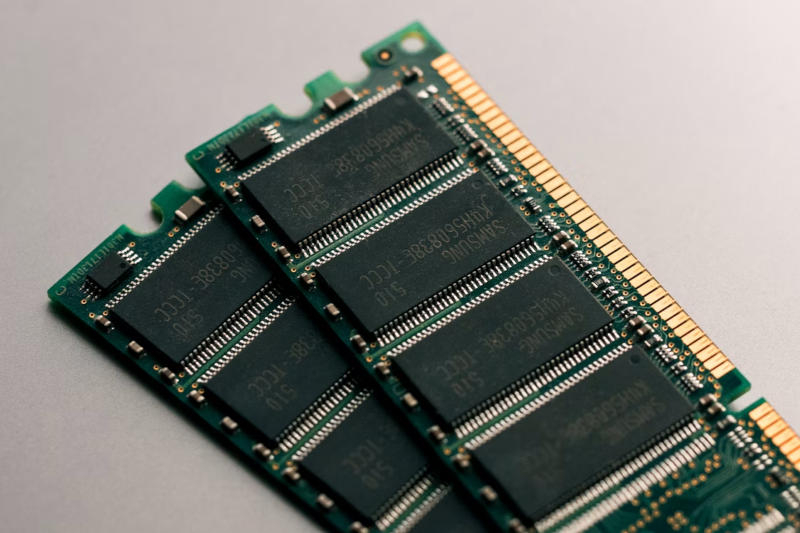
Photo credit: Harrison Broadbent / unsplash.com
Research to develop faster memory and storage has often turned to ferroelectrics with a wurtzite crystal structure, such as aluminum scandium nitride (AlScN), which is compatible with existing semiconductor manufacturing processes. They also feature low power consumption and high switching speeds, which are critical for future storage solutions. But until recently, switching tests on wafers made with AlScN showed insufficient reliability—they failed after about 100 million write cycles.
Chinese scientists claim they have found a solution. They investigated why the wafers were limited to 100 million cycles and identified the problem – these were lattice defects related to a lack of nitrogen atoms. Furthermore, the problem is not the defects themselves, but how they behave during the switching process—they begin to move and even clump together, creating channels for current leakage. “Previously, researchers knew that devices could malfunction and observed some signs of this process, but no one had been able to find an atomic-level explanation of what exactly was moving, how this movement occurred, and how it ultimately led to failure.”the scientist explains.
After discovering this, they developed a material structure that limits the migration and accumulation of nitrogen vacancies, preventing the formation of conductive channels and thereby slowing the degradation of the entire material. If the project continues to be successful and the technology can be scaled to mass production, AlScN-based RAM and persistent memory may become a staple of future server devices, including artificial intelligence systems.
If you find an error, select it with your mouse and press CTRL+ENTER.