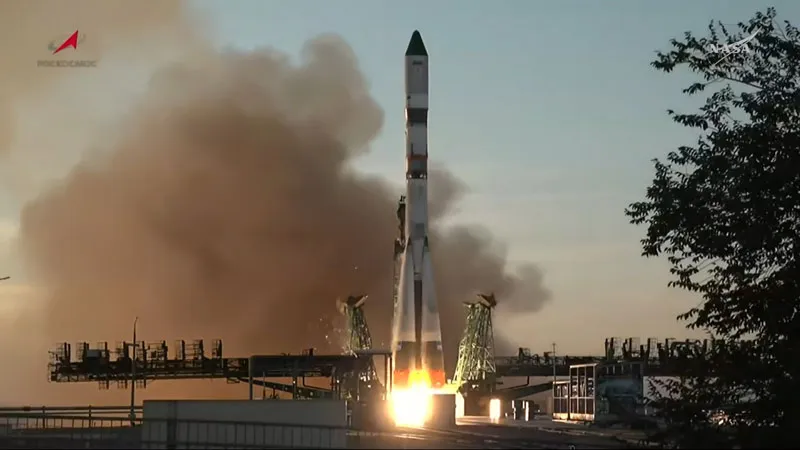
September 16, 2026, Baikonur Space Launch Site, Kazakhstan here we go Soyuz 2.1b launch vehicle and Progress MS-35 cargo ship. Minutes after launch, the spacecraft entered the calculated low-Earth orbit, turned on its solar panels and navigation system antenna, and began its independent flight to the International Space Station.
Image source: NASA
The ship must deliver about 3 tons of cargo to the orbital complex: fuel to correct the station’s orbit, water, air to replenish the station’s atmosphere, food (including vegetables), equipment for scientific experiments and materials for maintaining the station. It is planned to dock with the Poisk module on the Russian portion of the International Space Station on September 19.
A feature of the mission was the use of a Soyuz-2.1b rocket, a more powerful modification of the Soyuz family of rockets previously used primarily to launch satellites and other spacecraft. This is the first time the Progress cargo ship has been launched using this version of the launch vehicle.
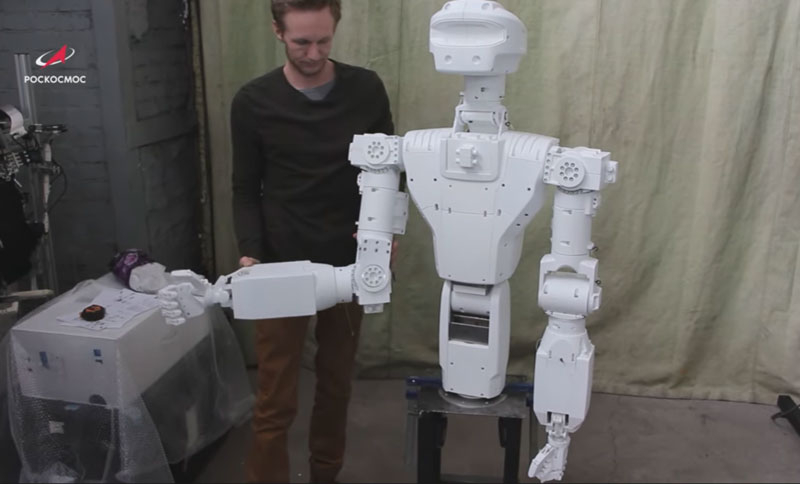
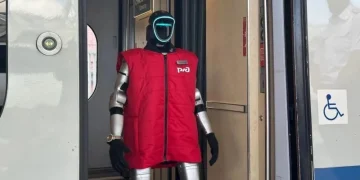
Remote control robot “Teledroid”. Image source: Roscosmos
Progress MS-35 continues the long-term program of autonomous cargo ships, which began as early as 1978 to resupply Soviet orbital stations. Modern versions of the spacecraft use the Coors automated rendezvous and docking system, designed to provide fuel, fluids, pressurized cargo and equipment to astronauts working in orbit for long periods of time.
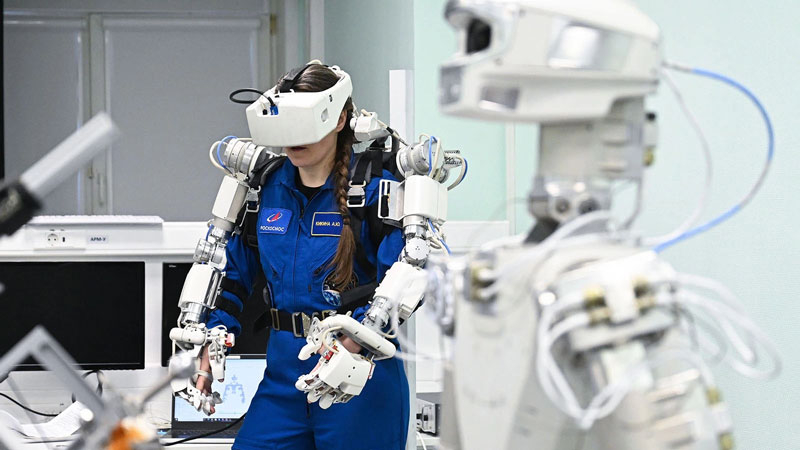
Astronaut Anna Kikina trains to control a robot in an exoskeleton. Photo credit: Roscosmos/RBC
Progress cargo includes equipment for many scientific experiments, including studying the behavior of materials and biological objects in microgravity. Robotic experimentation occupies a special place: an exoskeleton is transported to the International Space Station for remote control of a robotic assistant for astronauts in outer space. The Teledroid robot itself will be shipped on the next truck. Before his arrival, the crew will take control of the machine, which will have to provide the astronaut with tools, items and perform other tasks.
If you find an error, select it with your mouse and press CTRL+ENTER.