


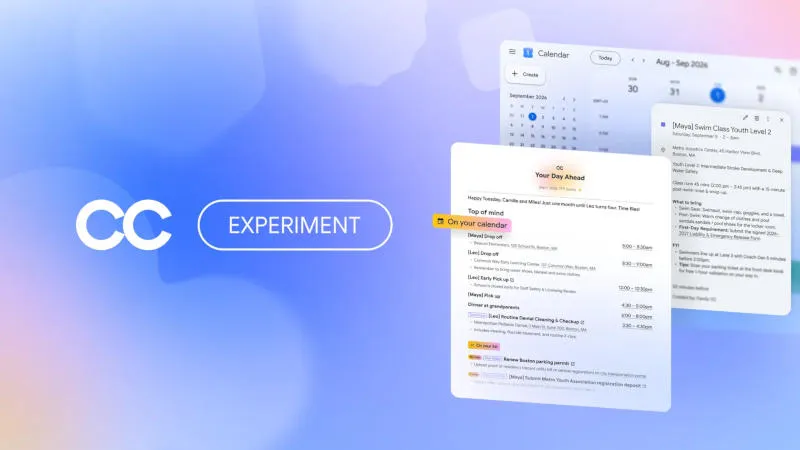
At the end of last year, Google released an experimental CC project aimed at making the Gemini model useful in daily life. It is an artificial intelligence agent that prepares daily summaries and helps track task completion by analyzing information from Gmail, Google Calendar, and Google Drive. This experimental service is embodied in the Gemini Daily Brief feature, but the company has also expanded the capabilities of the original Google CC concept.
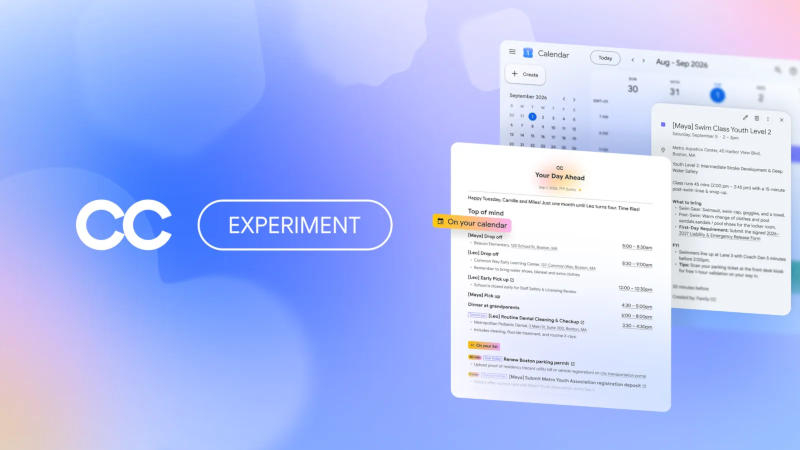
Image source: blog.google
Serving now GoogleCC Positioned as an AI assistant for families and families. It doesn’t just work with one person, but focuses on the needs of the entire family through their own Google account. The service operates through their own profiles, with users deciding what information is shared with them, just as they would with friends. Up to six family members can control and interact with the new AI agent. You can send him PDFs, images, receipts and plain text. After accessing the data, the system analyzes it and produces a daily summary of the entire household.
Parents can set up their child’s school email to be automatically forwarded to their Google CC address, as well as automatically forward calendar invitations. The main idea is to collect different information together and present it to people in a form that is convenient for them. The service can track important dates and tasks and enter these events into a family calendar or to-do list. Google CC can perform repetitive tasks such as filling out event license and registration forms, building shopping lists, and planning the week’s menu. Google emphasizes that in the absence of information, the service does not hallucinate, that is, it does not invent facts that do not exist, but simply requests missing data.
Over time, as the service’s memory capacity increases, the system gets to know the user better and expands its library: it remembers the products a family frequently buys or a favorite restaurant. Google CC doesn’t show a lot of initiative – it doesn’t fill out the form itself, and it doesn’t pay. The service is still in an experimental stage, so it may not always work as advertised. Right now only people living in the United States with a personal Google account can try it. Existing Google CC users will receive an email inviting them to upgrade to the new version of the service; newcomers must sign up for the waitlist.
If you find an error, select it with your mouse and press CTRL+ENTER.