


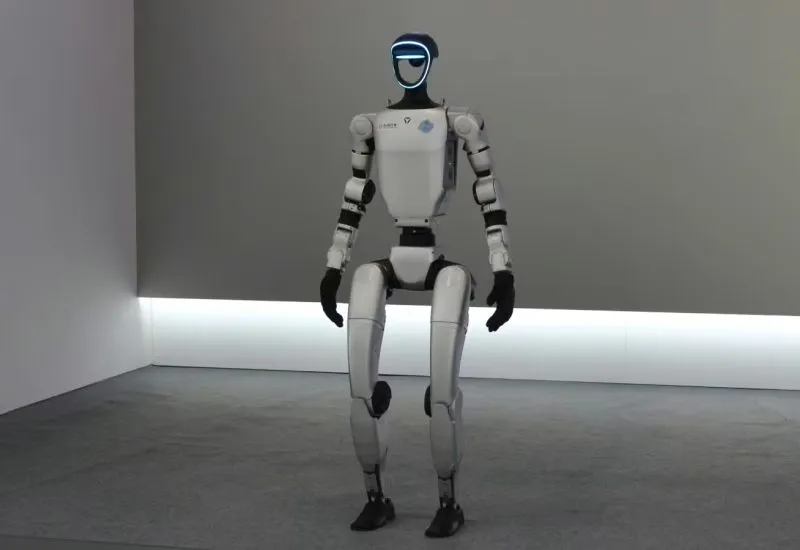
Industry analysts rightly believe that automakers are among the main backers of releasing humanoid robots. As Musk has already explained, their software may have a lot in common with self-driving cars. Additionally, such robots could replace humans on automobile assembly lines. Dongfeng Motor, for example, will start using humanoid robots next month.
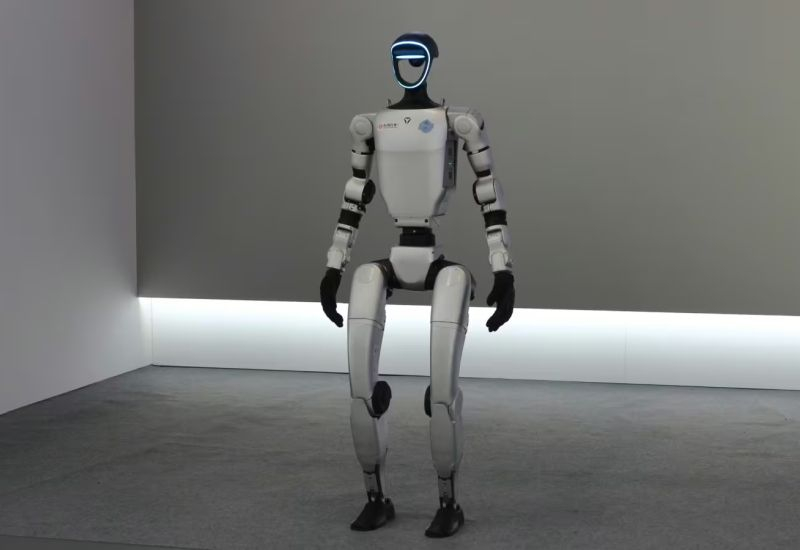
Image source: CLP Post
Importantly, we’re talking about a robot of our own design, although the early prototype shown last spring (pictured above) seemed to have at least some units and components borrowed from Unitree. By the end of this year, China’s Dongfeng Motor will realize small-batch trial production of humanoid robots. In October, existing prototypes will begin being used in the Chinese automaker’s vehicle assembly plants to sort parts and control product quality at various stages. The publication reported the matter Yicai Refer to Zhang Zhenlin, chief engineer of Dongfeng Intelligent Technology Division.
By the end of next year, the company hopes to bring its humanoid robots to a level of work functionality comparable to that of a living worker. This statement is important given the increasingly clear disparity in the advancement of humanoid robots: they outperform athletes in competition and perform stunning stunts, but in reality they are not that useful in real-world production as human replacements.
Normally, Dongfeng would have time to start producing robot dogs in advance, but so far their use within the company has been quite limited – these “friends of humanity” are tasked only with accompanying visitors to the brand’s car dealerships and briefing them on the situation, as well as patrolling the area to ensure safety. Company representatives believe that the development of “physical embodiments of artificial intelligence” will pay off because the resulting technology can be used simultaneously in different market segments. In fact, self-driving cars are also a type of robot.
Dongfeng calls his humanoid robot “Xiaodong” and the four-legged robot dog “Yuanzai”. Their samples were presented at the World Robot Conference in China this August. Originally created for use in the classification of parts and materials in automobile production, Xiaodong is not only capable of learning monotonous repetitive operations, but also able to act autonomously in flexible scenarios.
The introduction of humanoid robots into automobile production has become a trend for many Chinese companies, although not all of them develop such solutions themselves for this purpose. For example, Chery supports robotics startup Aimoga Robotics, which has produced more than 3,000 humanoid robots, more than 2,000 of which have been sent outside China. Xpeng Motors has started production of its Iron humanoid robot this month and plans to start shipping it to overseas markets next year. Li Auto, Aito Auto and Zero Sports Car will start producing robots this year. Even earlier, GAC and BYD had hinted at similar ambitions.
When it comes to plans to develop the global auto market, Dongfeng has committed to spending approximately US$7.41 billion to promote its products outside China and launch a total of more than 50 models. Large car assembly plants will appear in 10 foreign locations; at the same time, five research centers will appear outside China; by the end of this decade, Dongfeng plans to export at least 1.5 million vehicles a year.
If you find an error, select it with your mouse and press CTRL+ENTER.