

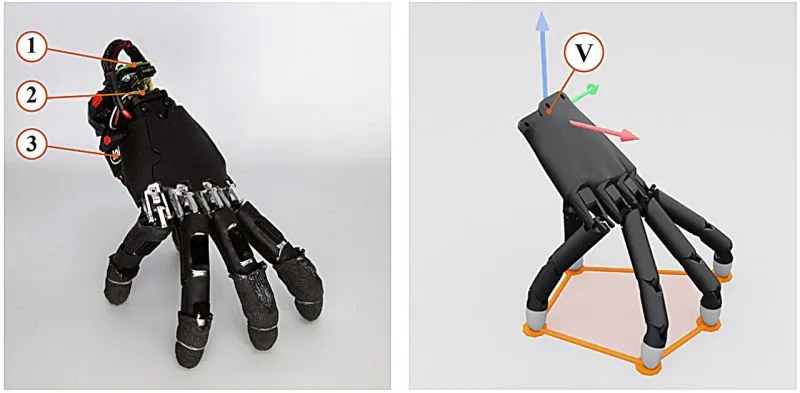
Many science fiction writers have predicted the advent of various inventions, but television writers have succeeded far less often. However, a group of Swiss engineers at the Soft Robotics Laboratory were inspired by the Addams Family example to developed The robotic hand can independently move over various surfaces and press keys with its fingers.
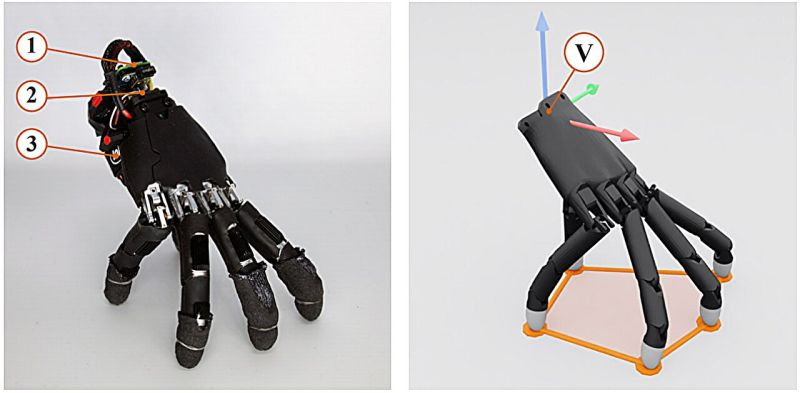
The prototype’s creators claim it’s more than just a fun toy. The hand, which is separate from a full-fledged robotic arm, can be used to operate in hard-to-reach places where the entire robot simply cannot fit. From the kinematics perspective of such a robotic arm, relying on fingers of varying lengths to move stably along a surface is not the easiest engineering problem to solve. Other experiments have demonstrated that a hand with equal finger lengths is easier to balance when moving on such “limbs”, but solutions that more closely mimic the human hand are less suitable for this method of movement due to problems with maintaining balance.
Experts at ETH Zurich based their work on a ready-made manipulator from a third-party manufacturer that was separated from the rest of the robotic arm. Swiss engineers placed batteries, sensors and a compact computer closer to the wrist and used computer models and the principles of reinforcement learning in an artificial intelligence environment to teach her to move with five fingers. When the software was transferred to a prototype of the “autonomous arm” itself, it was very successfully able to move on 14 types of surfaces, including street surfaces. Gravel, metal grating, lawn and carpet – all these types of surfaces are within the capabilities of this hand. In 25 trials she had to initiate the exercise from a lateral position, and in 21 trials she completed the task.
The steering mission isn’t an easy task either. The hand must be balanced on four fingers and use the fifth finger to press one of the four arrow keys. In 29 out of 32 cases, the hand successfully pressed the desired key. In another series of 15 experiments, the hand had to approach a block placed on a table and move it along the surface to within 2 cm of the desired point. The study’s authors believe this development allows humanoid robots to better adapt to coexisting with humans in shared environments. A robotic arm used in normal mode will in some cases be able to perform operations autonomously in tight spaces without the involvement of a specialized manipulator.
If you find an error, select it with your mouse and press CTRL+ENTER.