


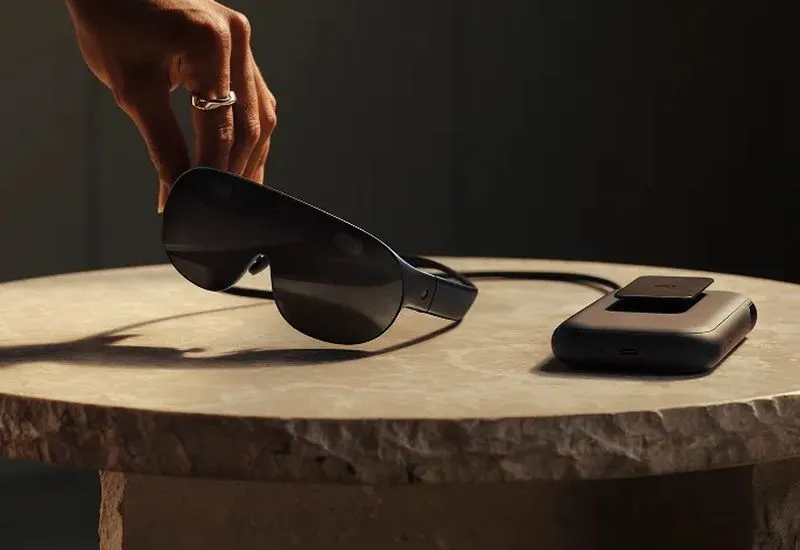
For Yuan✴ In terms of platforms, this week’s Connect event was originally the venue for the release of new wearable devices, and the most anticipated new products are undoubtedly the Phoenix VR headset and Luna camera-free AI glasses. The company is meeting these expectations by launching these two models of the device and specifying retail prices of $1,299 and $349 respectively.
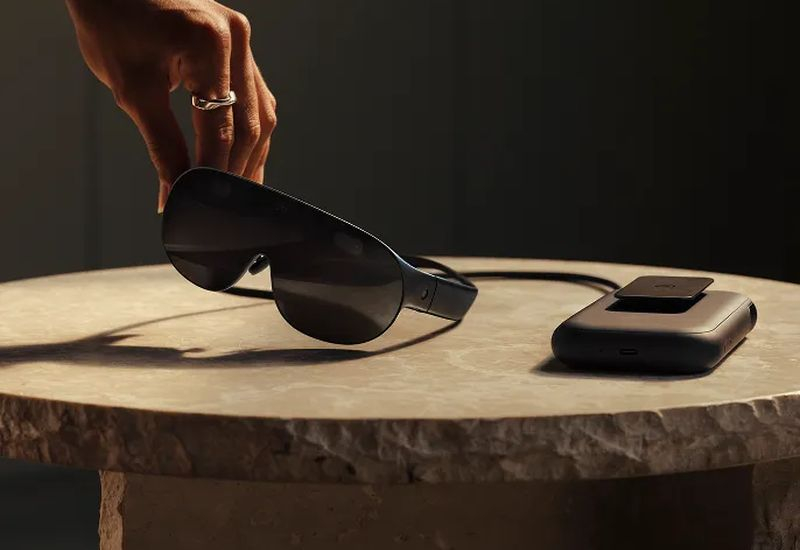
Since large size and weight were one of the main complaints with previous generations of VR headsets, the Meta✴ Try our best to create a lightweight VR glasses headset. As you can see from the name, it combines the functions of virtual reality with the size of smart glasses. Indeed, it is impossible not to compromise the layout: the headset simply distributes the weight between the part actually worn on the head and the external module, which is connected by a cable and attached to clothing, or placed on a table when working in fixed conditions. This module contains the processor, cooling system, battery, and other components required for the operation of the augmented reality headset.
Like its predecessors, the VR glasses headset allows you to hold video conferences, watch movies on a virtual screen, play games, browse the web and work in office applications. At the same time, users must wear glasses that weigh about 100 grams on their heads, which is five times lighter than Oculus Quest 3S and six times lighter than Apple Vision Pro. Chief Technology Officer✴ Andrew Bosworth admitted that the idea of separate layouts was partly borrowed from Apple, as users and developers noticed the convenience of this approach. However, in Yuan✴ They believe their offer is not only better priced, but also easier.
Additionally, Bosworth said many users were put off by the Apple Vision Pro’s bulky appearance because it made them look strange, not to mention that the weight of the device quickly caused fatigue. The VR glasses, while more than twice the price of the Quest 3 ($599), are still nearly three times cheaper than the Apple Vision Pro ($3,699). Battery power of new Meta✴ It can run for three hours, which is better than the performance of the listed devices, but at the same time, if the user is working with the VR glasses at a desk, the VR glasses can remain continuously connected to an external power source. For this mode, a virtual keyboard and trackpad are provided, projected directly onto the desktop. For example, this information input is actually no less efficient than the option of interacting with a tablet.
The resolution of the VR glasses display is not as good as that of the Vision Pro, which offers 4K, because the new Meta✴ Only close to 2.5K. On the other hand, eyewitnesses noted that the difference was barely noticeable visually. VR glasses use Qualcomm Snapdragon Reality Elite processors, while Vision Pro requires a Core M5 processor and a dedicated supporting chip. Yuan✴ It is confirmed that the VR glasses will offer a proprietary video conferencing mode that can create highly realistic holographic avatars of interlocutors. Later, Ray-Ban AI glasses with displays will support this feature.
The business model for selling VR glasses is still in its infancy, but Bosworth said that in the near future, the company will no longer lose money selling the glasses for $1,299.

The second key innovation at Connect is the Ray-Ban Meta AI glasses✴ Audio, without a camera, won’t draw the same outcry from privacy advocates as existing models with cameras. Users of such glasses will actively interact with the AI agent through voice commands, and the device can also serve as a replacement for hearing aids. By the way, a new version of Ray-Ban AI glasses with camera was also launched, as well as a new frame model suitable for the series.
Chief Technology Officer Andrew Bosworth said that he is working on building smart glasses without Meta cameras.✴ Started two years ago because the audio component is the most popular feature of this type of device. Additionally, ditching the camera makes the glasses lighter and extends battery life. The issue of privacy scandals was on the agenda well after development of the cameraless glasses began, so Meta✴ In that sense, as Bosworth admits, it was just luck. However, he noted that the company’s smart glasses with built-in cameras remain popular even amid privacy scandals. An indicator light on the outside of the frame indicates that the owner of the glasses is taking videos and photos, so the device does not allow for completely covert filming.
Ray-Ban Meta smart glasses version✴ Camera-free audio featuring Clubmaster and Burbank will be available on October 3 for $349. A single charge lasts for 12 hours, which is a significant improvement over the 8 hours of the previous generation with the camera. By the way, the new generation of Meta glasses✴ With the camera, that number increases to 9 hours, so progress is being made on their end. The third-generation camera glasses are also thinner than their predecessors, but still stand out in size compared to the non-camera versions and are virtually indistinguishable from regular Ray-Ban frames. Meta smart glasses have entered the third generation✴ There is a programmable “action” key that can be configured to call the artificial intelligence agent Must, etc. An updated microphone system more effectively suppresses background noise during calls, and the glasses now feature adjustable temple tips that can be adjusted for improved wearing comfort.
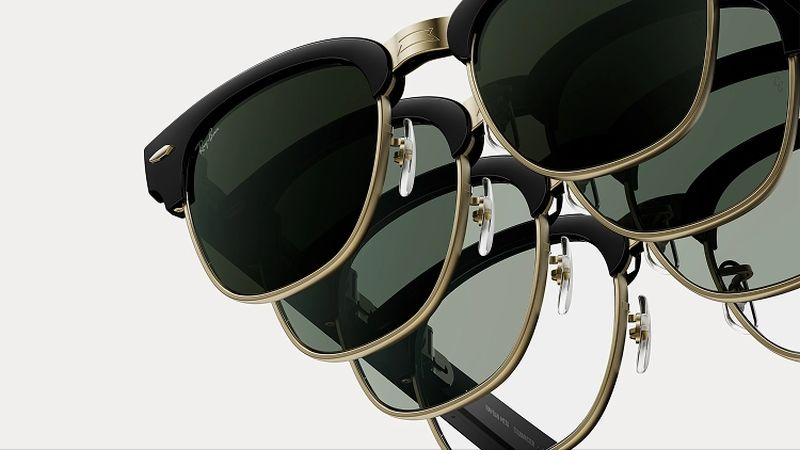
The camera-equipped version starts at $449 and comes in three designs: Wayfarer, Aviator and Zena. That’s more expensive than the second-generation glasses, which cost $379, but in the Meta✴ They explain the price increases as inflation and parts shortages, although the shortage of memory chips is not directly attributable to those factors. In the long term, higher memory prices may affect the positioning of Meta devices✴As the company’s technical director admitted.
In addition to its collaboration with Ray-Ban, Meta✴ Providing more affordable smart glasses, using self-designed frames, the new generation price starts at US$249. However, in South Korea and Singapore, a special model of the glasses is priced at US$399 and was created with the participation of pop singer Lisa of the Korean band Blackpink.
Software capabilities of Meta smart glasses✴ has also been improved. A new Dynamic Photo mode lets you take several photos at once and select the most successful photos for further use on your smartphone. In addition, a horizontal mode for shooting photos and videos has been added. Until the end of this year Meta glasses✴ Will be able to record 360-degree spatial audio using Dolby Atmos technology. The share of data processed locally on the glasses hardware will also increase. It would be a nod to privacy advocates concerned about the security of data sent to Meta’s proprietary cloud service✴.
Used to access FDA-cleared hearing aid features on Meta smart glasses✴ It will cost an additional $150 or include it with your Meta subscription✴ one.
yuan glasses✴ The built-in display will cost $799 and will get a host of new software features, including third-party apps that search for similar devices. The voice assistant has been improved and in navigation mode, directional arrows are available for both routes when taking public transport and cycling. Managing your calendar and notifications from your smartphone just got easier, now you can edit photos directly in the smart glasses interface.
Bosworth said the company has not given up on the idea of releasing AR glasses with paired displays in 2027, but the actual timing will depend on the maturity of the supporting technology.
If you find an error, select it with your mouse and press CTRL+ENTER.