



The biggest beneficiaries of China’s artificial intelligence boom are thought to be local memory makers Changxin Memory and Yangtze Memory, which by some indicators have begun to catch up with established Western players. Wind data shows that in the first half of this year, the net profits of 190 Chinese companies related to semiconductor production increased by 620% annually.
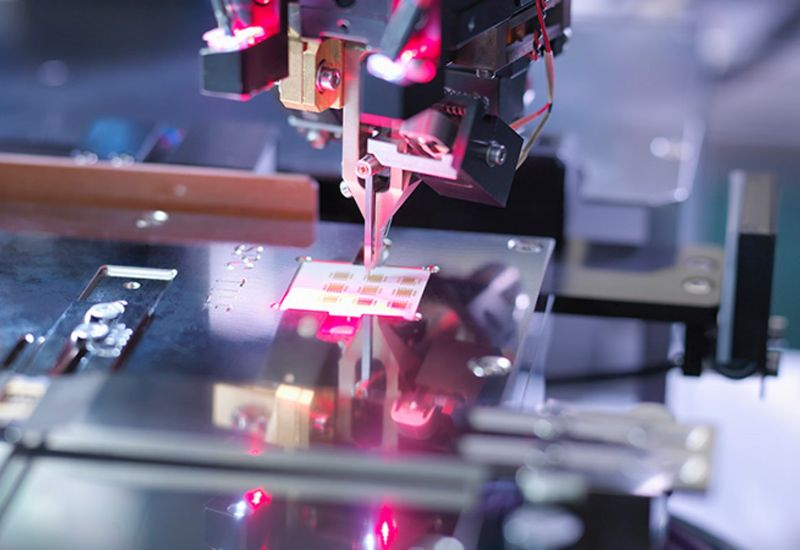
Image source: Micron Technology
This is caused by Nikkei Asian Reviewpointing out that the success of Changxin Storage and Yangtze River Storage has a beneficial impact on the overall situation of China’s semiconductor industry. The sample only includes Chinese listed companies whose stocks in this industry are listed on local exchanges. At the same time, their total revenue in the first half of the year only grew by 68%, which shows that revenue grew faster than expenses amid strong demand for semiconductor components. The study authors said government support measures also had a positive impact on the dynamics of changes in financial indicators of China’s semiconductor industry.
Local industry representatives make no secret that the success of Changxin Storage and Yangtze River Storage has made them more profitable because they provide these companies with equipment and supplies for the production of memory chips. Despite losses last year, Changxin Storage’s net profit in the first half of the year reached US$11.55 billion. Revenue for the period reached $22.4 billion, exceeding full-year 2025 sales.
Taking Yangtze Storage as an example, in the first quarter of this year alone, its revenue increased to US$7 billion, almost five times its full-year revenue in 2025. Net profit in the first quarter reached US$5 billion, more than double its full-year profit in 2025. Chinese chipmakers are unable to purchase advanced foreign equipment under Western sanctions, so the trend of import substitution has a favorable impact on the business of local suppliers. Chinese contract chipmakers are also expanding production capacity.
Lithography equipment manufacturer China Microelectronics’ net profit in the first half of the year generally quadrupled compared with the same period last year. By 2030, China hopes to build a semiconductor industry that is largely independent of Western technology, materials and components. The need to attract new funds to expand business has prompted many market participants to come to exchanges, such as Changxin Storage. Yangtze River Storage will also follow suit and is expected to raise approximately US$5 billion. This means that the influx of financial resources into the industry will not only attract the attention of customers, but also investors.
If you find an error, select it with your mouse and press CTRL+ENTER.