

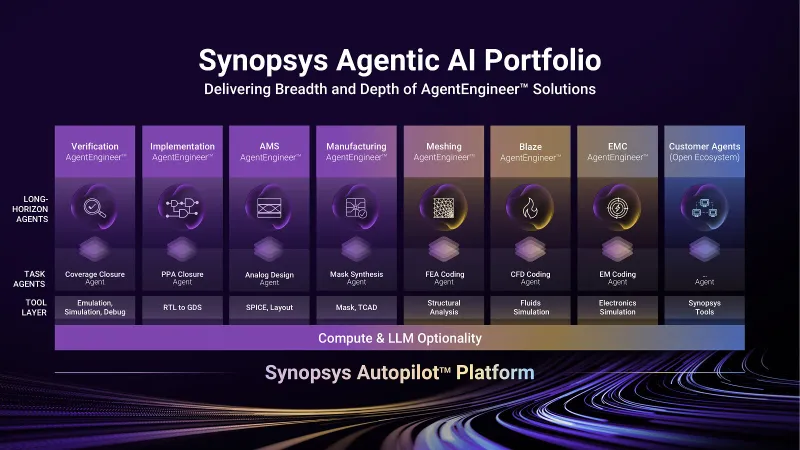
Synopsys, the largest developer of chip design software, announced the launch of an AgentEngineer solution— “Dedicated agent for long-term tasks” Based on the new Autopilot artificial intelligence platform. The suite covers six areas of IC design: Wafer Verification, System Verification, Physical Implementation, Simulation and A/D, and Simulation and Analysis.
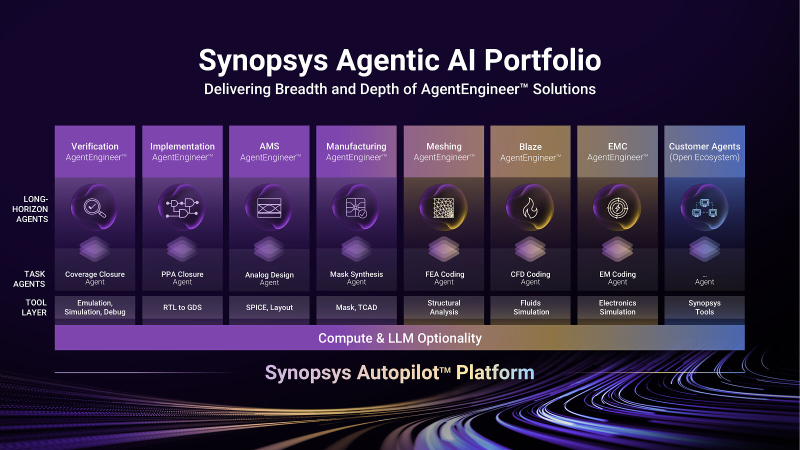
Image source: synopsys.com
More than 50 Synopsys customers have already implemented the product, which the company will release to the public by the end of 2026. Previously, she demonstrated an AI agent-based workflow built with the participation of Nvidia and Microsoft. The company emphasized that Synopsys positions its AI agents as autonomous, but approval of control phase results remains at the discretion of the individual. For companies that design and manufacture chips and want to increase efficiency through artificial intelligence, a new set of solutions will help “Accelerating the transition from artificial intelligence design to autonomous engineering”.
The AgentEngineer system has a three-tier structure – it includes “Professional super agent who coordinates execution agents”;Executive agent “Solving a direct, clearly defined engineering problem” or at the direct request of an Engineer; and tool-level engines “Perform the work required” But they don’t make decisions or set goals. Agents with long or long tasks help solve problems of target complexity—they perform tasks that require hundreds or thousands of steps of reasoning.
The platform covers all development stages from coordinating the work of artificial intelligence agents to collecting telemetry data – and is based on “cognitive model”which provides work “Situational Intelligence”. The security of intellectual property rights is ensured by access control systems, encryption and execution environment protection tools. Customers can use commercial, open and pre-trained artificial intelligence models in the system, deployed in the Synopsys cloud, the customer’s own cloud or running on on-premises infrastructure.
The company elaborated on the wafer verification cycle. The AI agent makes a plan, coordinates the execution of the agent’s work, and makes adjustments if the intermediate results are not ideal. When an error is detected during testing, an agent is launched to analyze the root cause – it examines logs, groups errors, formulates hypotheses and conducts tests by analyzing signals. Then the agent generates “Local rewriting of RTL code to confirm bug fixes”and draft a correction report. If the intermediate result deviates from the set goal, the AI agent “Correct course, adjust and react accordingly”.
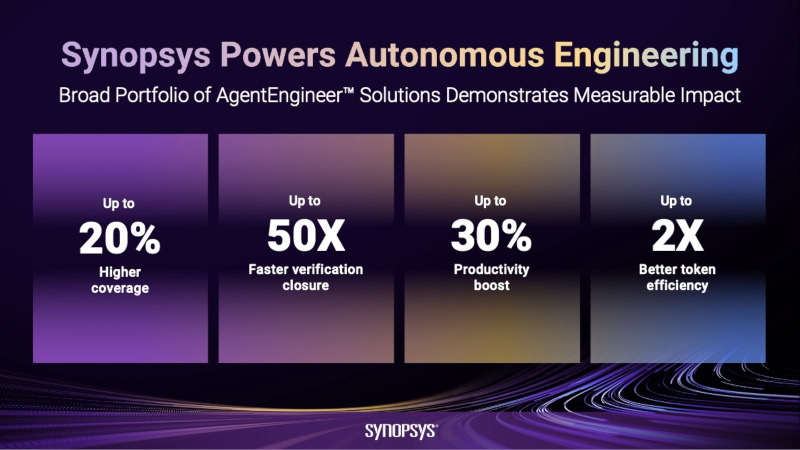
In joint testing of the system with Nvidia, wafer inspections were completed up to 50 times faster, inspection completeness improved by 20%, and performance in resolving engineering problems increased by 30% – the latter numbers were shown by Fujitsu in the context of RTL code generation. One Synopsys customer created his own AI chip development environment based on a commercial general-purpose AI agent – the AgentEngineer suite helped cut AI token consumption in half. Intel, MediaTek, and Samsung left positive reviews of the system but did not share specific results.
Previously, Synopsys proposed an autonomous level classification of AI agents for chip development, according to which AgentEngineer components meet the standards of the highest level, L5. Human engineers still play an active role in the work, but the level of control may vary. Customers can set their own milestones to validate results, validate decisions and adjust progress, then gain confidence in the system as they grow “Reduce the level of disruption”. Synopsys did not specify at what point an agent would interrupt an attempt to complete a task or transfer it to an engineer.
If you find an error, select it with your mouse and press CTRL+ENTER.