

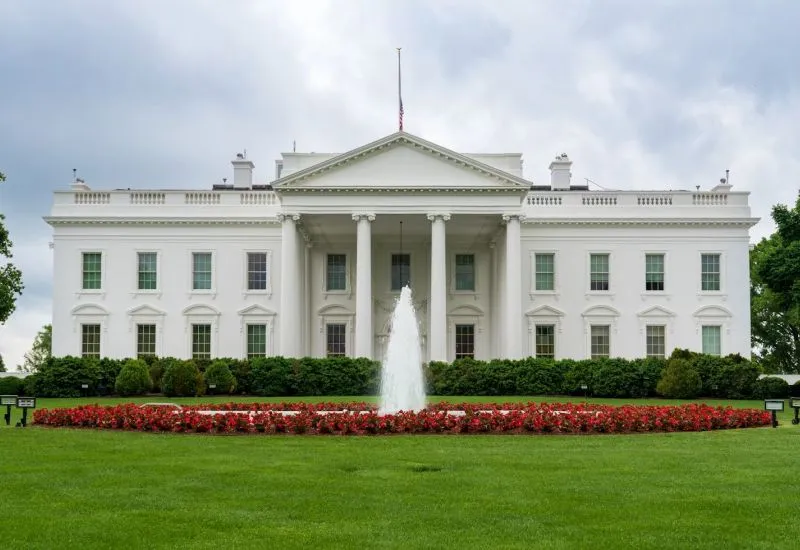
An event held at the White House yesterday brought together representatives of more than a dozen major American companies with some connection to the field of artificial intelligence. Witnessed by U.S. President Trump, industry representatives signed a memorandum pledging to self-regulate the development of artificial intelligence.
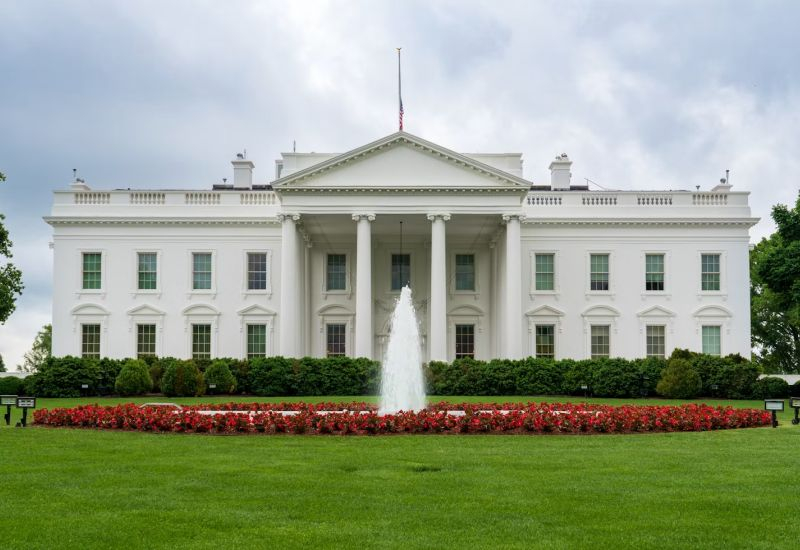
Image source: Unsplash, Tomasz Zielonka
Meanwhile, Donald Trump himself is simultaneously pushing for another initiative to rename “artificial intelligence” to “superintelligence,” hoping to distance the concept from the negative associations it has generated in recent months due to scandals over the safety of artificial intelligence models. Under his decree, Trump requires all U.S. government agencies to use the term “superintelligence.” Obviously, this move is partly an attempt to win the trust of American voters before the November midterm elections. Billed as “Declaring the Age of Superintelligence,” the order requires officials to eliminate use of the term “artificial intelligence” or the abbreviation “AI.”
According to Trump, the decision was supported “The brightest and greatest people from around the world”. At the same time, the main document of the meeting between the US president and a large number of US technology company leaders was the “Superintelligence Agreement”, subtitled “Advanced Commitment Joint Agreement.” Although the document does not formally have strict legal force, it serves as confirmation that U.S. market participants in artificial intelligence systems voluntarily agree to adhere to certain self-regulatory principles. Trump compared the signed document to “a constitution of sorts” because of its significance to the artificial intelligence industry. He also admitted that the presidential administration is considering establishing a special government committee of ten people to oversee the development of artificial intelligence. Trump did not disclose the composition of this government agency, but said that he would appoint an official (“AI czar”) in just three or four days to oversee the development of these technologies in the US government.
Among other things, the agreement provides for regular independent audits by AI model developers. Participants in the initiative also committed to holding regular meetings to establish safety standards. As highlighted, over time the principles developed can be reflected at the legislative level. Part of a broad delegation attending a meeting at the White House, the document was signed by the heads of Google, Tesla (SpaceX), Anthropic, Meta✴ Platform: OpenAI and Nvidia. According to Trump himself, the document imposes a “moral obligation” on the companies that sign it and becomes a guarantee of protection.
For participants in the initiative, in addition to the obligation to conduct regular independent audits of the security of developed artificial intelligence systems, the document also provides for the establishment of a special committee within the board of directors, which will review the audit results. Developers also need to strengthen control over the behavior of artificial intelligence models during training and deployment to prevent them from intruding into third-party technology systems in “undesirable ways.” There should be a separate structure responsible for maintaining control of the models within each company.
Meanwhile, attendees at the White House meeting confirmed intentions to accelerate the expansion of artificial intelligence computing infrastructure, as the current US president is an enthusiastic supporter of progress in this field. It is widely believed that the rapid expansion of U.S. data centers is damaging the support of the Republican Party represented by Trump. Local residents protested against the construction of data centers, which occupied large amounts of land, consumed large amounts of water and electricity, and became a constant source of noise. Trump stressed this week that the proliferation of data centers across the United States is a very good trend, and that representatives of companies building data centers are interested in keeping local residents happy. Otherwise, they will have to establish data centers outside the United States. The president has given the company the responsibility to explain its work to the public before they become so opposed to building new data centers.
Anthropic CEO Dario Amodei was not invited to Xi Jinping’s official dinner during the Chinese leader’s visit to Washington, but he attended the event with colleagues from other companies and expressed his commitment to working with the president to ensure the safety of artificial intelligence technology. It is reported that Amodei visited the White House last Sunday to have a private meeting with the President of the United States. After a group meeting with industry representatives, Trump called Anthropic’s chief a “terrific man” and sent him to speak to the media.
Trump emphasized that control of the development of artificial intelligence will be carried out by the usual federal agencies, including the FBI and the U.S. Department of Justice, but that self-regulation by industry representatives is also necessary. On the same day, the U.S. government announced the launch of a new chatbot that will run on government websites. resource U.S. government websiteDesigned to interact with citizens on government services, it will operate with the support of specialized artificial intelligence models. Services will be provided on a “single window” basis. All federal agencies are required to integrate their services with this resource. It would be something like an American version of National Service.
If you find an error, select it with your mouse and press CTRL+ENTER.