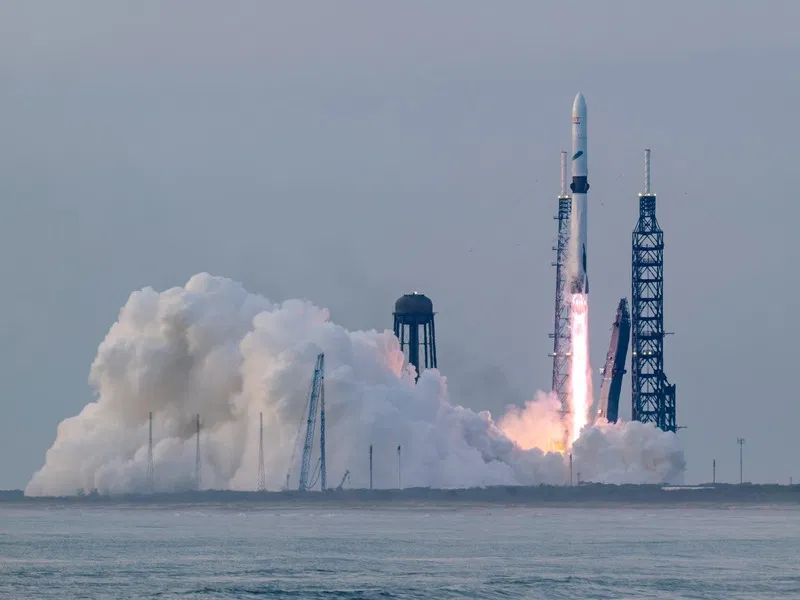
Google has entered into an agreement with Jeff Bezos’ aerospace company Blue Origin to launch satellites into space with artificial intelligence accelerators. In the first quarter of 2029, the New Glenn heavy rocket should deliver Project Suncatcher vehicles into sun-synchronous orbit.
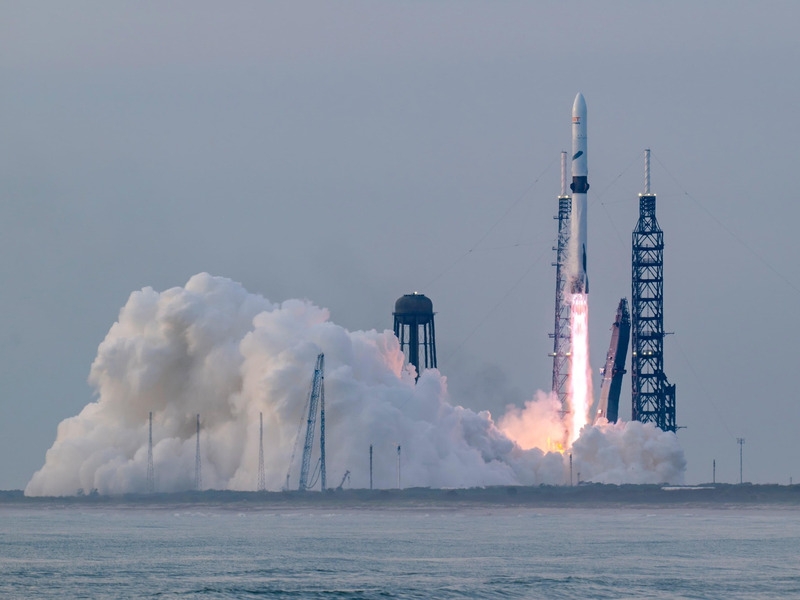
Image source: Blue Origin
How writes The Verge, this will be the first separate launch of a heavy rocket under Project Suncatcher. The computing power of each satellite will be approximately equal to one server rack of a ground-based data center. The company did not disclose the number of devices and the cost of the agreement.
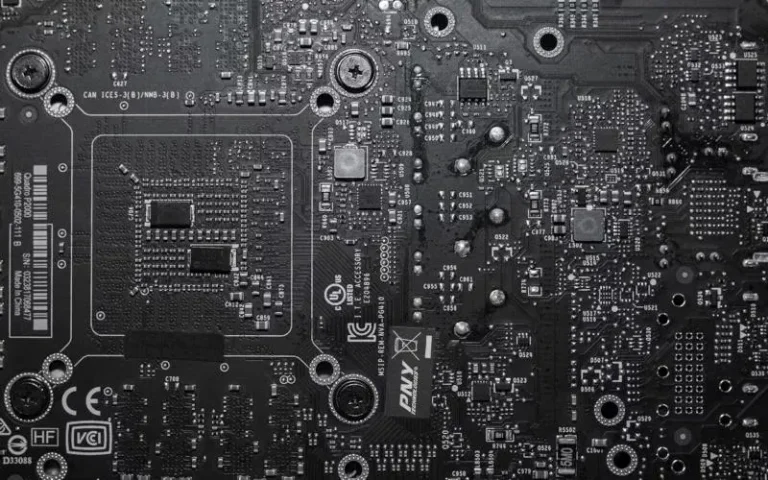
Project Suncatcher involves the creation of an orbital computing infrastructure based on tensor accelerators Google Tensor Processing Unit (TPU). The company hopes to use satellites to perform artificial intelligence tasks beyond Earth. In the future, such devices can become the basis of space data processing centers.
The first tests of the equipment have already taken place. In October 2026, SpaceX’s Falcon 9 rocket launched an experimental Google satellite into orbit with four TPU boosters. The launch was part of a joint mission during which the rocket delivered several payloads into space.
At the end of October, Google performed the first AI query directly in orbit. The Gemma 4 model running on the satellite generated a three-line poem and transmitted the result to Earth. The next step will be testing the interaction of two interconnected satellites, planned for 2027. Engineers will also have to evaluate the accelerators’ resistance to radiation and temperature stress.
It is noteworthy that Google initially agreed with SpaceX to launch orbital data centers. In May, it became known that the company was considering cooperation with other space launch operators. Now the first separate heavy mission of Project Suncatcher has been entrusted to Blue Origin, while the experimental satellite was previously delivered into orbit by SpaceX.
If you notice an error, select it with the mouse and press CTRL+ENTER.