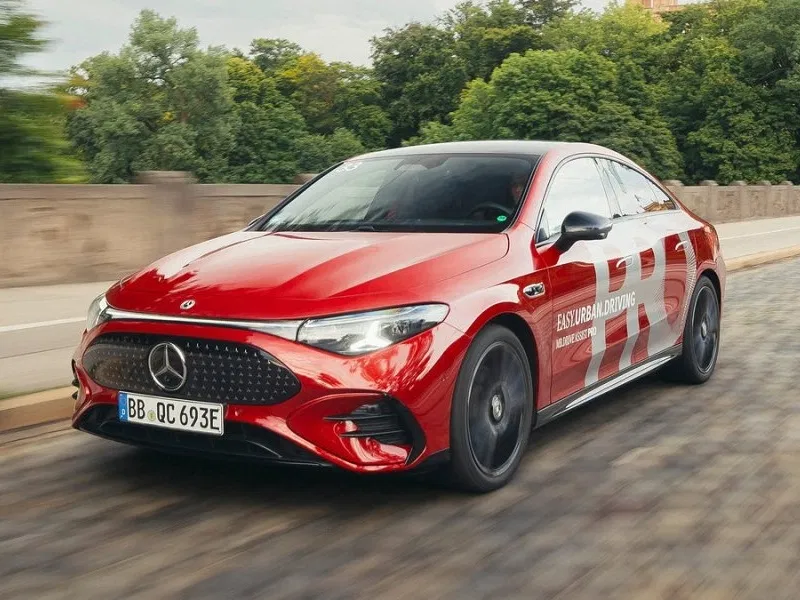
Mercedes-Benz was the first in Germany to receive permission to use an automated driving system capable of autonomously driving not only on highways, but also on city streets. The German automaker is ahead of Tesla in the fight for the local market: its MB.Drive Assist Pro can change lanes, pass through intersections, react to traffic lights and perform most maneuvers along the route.
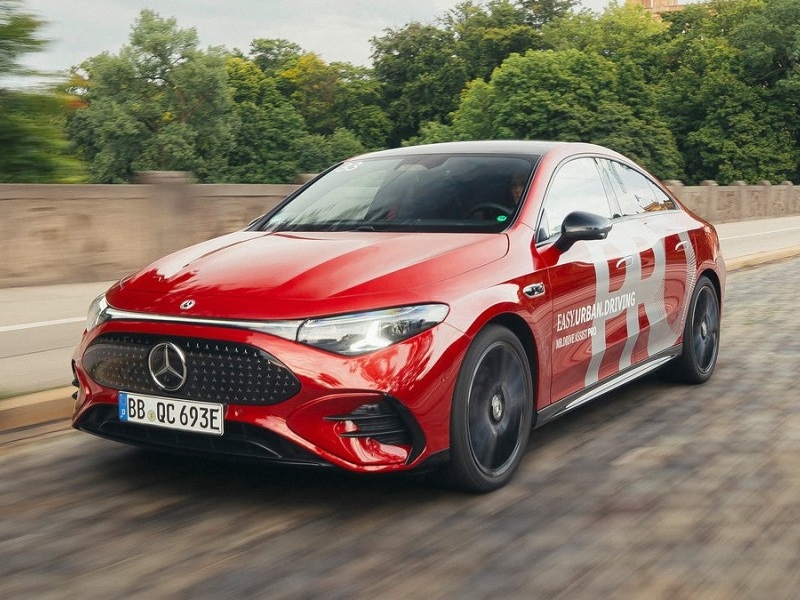
Image source: Mercedes-Benz
German regulator’s decision gives Mercedes-Benz has an advantage in the competition with Tesla for European buyers. The American company is also seeking to expand the approval of its Full Self-Driving (FSD) system in the European Union, but its distribution is still limited by the regulatory requirements of individual countries.
Developed jointly with Nvidia, the MB.Drive Assist Pro system has received approval in accordance with the requirements of the new UN Regulation No. 171, which regulates the operation of modern driver assistance systems (Driver Control Assistance Systems, DCAS). The document establishes safety requirements for technologies capable of driving a car along a route, and not just on certain sections of the road.
MB.Drive Assist Pro allows the car to independently change lanes, make turns at intersections, select the desired direction of travel, brake at traffic lights and resume driving after stopping. The system also supports driving on country roads and highways, including their exits.
At the same time, the technology corresponds to the second level of SAE automation and does not relieve the driver of responsibility for driving the car. A person is obliged to constantly monitor the road situation and, if necessary, intervene in the operation of the automation. Thus, we are talking about an advanced driver assistance system, and not a full-fledged self-driving car.
Participants in the early access program in Stuttgart and Munich will be the first to use the new technology. Its launch is scheduled for December 2026, and the full release of MB.Drive Assist Pro on the German market is planned for the first half of 2027. In the future, Mercedes-Benz expects to extend the system to other models of cars and vans, including vehicles with different types of power plants.
For compatible vehicles already in customers’ possession, the new features can be activated via an over-the-air software update. The manufacturer will announce the cost of the system and the exact list of supported models later. However, the entry into force of harmonized requirements in January 2027 may simplify the spread of technology to other European markets.
The technical basis of MB.Drive Assist Pro is Nvidia’s developments. Previously, the partners had already demonstrated the capabilities of the system during a trip in a Mercedes-Benz CLA from Woodside to downtown San Francisco. Nvidia sees automotive technology as one of the key growth areas for its business, along with artificial intelligence for data centers.
However, Tesla has also achieved some success in Europe. In April 2026, the Dutch regulator RDW approved the use of FSD in the country. To extend this technology to the entire European Union, separate approval is required. Like the Mercedes-Benz system, the European version of FSD requires constant monitoring by the driver.
If you notice an error, select it with the mouse and press CTRL+ENTER.