



CXMT was the first among its global competitors to achieve progress in organizing mass production of DRAM memory with vertical orientation of transistors. It will begin releasing it by the end of this year, focusing on the server market.
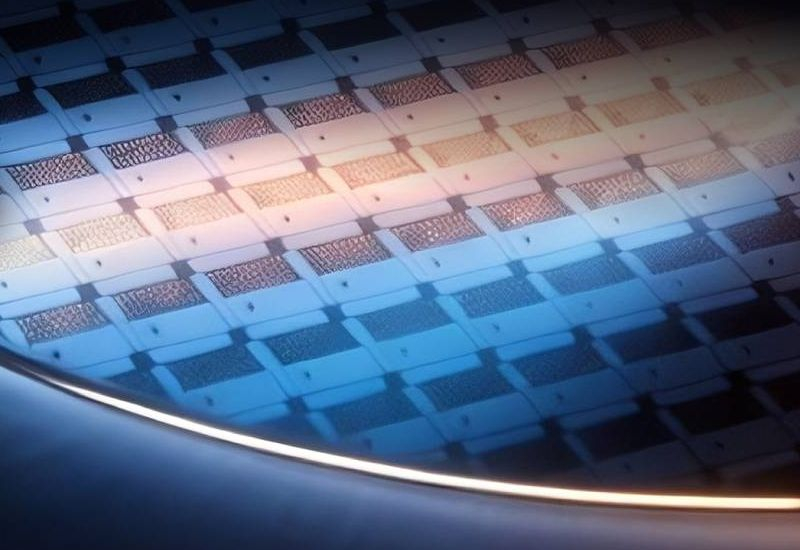
Image Source: CXMT
The name of the Chinese company CXMT in the western part of the world information space is surrounded by controversial stories in terms of the sources of the technologies it receives, but the practical results speak for themselves. This Chinese manufacturer is already the fourth largest DRAM supplier in the world, and is also eyeing the solid-state memory market. Now it has announced its ambitions in the server DRAM segment.
According to BigGo FinanceCXMT President Cao Kanyu said at the fourth Chips and Chiplets Conference yesterday that the company will begin supplying its own advanced DDR5 RDIMM for server systems by the end of this year. The latest 4F2 architecture features a vertical transistor layout, providing greater control over gate performance, reducing leakage current, and combating so-called short-channel effects. Among other things, the vertical orientation of transistors in a memory crystal makes it possible to increase the density of their placement, increasing the capacity of the chip.
The value 4F2 indicates that one memory cell occupies only four times the area compared to the square of the size of the minimum element of the cell. The currently mass-produced memory is characterized by the 6F2 parameter, occupying more area on the chip per cell. By placing more transistors per unit area, CXMT will be able to produce higher-capacity memory.
In the early stages of development of the 4F2 architecture, CXMT relied on planar transistors and unified lithography, and such prototypes were inferior to mass-produced 6F2 class solutions. The transition to the third dimension in the case of 4F2 made it possible to separate the manufacturing processes of DRAM and CMOS structures and move to hybrid splicing of silicon wafers for organizing high-speed connections. The density of logic elements and memory cells can now be optimized independently of each other, eliminating the inherent limitations of a monolithic design.
CXMT has over 300 patent families related to the 4F2 architecture. The focus on promoting this generation of memory in the server segment underscores the company’s ambitions to conquer the market for components for data center infrastructure. Moreover, the presence of such a priority was already evident in the first half of the year.
In August of this year, CXMT announced the start of mass production of LPDDR6 memory, emphasizing that it was the first in the world to do so. In September, it announced the start of production of fifth-generation DRAM (G5). The appearance in its arsenal of memory with 4F2 architecture, which is in demand in the server segment, will further strengthen its market position in the context of the AI boom. Competitors Samsung, SK hynix and Micron are also mastering the 4F2 architecture or their 3D analogues, but none of them have yet started mass production of the corresponding products.
If you notice an error, select it with the mouse and press CTRL+ENTER.


