



The memory shortage has reached Tesla robots: the company had to reduce the amount of RAM in humanoid Optimus so as not to disrupt their mass production. In the younger version, the LPDDR5 volume was cut by a third – to 96 GB, and the older version lost the same share of LPDDR6 – its volume was reduced to 144 GB.
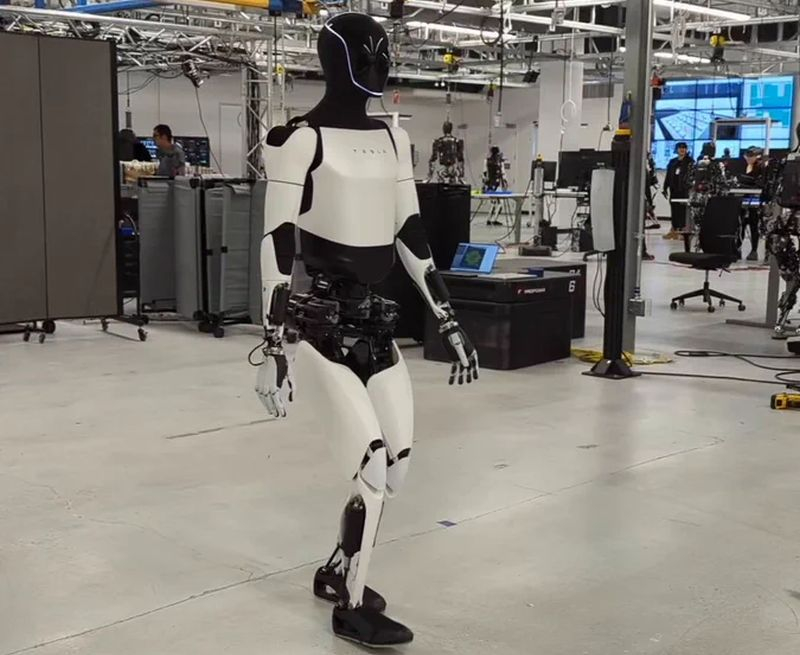
The shortage of memory chips in the context of the AI boom is already affecting many market segments, but the field of humanoid robots is not yet so developed to talk about such an impact. However, at the end of last week, Elon Musk said that the shortage of memory and its high cost forced Tesla to reconsider the amount of RAM that should be equipped with Optimus humanoid robots.
Head Tesla explainedthat when using the AI5 processor, the volume of LPDDR5 had to be halved to 72 GB, and in the case of the AI6 processor, the volume of LPDDR6 had to be reduced by a third to 144 GB. Musk later clarified that in the case of the AI5 chip, it was decided to reduce the volume of LPDDR5 not so much – to 96 GB.
First of all, reducing the amount of memory will allow Tesla to produce Optimus robots in the required quantities. Secondly, this will also make it possible to reduce costs in the context of high prices for memory chips.
“As it turns out, we believe this will have a negligible impact on Optimus performance since memory bandwidth is a more significant limiting factor than total memory (bandwidth remained constant),” – said Elon Musk.
The discussion on this topic was unwittingly started by Micron Technology CEO Sanjay Mehrotra, who at the quarterly reporting conference suggested that every humanoid robot would need memory similar to that of a self-driving car. Social network user X, with whom Musk eventually entered into a correspondence, estimated that in this case, 10 billion robots would require 2 trillion gigabytes of memory, and this amount is almost 45 times the amount of memory produced annually throughout the world.
If you notice an error, select it with the mouse and press CTRL+ENTER.


