

This week, when it was learned that Nvidia would form a consortium of institutional investors that would provide a total of up to $500 billion in funding for projects in the field of artificial intelligence, the company’s own terms of participation were only superficially described. It turns out that Nvidia’s commitment at its own expense to ensure a minimum residual value for its GPUs can be considered collateral.
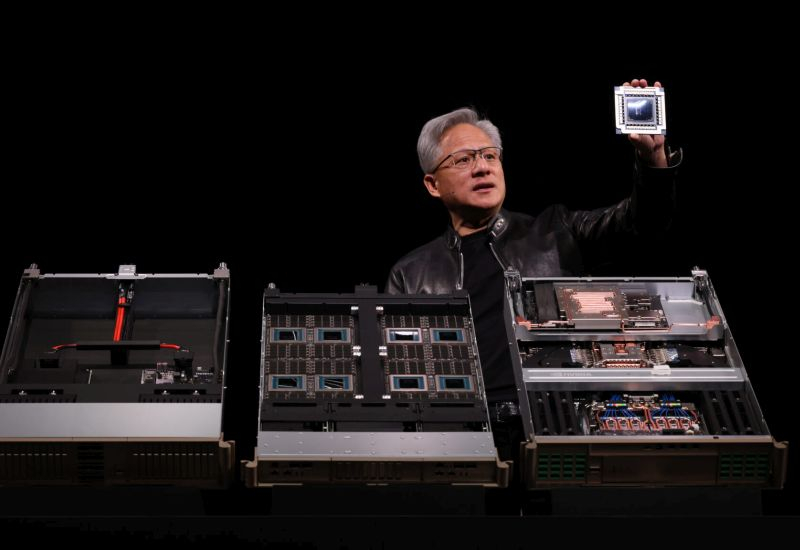
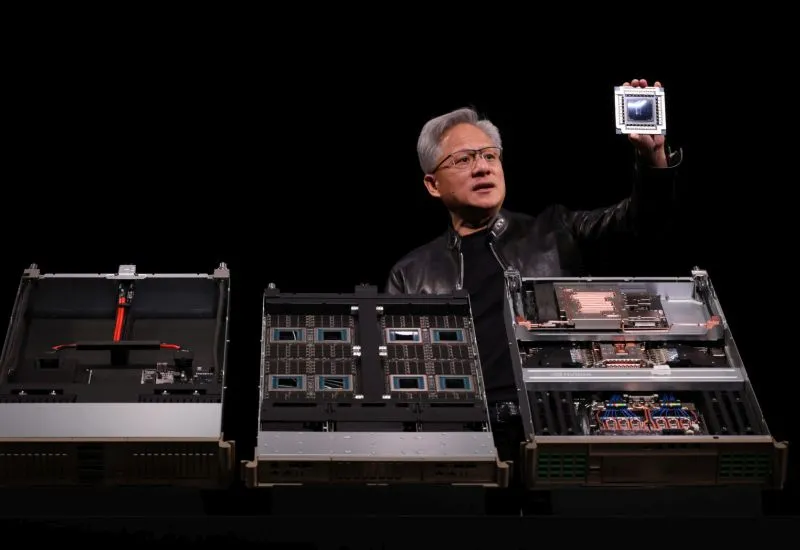
Image source: NVIDIA
It is understood financial timesTraditionally, lenders have provided funding to clients for three to five years based on nearly all depreciation of the cost of the fixed assets included in the collateral. For AI infrastructure projects, the cost of the data center building and the computing accelerators installed within it will be taken into account. Many people have trouble assessing the residual value of a GPU.
Computing components have traditionally depreciated quite quickly, and this is even more true for Nvidia products as the company releases more powerful computing products every year. In this case, the accelerator already used by the customer quickly loses its residual value. Yet Nvidia executives often promote the idea that even traditional accelerators are in high demand during the AI boom. This can at least be judged from the current rental prices of the H100 family of accelerators, which are not among Hopper’s most advanced generations. Furthermore, according to Nvidia founder Jensen Huang, even the older A100s with the Ampere architecture are still in active use despite having reached the end of their design lifecycle. As a result, Nvidia maintains that the cost to customers of its accelerators can be amortized over a typical five years.
To keep older chips running, Nvidia regularly updates the CUDA software that supports them. At the same time, under the terms of the agreement with its investment consortium partners, Nvidia remains committed to providing customers with 25% of the remaining value of its accelerator throughout the loan period. Roughly speaking, if the project does not meet investor expectations, Nvidia will lose at least 25% of the cost of providing the computing accelerator for its implementation.
At the same time, Nvidia will need investment partners within the consortium to expand its capital sources. It is assumed that they will resell the debt of project participants, thus distributing investment risk more evenly. Until now, Nvidia itself has had to fund some data center construction projects, even without advertising them. Now, this debt load will be shifted off the company’s balance sheet. Private investors who purchase the debt of companies participating in the consortium will be able to indirectly participate in financing projects in the field of artificial intelligence. However, this plan still cannot eliminate the financial market’s concerns about the expansion of the “artificial intelligence bubble”.
If you find an error, select it with your mouse and press CTRL+ENTER.