

Perhaps, for local companies entering related economic fields on China’s stock exchanges, the “first-mover” effect is important because early IPO participants collect good “cream” from investors. In the case of robot manufacturer Unitree, this argument makes sense because immediately after the company listed on the Shanghai Stock Exchange, its stock price rose 629% from its issue price.
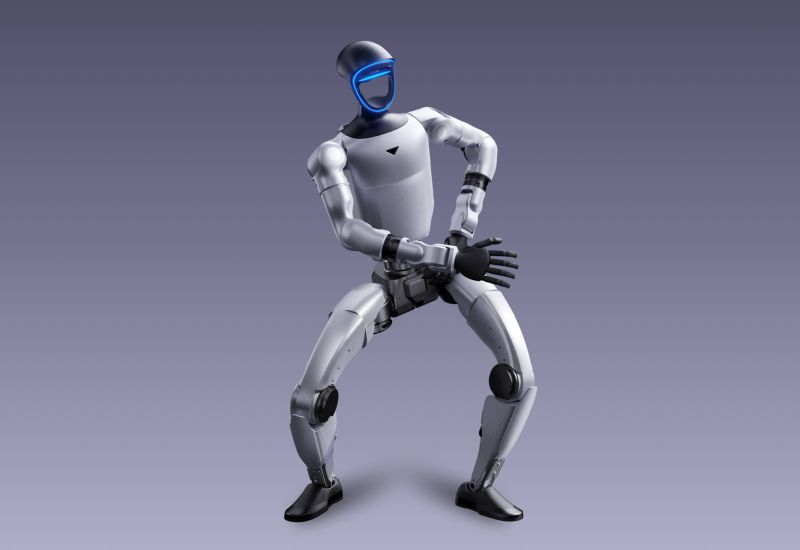
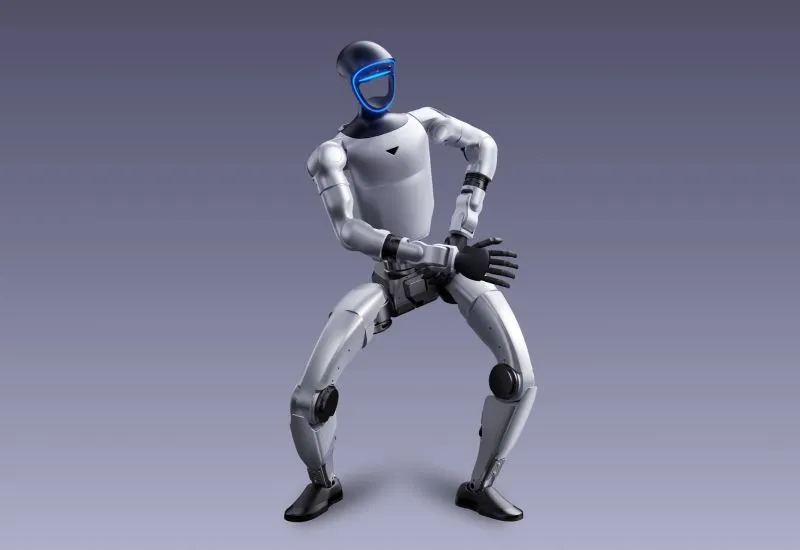
Image source: Unitree Robotics
as mentioned before Nikkei Asian Reviewthe humanoid robot maker is now priced at 1,100 yuan per share on its Shanghai website. During the initial public offering, the company successfully raised 6.1 billion yuan ($905 million), bringing its IPO capital to $9 billion. Now, in its first days on the market, its market cap has actually soared to $66 billion. In fact, judging from the growth dynamics of stock market value, Yushu even surpassed memory manufacturer Changxin Memory. The company’s stock price rose by 466% at the end of last month, becoming the company with the highest market value in the Chinese stock market.
On the eve of its IPO, Unitree launched a new humanoid robot with the ambitious name Superman, which is capable of jumping to a height of two meters and running at a speed of about 12.66 meters per second, surpassing humans at a maximum speed of 12.4 m/s. Unitree was founded in 2016 by Wang Xingxing, who had worked at DJI for a period of time, specializing in creating quadruped robots. By 2023, Unitree turned to humanoid robots. Under the leadership of its 36-year-old founder, with the rapid development of artificial intelligence technology, significant progress was made in this field. The company’s shareholders include Tencent, Alibaba, Meituan and DeepSeek. In the past few days, the World Robot Conference is being held in China, and this weekend, the World Humanoid Robot Games is about to open. Yushu has chosen the timing of this IPO very well.
About 140 companies in China currently plan to start producing humanoid robots, and some of them have already done so. Morgan Stanley estimates that 50,000 humanoid robots will be sold worldwide this year, and that the global market will grow to 446,000 units by the end of this decade. New entrants to this market will have a more difficult time competing and will have greater difficulty obtaining financial resources than established companies. Unitree’s revenue will grow more than tenfold between 2023 and 2025, and the company will achieve breakeven in 2024. In the first half of the year, Unitree’s revenue growth is expected to slow to a range of 35.6% to 45.4%. Last year, its profit margin reached 60.1%, which is quite good for companies in the high-tech industry. In preparation for the IPO, the number of people looking to buy Unitree shares exceeded the placement volume by 8,000 times.
It’s worth noting that the upcoming ban on the import of Chinese robots into the United States does not apply to Unitree’s full range of products. Before the ban, she had obtained permission to supply the humanoid models G1, H2 and R1 to the United States, and the four-legged robots Go2, B2 and A2 will also be able to bypass the ban. The Chinese company will be able to sell them freely in the United States, but newer models will not be able to enter that market.
If you find an error, select it with your mouse and press CTRL+ENTER.