

According to reports, in 2026, the Russian robotics market began to develop actively, with the emergence of several large companies that were not previously associated with this field “Kommersant”. In particular, MTS Web Services (MWS), Rostelecom and T1 created robotics divisions.
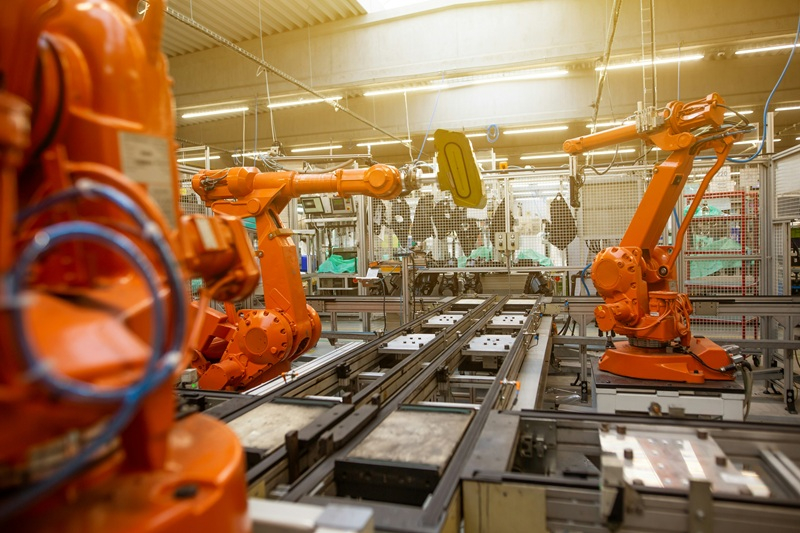
Photo credit: Simon Kadula/unsplash.com
MWS pointed out that the domestic robot market is in the early stages of development, with a low foundation and high growth potential.
Artyom Kharitonov, Project Director at ATK Consulting, said that the early stages of market development were mainly due to the need for a large amount of domestic technology to manufacture components (microprocessors, controllers, etc.), which are now easier to purchase abroad. In this regard, companies prefer an intermediate model – the role of integrator of foreign physical technology and the customer’s own software at the production site.
“According to statistics, 80% of industrial robots are implemented through integrators and only 20% are implemented by companies themselves, but we are talking here usually about large companies with extensive experience in the operation and implementation of industrial robots,” —— Nikolay Chernetsov, Director of Strategy and Operations Consulting at Kept added. He noted the increasing use of hybrid models of interaction with end consumers: “Robots as a Service (RaaS) essentially outsources production tasks to a robotics solution aggregator, rather than making a one-time investment – paying for the service.” This makes it possible to accelerate the implementation of robotic solutions thanks to “rapid feedback from consumers while offering more interesting conditions than foreign competitors”.
The RaaS model involves customers renting robots and software on a subscription basis. In this case, the supplier is responsible for maintenance, repairs, software updates and technical support.
According to expert estimates, there are about 120 integrators in Russia. “An integrator can deploy up to 25 robots per year – which means that all Russian integrators can deploy no more than 3,000 robots per year. At the same time, to achieve the national goal of entering the top 25 countries in terms of robot density, an average of 15,000 robots need to be introduced per year. The difference between 3,000 and 15,000 is the potential market for integrators.” he claimed.
At the same time, Russian companies have not yet planned to master hardware production and plan to focus on developing robot software. “We see our role in creating an intelligent software layer that can work with different robotics platforms and help companies quickly implement robots in specific processes,” – MWS Report. At the same time, the company sees the prospect not only of robots as a service but also of the skills-as-a-service model (skills-as-a-service). “We are talking about replicable cognitive skills of robots, each of which can solve specific application problems and produce clear commercial results. Current estimates of their SOM (share of available market) are 6 to 8 billion rubles. And 7 to 10 billion rubles.” — says Pavel Voronin, General Manager of MWS. He mainly emphasized the prospect of physical artificial intelligence – artificial intelligence built into the physical system, and the company will develop the software layer for it.
Earlier, Rostelecom President Mikhail Osevsky announced plans to enter the RaaS field. According to him, the company has been testing Chinese robots in many companies and “has ways to use artificial intelligence in robotization.”
T1 IT Holdings doesn’t plan to engage in robot production either; it is developing a platform that uses digital artificial intelligence agents to control physical robots. Previously, he announced a partnership with a robotics company to implement complex robotics projects. Russian manufacturers are trapped in a vicious cycle of “low production – high cost – high price – low demand”. In order to obtain competitive prices, they need to produce 300 units per year. “The market has not yet reached this level,” said Robotics CEO Alexander Alekseev.
At the same time, the domestic market has huge potential, Roman Rufov, senior manager of TeDo’s business consulting business, said: “First of all, due to the low starting density of robotization, there is objectively pressure from personnel shortages and production capacity requirements. But the low base itself does not guarantee rapid growth.” He believes that it all depends on whether it is possible for medium-sized industrial enterprises to move from a point-based robotization model to a large-scale replicable robotization model.
If you find an error, select it with your mouse and press CTRL+ENTER.