

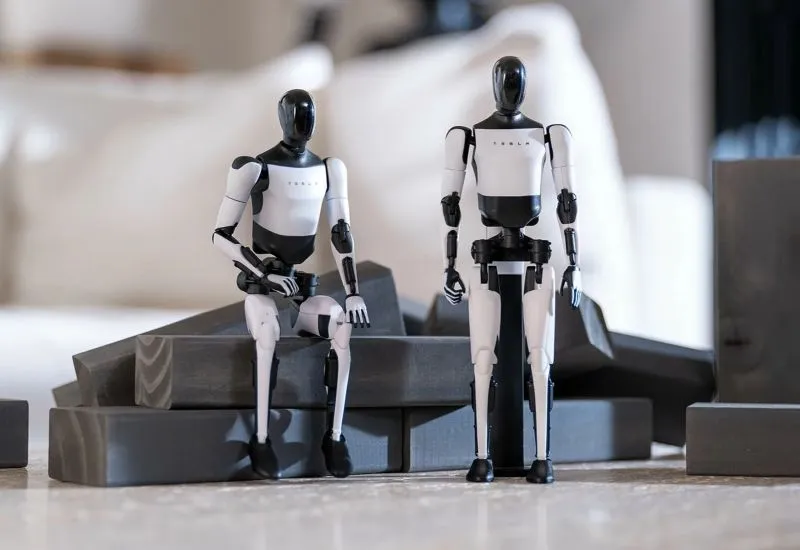
Tesla this week hold a meeting JPMorgan analysts conducted interviews at the oldest automobile assembly plant in Fremont, California, where the electric vehicles Model S and Model X have given way to the humanoid robot Optimus in terms of production organization. Indeed, as the manufacturer has made clear, mass production of the third-generation Optimus robots will begin within a year and will be delivered to third-party customers.
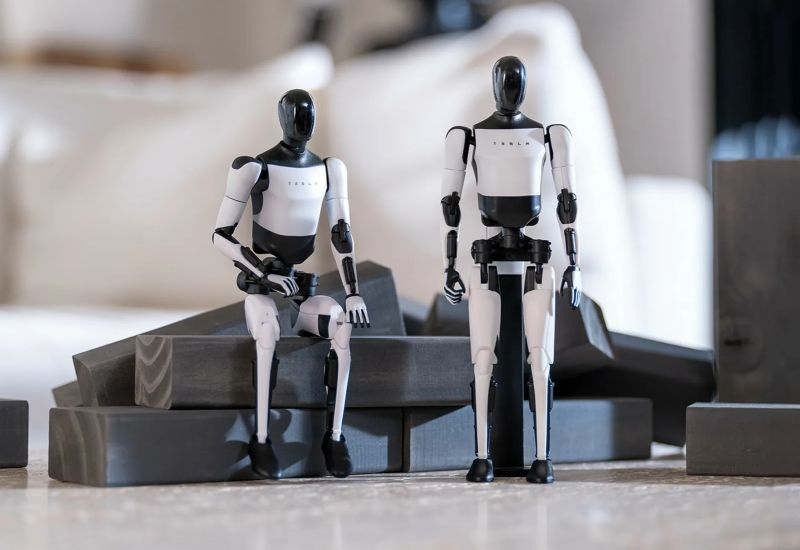
Image source: Tesla
Let’s recall that this year Tesla cut production of its flagship electric cars, the Model X and Model S, to make way for humanoid robots at a California factory. The latter will eventually begin assembly at the company’s largest factory in the Texas capital, home of its new headquarters. The ratio speaks for itself: If Fremont assembles as many as 1 million of these robots a year, Austin will have ten times as many. Note that Tesla CEO Elon Musk promised last year to bring 5,000 Optimus robots to market, but in reality, everything has been limited to a single copy for internal testing and training. Furthermore, company leaders have to admit that in their current form, these robots don’t perform any particularly useful jobs at the Austin facility. Previously, it was believed they would be able to assemble each other and all Tesla electric vehicles produced on site here.
Along the way, Tesla representatives briefed event attendees on the development progress of the brand’s electric vehicle FSD software. FSD v14 made its debut in October last year, and in April this year, Musk called the subsequent v14.3 version “the last piece of the puzzle” that will pave the way for fully autonomous driving. FSD v15 is currently being tested on Tesla’s self-driving taxis in the Texas capital, and the company calls feedback on the software’s capabilities “encouraging.” According to company representatives, HW4 generation avionics are powerful enough to work not only with FSD v15, but also with future fully autonomous pilots. However, this does not prevent Tesla from preparing to release the AI4.5 processor, which is about 10% more productive than its predecessor and has twice the memory capacity.
Tesla’s own robotaxi fleet will aggressively expand starting late this year and early next year. Before that, it must ensure that its driverless taxis are safe, so there is no rush to increase the number of driverless taxis.
If you find an error, select it with your mouse and press CTRL+ENTER.