


NASA Swift Space Observatory recover Scientific observations made after several months of flight in the mode of least resistance for the device to enter the Earth’s atmosphere. This would allow the observatory to collect more data about the universe, but would accelerate its entry into the denser layers of the atmosphere and cause subsequent death.
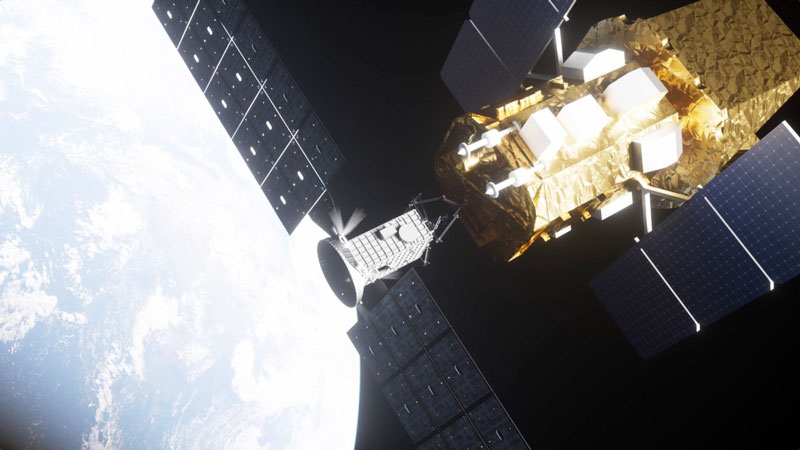
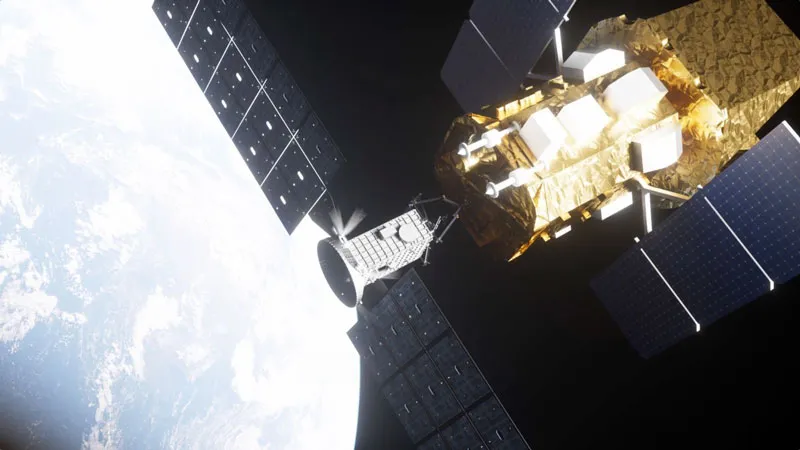
Artist’s impression of the space tug plan to rescue the observatory. Image source: NASA
All three operating instruments of the observatory will be phased out in early 2026. Two of them directly slowed down the device in the atmosphere, and the third dissipated too much energy, forcing the solar panels to remain in a position that was not conducive to the observatory’s aerodynamics and also increased air resistance. The measures taken allowed the device to fall to Earth for a longer period of time at an altitude of more than 300 kilometers, below which the observatory would begin a steep descent and destruction.
Katalyst Space’s private LINK mission was supposed to lift the observatory to an altitude of over 600 kilometers and extend its operations for several years, but after it failed, NASA decided to put it back to work, even at the cost of hastening its demise. If Swift survives in orbit until November or more in sleep mode, returning to actively collecting scientific data will kill it in a month or two.
Last Wednesday, NASA turned on two of the observatory’s three scientific instruments – the X-ray telescope XRT and the ultraviolet optical telescope UVOT. A third instrument, the Gamma-ray and X-ray Burst Alert Telescope (BAT), remains offline, with plans to resume data collection in the coming weeks. Its operation requires specially oriented solar panels – a very energy-intensive device.
Problems with the observatory’s orbit necessitated shutting down instruments and suspending scientific work. The device does not have its own propulsion system to compensate for braking in the atmosphere, so it gradually loses altitude. Increased solar activity in recent years has heated and expanded the upper atmosphere, increasing the density of the environment and thereby increasing aerodynamic drag in low Earth orbit. About a year ago, NASA signed a contract with Katalyst Space to raise the observatory’s orbital altitude, and since then, NASA has made every effort to keep it in space as long as possible, even at the expense of scientific research.
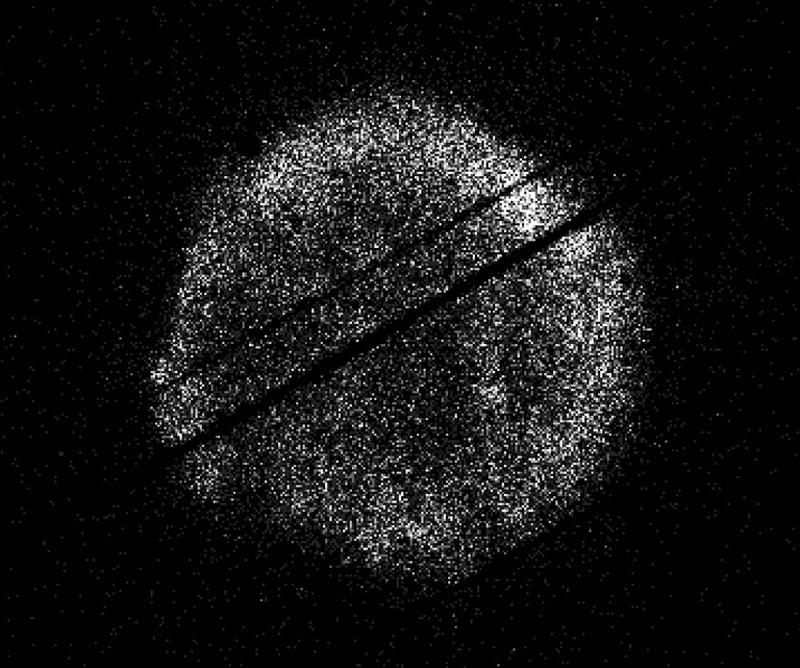
The X-ray telescope at NASA’s Swift Observatory captured this image of the Tycho supernova remnant on August 26, 2026. The bright spots are X-ray photons, and the streaks are image defects. Image source: NASA
The LINK space tug was launched by Northrop Grumman’s Pegasus rocket in July, but problems with the attitude control system occurred after launch. NASA announced on August 19 that it had canceled Swift’s capture and orbital ascent. LINK will now continue its mission as an experimental vehicle, testing rendezvous and operations near another satellite. There is no point in continuing to mothball the observatory – its days are numbered anyway, and they would be better spent in the interests of science.
If you find an error, select it with your mouse and press CTRL+ENTER.