

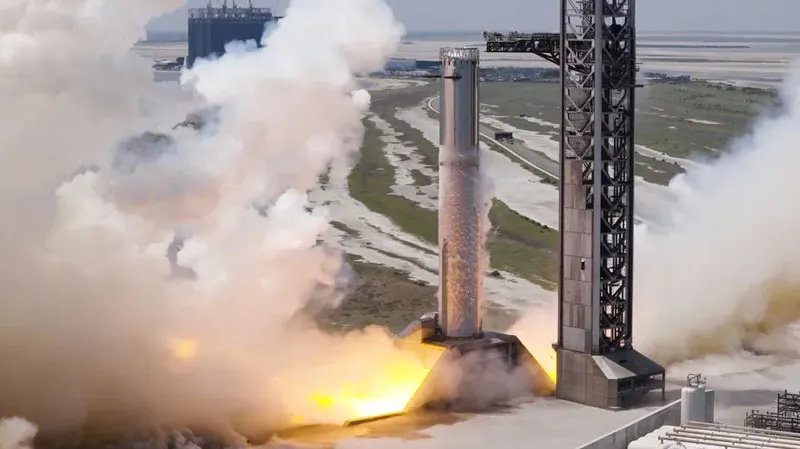
August 28 SpaceX spend The first comprehensive static ignition test of the super-heavy V3 first-stage engine is aimed at the 14th test flight of the Starship missile system. The test was conducted in maximum configuration, with all 33 Raptor V3 engines firing simultaneously – just like a real launch. Judging from the lack of problems, the actual flight will not be delayed.
Image source: SpaceX
During a static fire test, the rocket is securely attached to the launch pad so engine thrust does not accompany takeoff, and engineers are able to test the operation of the propulsion system, fuel supply system, controls and telemetry at full load.
The Super Heavy booster is the first stage of Starship and uses 33 Raptor engines, fueled by liquid methane and liquid oxygen. Their combined thrust is necessary to accelerate the giant two-stage system weighing thousands of tons. The upper stage of the spacecraft is equipped with six Raptor 3s, three of which are atmospheric pressure level and three are vacuum level. Its engines had already passed individual tests a week ago, so the current launch of all 33 super-heavy engines actually completed the critical stage of fire tests before assembly and the new launch of the complex – the 14th consecutive test. Furthermore, this will be the third launch of the complex in the V3 configuration, or indeed in the subsequent commercial operational version of Starship.
The upcoming flight is critical to the plan: SpaceX intends to launch a payload in the form of a Starlink V3 internet satellite into orbit for the first time. In the previous 13th Starship test, the complex had launched 20 Starlink V3 satellites into space, but they were sent into a suborbital orbit and burned up in the atmosphere after 20 minutes. Unfortunately, the most spectacular part of the plan will not happen: Elon Musk had previously promised to capture a spacecraft with a launch tower for the first time after entering the atmosphere, but later abandoned the idea and delayed it for several months.
However, the timing of the 14th test is still unknown. In addition to the launch site and rocket being ready, regulators have not yet granted permission for the launch, which has yet to be granted. Elon Musk’s plan is to test it by the end of August. With two days left until the end of the month, it looks like September will most likely be the month of new beginnings. Tomorrow, August 30, NASA will launch the great new Roman Telescope into space. All attention will be on this event, while Starship will wait a little longer behind the scenes.
If you find an error, select it with your mouse and press CTRL+ENTER.