

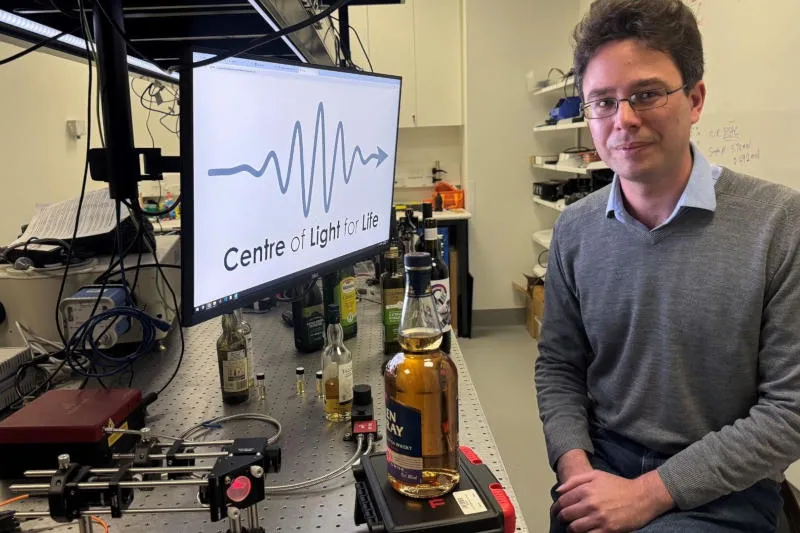
Scientists from the University of St. Andrews (Scotland) and the University of Adelaide (Australia) developed laser detectorallowing you to detect fake wine without opening the bottle.
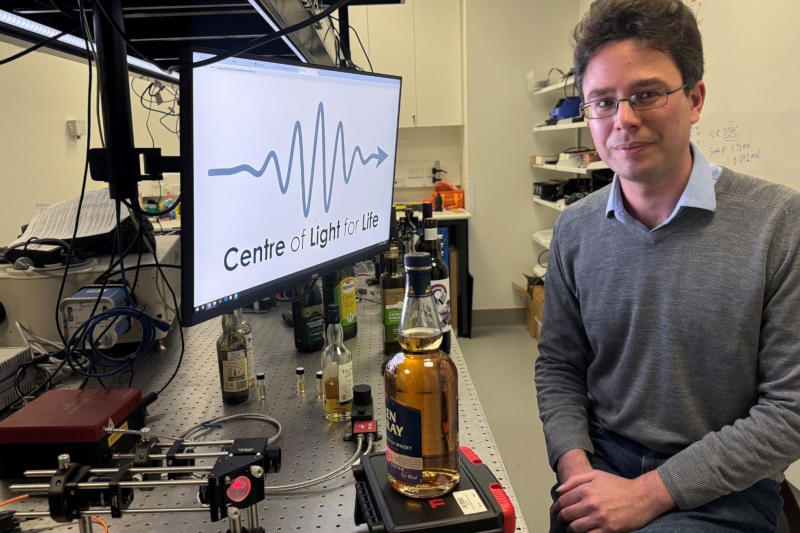
Image source: adelaide.edu.au
The project’s authors say the system is based on Raman spectroscopy – which allows you to read the “unique chemical fingerprint of a liquid”. To determine whether harmful components, including methanol, are present, a laser beam is fired at a liquid and how the light scatters, hits the surface and excites the liquid molecules is analyzed. These characteristic patterns make it possible to determine its chemical composition.
By carefully tuning the laser beam and changing its wavelength, the scientists were able to filter out the interference caused by the bottle. In other words, this analysis method does not require opening the container, which is a big breakthrough. Researchers found that the concentration of methanol in whiskey was ten times lower than internationally accepted safety standards. As well as being highly reliable, this technology is cheaper and faster than traditional laboratory testing, so it could become a real weapon in the fight against fake wines around the world.
In the future, this solution could be used not only to study alcoholic beverages, but also to identify fake perfumes, pesticide-contaminated olive oil, and improve quality control in agriculture as a whole. It targets large organizations, including customs authorities, alcohol producers and distributors, and authorities responsible for food and drug control.
If you find an error, select it with your mouse and press CTRL+ENTER.