

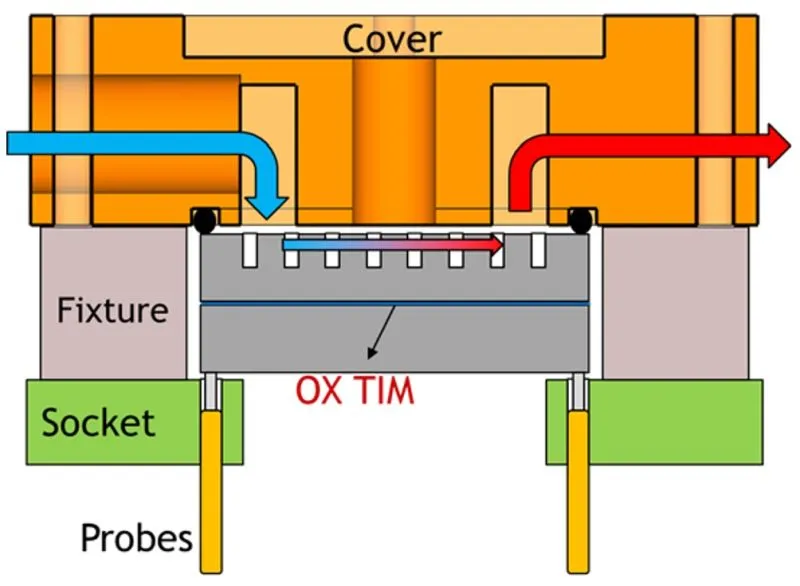
As we have pointed out more than once, further increases in the performance of semiconductor components will be accompanied by a significant increase in heat generation, and wafer designers themselves will need to consider effective cooling methods. TSMC representatives explained that further development of the industry cannot be imagined without liquid cooling, which must be built into the wafer itself.
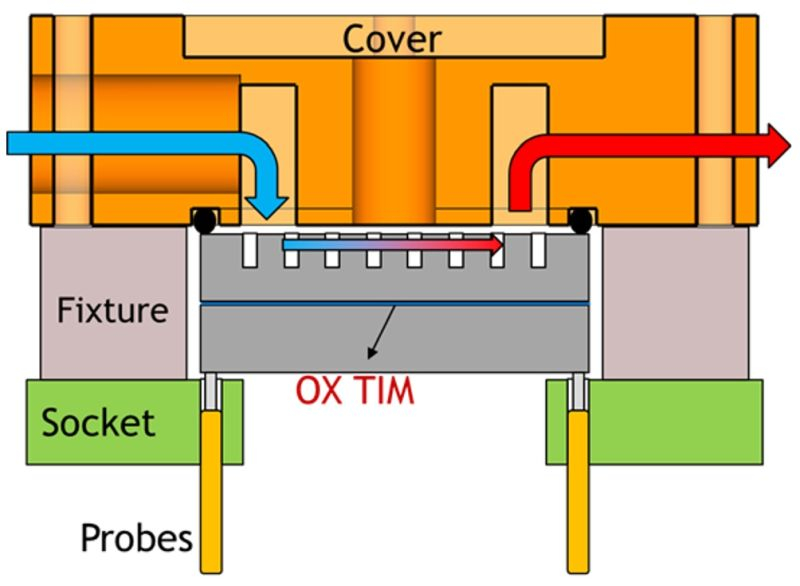
Image source: TSMC
According to reports, James Chen, director of advanced packaging engineering at TSMC, spoke at Semicon Taiwan 2026 TrendForce References were made to Taiwanese media publications. He cited a forecast in which the power consumed by computing systems will increase nearly sixfold over the next five years. The total area of wafers included in CoWoS packages will grow from 2024 to 2029, reaching 14 times the reticle size of lithography equipment. In other words, it is no longer possible to produce such wafers from a single wafer using conventional production methods.
By 2029, the number of transistors in a multi-chip chip will increase 48 times. The throughput of each packaged HBM memory will be increased by more than 34 times, the number of data transmission channels will be more than doubled, and the speed of information exchange on it will be increased by six times. The power consumed by a die in such a package will increase from 600 watts to 4100 watts, and the energy loss will increase by more than five times. TSMC representatives said that given the increasing complexity of chip layouts, only integrating liquid cooling can cope with the growing heat dissipation issues.
The company has long recommended incorporating microchannel systems into chip packages to use coolant to dissipate heat more efficiently. In the heat exchange chain, the number of links needs to be reduced, since each link has its own thermal resistance. Figuratively speaking, the coolant should be closer to the inside of the wafer. TSMC says there are still enough hurdles to actually implement the idea at volume production scale, but it’s inevitable that the industry will adopt similar solutions.
The company also calls for optimizing material composition and wafer layout to lower the thermal resistance of components. In this sense, this direction offers the potential for reductions of up to 40%. Potentially hot components during the wafer design stage need to be placed in a way that they can be more easily cooled later. Attention to this should be maintained throughout the entire cycle of product preparation for production. Companies that make liquid cooling systems will also be involved in finding solutions and potentially making a lot of money from it.
If you find an error, select it with your mouse and press CTRL+ENTER.