


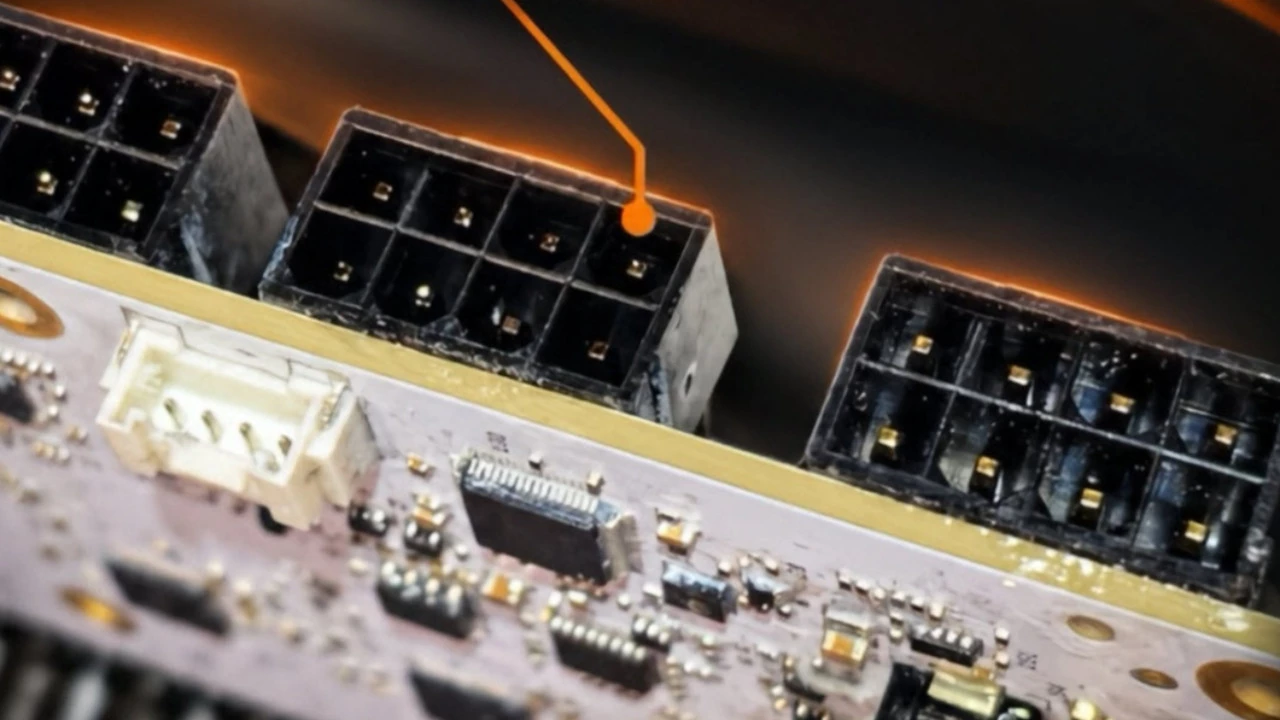

The infamous 16-pin power connector melting problem continues to plague users of high-end graphics cards. Even the transition to the newer 12V-2×6 standard and vendor-specific cables can’t prevent expensive adapters from getting burned out. Tired of the constant concerns about hardware security, overclockers from the renowned TecLab team took matters into their own hands and created the world’s first GeForce RTX 5090 using the classic 8-pin connector.

In the experiment, the modder took a GALAX HOF OC LAB board originally equipped with a pair of 16-pin ports, completely desoldered it and installed three standard 8-pin connectors. In order for the graphics card to correctly determine the available power limit, engineers turned off the Sense 0 and Sense 1 signal lines – a modification that was accomplished only through physical intervention and did not require changes to the BIOS.
The results of the stress test clearly prove that it is too early to cancel the old format. Under heavy load, the flagship consumes up to 900 W when the GPU is overclocked to an impressive 3400 MHz. At the same time, the cable generates almost no heat – under long-term loads with currents exceeding 120 A, the cable temperature barely exceeds 35 degrees. Experiments have shown that the card is able to operate reliably even through two or one connector without the need for severe heating of the wires, debunking the myth that the fickle 12V-2×6 is irreplaceable. By the way, the temperature under a single 8-pin load is only 46 degrees.