


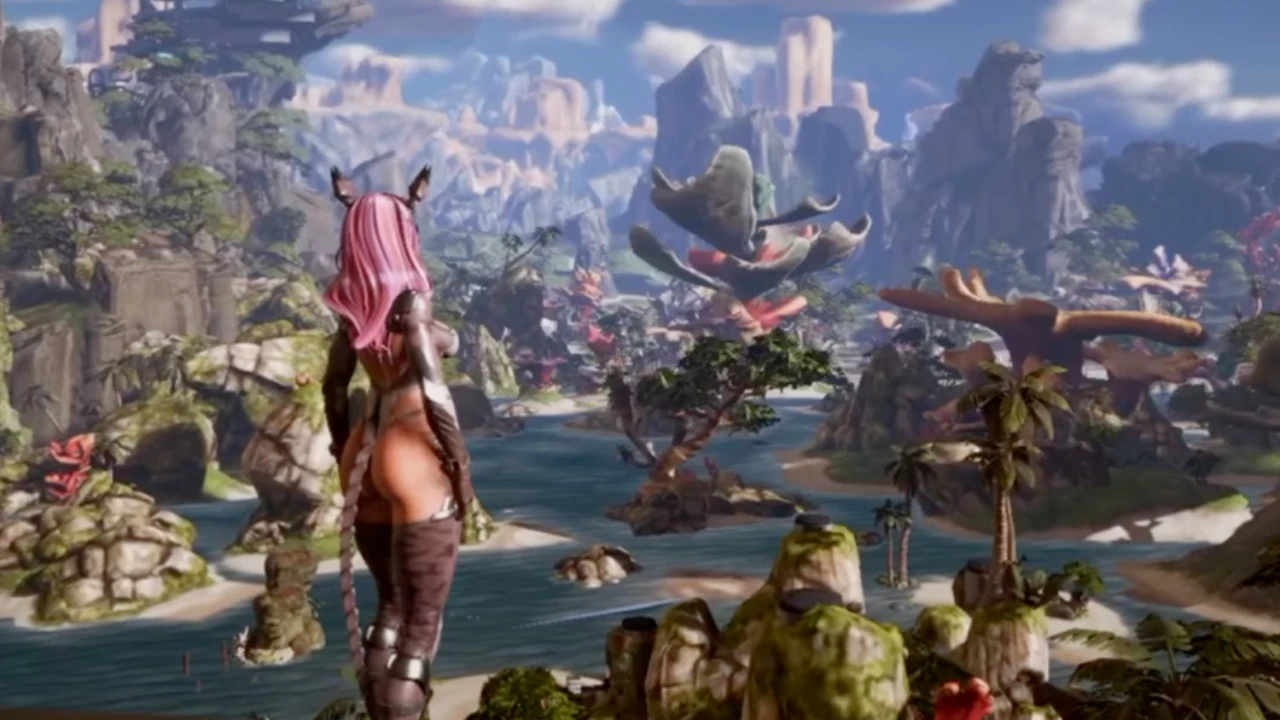

Mark Kern, the former producer of classic World of Warcraft, has announced a technological breakthrough in the development of his long-term project Em-8ER, the spiritual successor to shooter Firefall. The team abandoned Unreal Engine entirely in favor of its own Kunzhi Engine, which was written in just six months using Vibe coding with support from Razer and AMD partners.
According to Kern, using a range of generative neural networks (from Claude and Grok to Codex and Astra) can speed up production by 93 times compared to the traditional Unreal pipeline. The engine was created from scratch using C and Elixir under the Vulkan API, and was instantly customized to the specifics of the project, including large online maps for 100 players, battles with mechas, and battles with giant monsters. The developers emphasize that contrary to misconceptions, vibe coding does not boil down to banal requests to chatbots – in order for the architecture to not break down, authors still need to deeply understand the material structure and rigorously guide the artificial intelligence.
However, the community views these loud pronouncements with a certain skepticism. No one has done any real independent benchmarking of the new engine, and the 93x speedup simply reflects the subjective speed at which developers write their own code, rather than any performance or graphics superiority to Epic Games’ creations. By the way, this is a demonstration of what the engine is capable of.
In what’s shown, we see 2005 graphics, constantly glitchy shadows, soapy textures and low-poly environments, and an abysmal implementation of TAA anti-aliasing.