

| type | adventure, action |
| Publisher | Capcom |
| Developer | Capcom |
| Minimum requirements | Processor Intel Core i5-8500 4.1 GHz / AMD Ryzen 3 3100 3.6 GHz, 16 GB RAM, DirectX 12 support and graphics card with 6/8 GB memory, such as NVIDIA GeForce GTX 1660 / AMD Radeon RX 5500 XT 50 unit |
| Recommended requirements | Processor Intel Core i5-10400 4.3 GHz / AMD Ryzen 5 3600 3.6 GHz, 16 GB RAM, graphics card with DirectX 12 support and 8 GB memory, such as NVIDIA GeForce RTX 2060 Super / AMD Radeon RX 6600 |
| Release date | September 4, 2026 |
| localization | text and sound |
| platform | PC, Xbox Series X|S, PlayStation 5, Nintendo Switch 2 |
Played on PS5
Onimusha died as soon as they took off (you can read more about this in my article) recent review), it seems that the samurai’s adventure of absorbing the soul of the devil ends here. However, Capcom has set a course for reviving its venerable franchise – 20 years after the last installment, the company decided to give Onimusha another chance. Not much remains of the original idea, everything else has been redone in a modern way. Yes, the series’ old issues are fixed. At the expense of new ones.
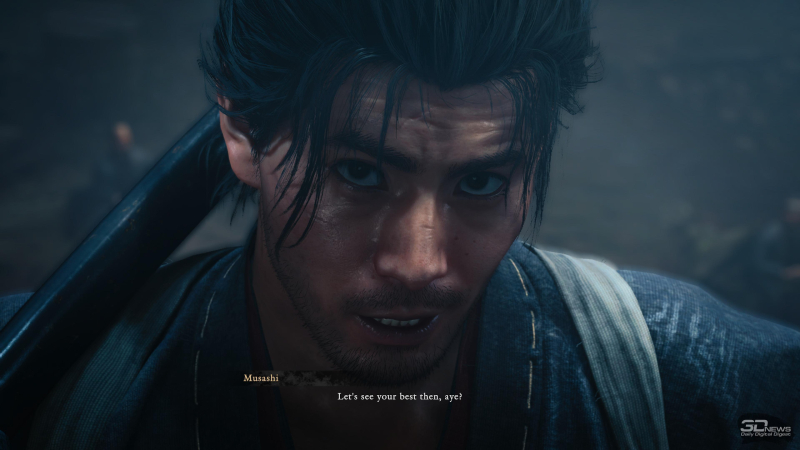
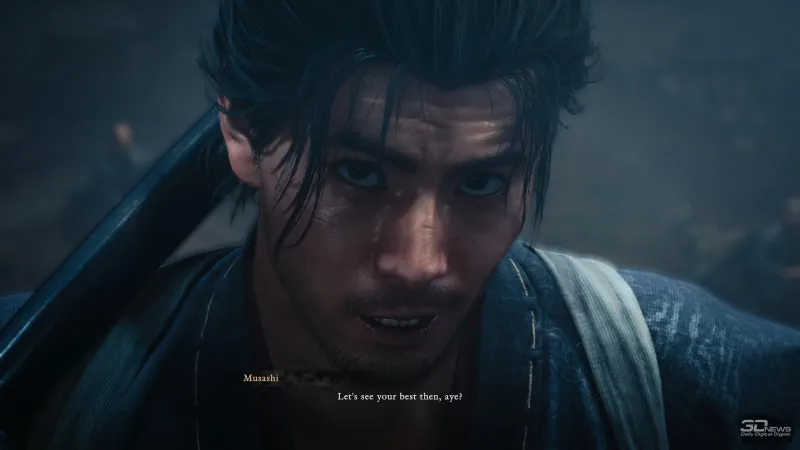
This time Capcom decided not to refer to historical figures, but to choose Miyamoto Musashi as the protagonist.
By the way, the actor gave him good looks Toshiro Mifune (1920-1997). Interestingly, Toshiro played Musashi in “The Samurai Trilogy” (1954-1956) directed by Hiroshi Inagaki.
⇡#We move forward, we move back
The developers have finally managed to address two of the biggest problems that have plagued the series throughout its short lifespan: the story and the combat system. Unexpectedly, “The Way of the Sword” has a pretty strong storyline, a decent number of characters, and even an unexpected twist. The characters interact well with each other and the main character, Miyamoto Musashi, is the best protagonist of them all. He handles both comedic and dramatic scenes well – overall, he’s very lively, especially compared to Sanosuke Oak in Parts 1 and 3 or Jubei in Part 2. This is not only due to the script, but also to the excellent facial animation, as well as the excellent performances from the voice actors.
The dastardly, thoroughly fucked-up antagonists are just as solid, too—unlike Nobunaga, the primary villain in the original trilogy, these bad guys are always in sight and constantly committing all kinds of bloody obscenities. Crazy especially successful Minamoto and Yoshitsune – By the time the fight comes, not only will Musashi want a sword between his ribs, but most likely the player himself will want a sword between his ribs too. It’s nice to see they’re taking the storytelling more seriously this time around and not deciding to put it somewhere in the third row like they did before.
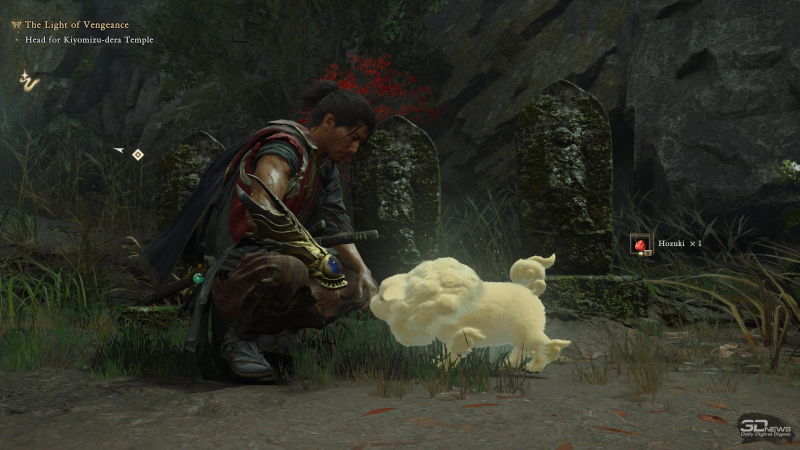
The game has passed one of the most important tests – here you can hug dogs
But where Kendo really shines is its combat system. Capcom has managed to find a near-perfect balance between cinematic spectacle and the player’s need to react quickly to situations. The popular “battle” nowadays is based on knocking down the enemy’s physical strength level to deliver a critical blow, and of course, blocking, but it is not as strict as some “Sekiro” or “P’s Lies”. A traditional ability in the series, if you attack a normal enemy at the last moment before he is attacked, you will instantly destroy him.
On the surface, this all sounds pretty corny, but as with Pragmata, another recent release from the company, the operation needs to be tested in practice. Because when you get into the flow state and fight off everything that comes your way, furious samurai action, beautiful choreography and dismemberment unfold on your screen. Especially when it comes to the main bosses – combat can become a mess once you get used to their attack patterns, however, even short-term lapses in concentration can have a painful impact on the hero’s health.
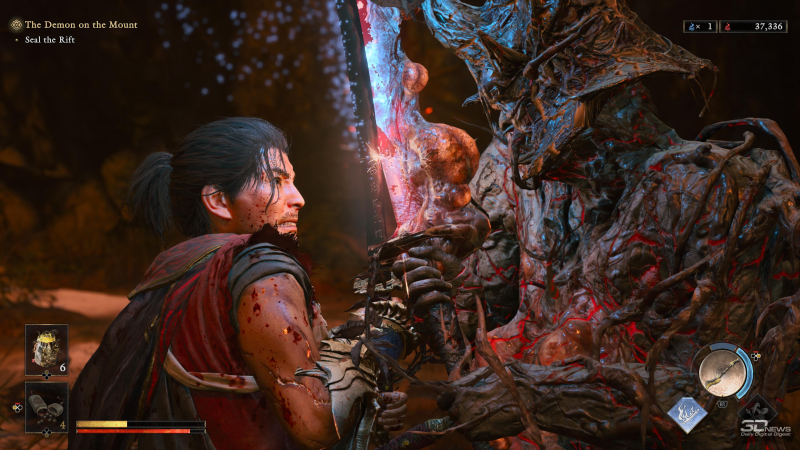
When you need to “suppress” an enemy, the camera will perform a close-up
Although, in my opinion, the combat system has lost an important tactical component – in previous installments it was impossible to attack/defend and drain the souls of defeated enemies at the same time. It is necessary to choose the right moment for both, and sometimes it is not easy. In the new version, all objects flying around the arena can be easily “vacuumed” even when performing combos (you’ll be upgrading for this soon) – it may seem like a small thing, but a layer for decision-making is gone.
However, while it’s exciting to hack everything at hand, even the perfect “battle” can be stifled by monotony. Way of the Sword can’t be called difficult – common enemies quickly cease to be at least some kind of threat (even with the new twists), interesting, unique plot opponents aren’t encountered very often, and there are only… two mini-bosses. We must kill them again. Over and over again, and again, and again, even if you decide not to do additional missions, you’ll encounter sulley monsters and winged demons. In addition, no matter how powerful your weapon is, these two characteristics will appear with a longer and longer health bar, so you can’t solve it quickly even if you want to.
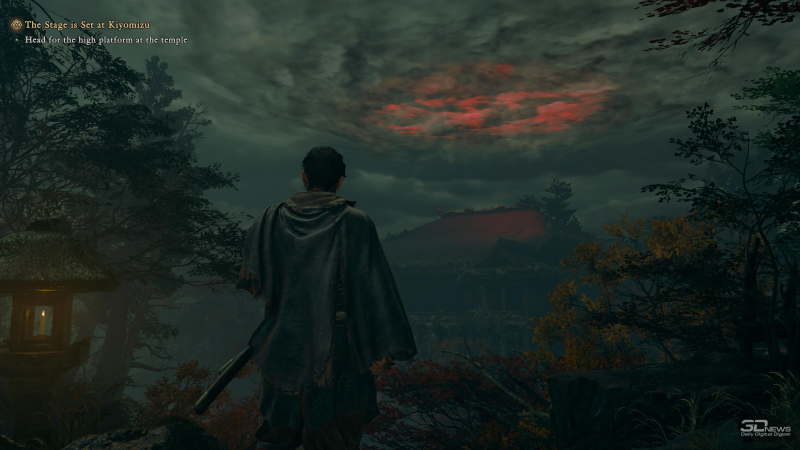
Dark clouds herald the arrival of the devil
It’s unclear why opponents need to be used so frequently. Over time, fighting against ordinary “cannon fodder” starts to become boring, just like Onimusha 2 and Onimusha 3. This might have been avoidable if Kendo had been shorter, but big-budget games now seem afraid to do that. Parts of the project are reminiscent of previous versions in that it takes place in linear plot locations, and everything works well in terms of pacing and staging. The other part is Kyoto, a large open hub that we return to often in different situations. The “modern game industry” is here: random events, constantly respawning enemies, “kill/find locations from photos” quests from unknown NPCs, clearing icons on the map, closing rifts where demons appear, and gradually opening up new areas by destroying strange plants. If you want to avoid the repetitive tedium of the last two points, Capcom has done a clever trick with its ears – and added them to the mandatory story missions.
Running around the city doing useless nonsense, I couldn’t help but think that I wasn’t playing Onimusha but some sort of Ronin from Nioh: Rise of the Assassins – a project that simply copied all the modern ideas without really reflecting on whether they were appropriate. Does an action game really need dozens of side missions like this? Is it really necessary to have a large location whose sole purpose is to be a venue for finding multiple “collectors”? Yeah, yeah, I know this is all unnecessary, but why not make the map three times smaller and in return add at least a few extra mini-bosses and increase the density of events? The game’s strength lies in the action more than anything else.
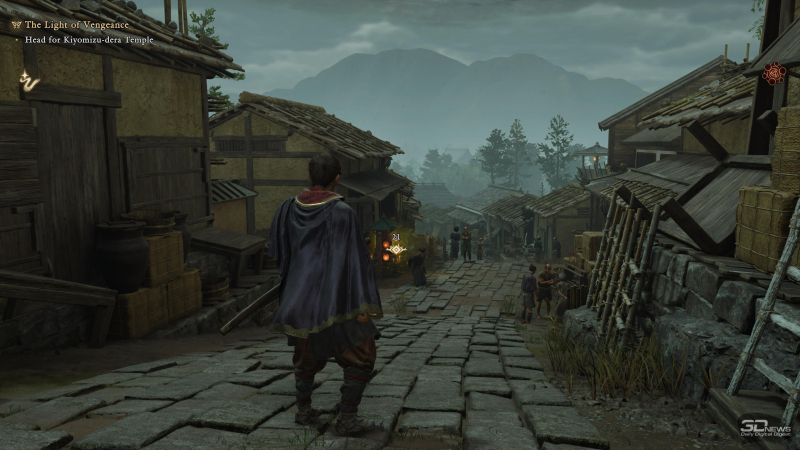
Kyoto neighborhoods start to come alive as areas are cleared
In terms of world structure, Kendo follows the exact same rake as other games, arguing that quantity is more important than quality, and that an extended runtime of 20 hours is better than a concentrated 5 hours. The duration slows down the pacing because of how long it takes you to turn off glitches, and interferes with “combat,” since hacking away at dummies is fun for a few hours, but the further you go, the more in the way they get and become less fun.
However, “Onimusha” finally got rid of the “Resident Evil and Samurai” label of the entire PS2 era. However, change that to “We have everything here that everyone has to offer.” Japan is on trend right now, so a lot of different samurai action games have been released over the past decade – and Way of the Sword, while offering cool combat and a fairly interesting plot, doesn’t really stand out too much in other aspects. The situation is not that bad, but it seems that “Onimusha” has not found himself yet. Path of the Sword already has a solid foundation – we’ll see what Capcom decides to build upon it in the future.
advantage:
- Thank you for not liking soul (not sarcastically!);
- From a purely mechanical perspective, the combat system works well – the perfect balance of entertaining and demanding reactions;
- Crazy opponents.
defect:
- A large map with a standard set of activities to extend the duration interferes with gameplay;
- The trouble of closing faults and opening territories has been added to the mandatory missions;
- For a runtime like this, the game clearly lacks a variety of opponents.
|
graphics |
Kendo generally looks great, especially in its temples and animations, but a few locations feel too faceless. |
|
sound |
If a Japanese game has Japanese dubbing then I’d pick it – it’s traditionally good. Musically, the series has never particularly stood out – and issue five is no exception. |
|
single player game |
Fighting unique bosses turns out to be fun, and taking down common enemies is exciting at first. However, over time it starts to get boring, especially when you encounter the same mini-boss for the 100,500th time. However, the desire to kick your opponent’s butt helps moving forward. |
|
Estimated completion time |
If you ignore all side jobs, it takes 12-14 hours; if you decide to help all NPCs, it takes about 20 hours. It may take longer to collect all items. |
|
group games |
Not provided. |
|
overall impression |
Kendo is perhaps the best entry in the series since its initial release. There are some common issues with modern projects – like obscure side content and lengthy run times – that get in the way, but other than that, Onimusha’s return is a success. |
Rating: 8.0/10
More information about the rating system
video:
If you find an error, select it with your mouse and press CTRL+ENTER.