


The U.S. Department of Justice is investigating to determine whether the structure License Agreement NVIDIA’s $20 billion Groq deal was crafted to avoid antitrust probe, according to newspaper reports new york times Refer to people familiar with the matter.
Last year, Groq CEO Jonathan Ross and company president Sunny Madra joined NVIDIA as part of what Groq described as a “non-exclusive licensing agreement with NVIDIA for inference technology.”
NVIDIA spokesman John Rizzo said “Groq’s story is a prime example of how the American system works exactly as it was designed: It spurs innovation, rewards entrepreneurs, and benefits consumers.” He added: “This legislation is designed to support America’s entrepreneurial ecosystem and protect the fundamental rights of inventors and employees to pursue their aspirations.”
Formally, Groq remains an independent company. It was this combination of circumstances that became the subject of investigation. Although NVIDIA gained not only technology but also two key Groq executives, the deal did not face regulatory scrutiny for potentially harming competition in the market. The U.S. Department of Justice began investigating the Groq deal shortly after it was announced in December and issued a formal inquiry to NVIDIA, one of the people said. Federal Trade Commission (FTC) Chairman Andrew Ferguson told Bloomberg in January that the agency had launched an investigation into whether such transactions were intentionally designed to avoid regulatory oversight.
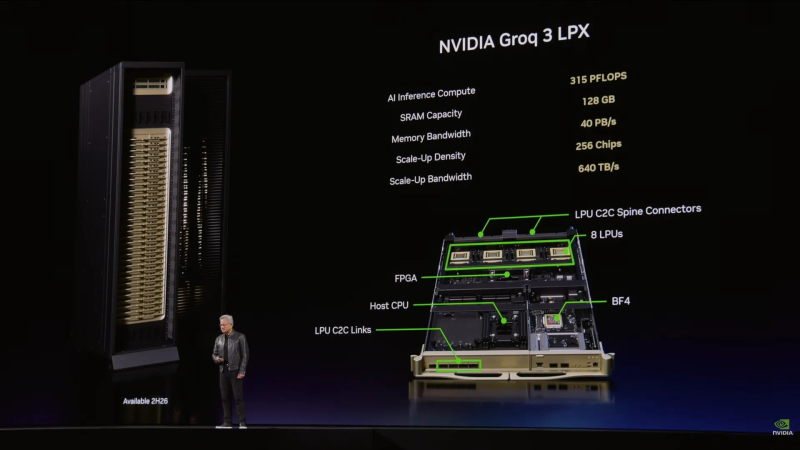
Image source: NVIDIA
The U.S. Department of Justice may seek civil penalties if it determines that NVIDIA’s deal deserves antitrust approval. Meanwhile, sources said no final decision has been made and the Justice Department may not ultimately find any violations. However, according to BloombergThe Justice Department is studying the chipmaker’s possible violations of antitrust laws starting in 2024. Regulatory questions about the agreement between NVIDIA and Groq reportedly arose earlier this year as part of this larger investigation.
The deals have also drawn the attention of senators, who have called on the Federal Trade Commission and the U.S. Department of Justice to investigate a number of such deals, including NVIDIA’s partnership with Groq. “In essence, these transactions represent de facto mergers that allow companies to pool human, information and financial resources while clearly attempting to circumvent controls typically applicable to mergers and acquisitions,” The senators stated in a letter to the Federal Trade Commission and the U.S. Department of Justice. Although NVIDIA did not officially acquire Groq, the result actually amounted to an acquisition.
The New York Times pointed out that the Department of Justice’s attention to these issues comes at a time when NVIDIA, a company with a market capitalization of US$5.4 trillion, has become the de facto “central bank” of Silicon Valley, using its huge financial resources to support artificial intelligence startups and financial customers. The main question facing the DOJ is whether the deal harms competition; given current market conditions, it may be difficult to prove the existence of such harm, it wrote register. But even if the Justice Department finds a cause of action and cancels the deal, it would be difficult to fundamentally change anything, the source noted.
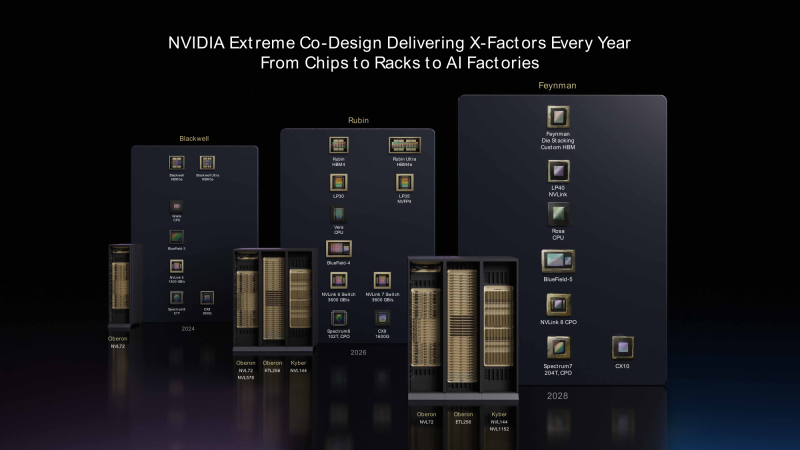
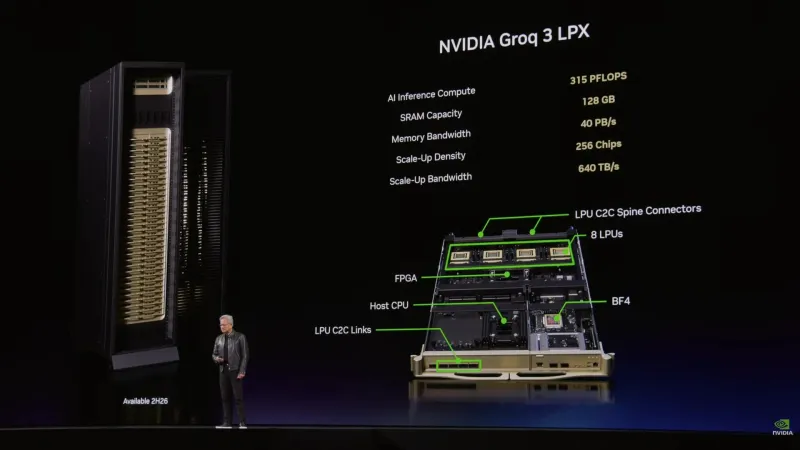
The Groq deal provides NVIDIA with two key assets: an off-the-shelf hardware solution (chips) and the expertise needed for further development. Groq is known for creating accelerators with streaming architecture and large amounts of SRAM memory, which accelerates large language model (LLM) inference to levels that NVIDIA GPU-based systems alone cannot achieve. In March, NVIDIA launched the rack LPXequipped with 256 LPU Groq 3 accelerators. Head of NVIDIA promisedLinking Groq with Vera Rubin Will provide the best performance for a full range of inference tasks.
The Register points out that decomposition is not a unique feature of Groq. Cerebras created a similar system Work with AWS and AMD; Sambanova cooperate Working with Intel; with d-Matrix and its partners unity Its platform features an NVIDIA GPU and pursues the same goals as the Vera Rubin NVL72 and Groq 3 LPX combination. Even before announcing the Groq deal, the company had laid the foundation for an ecosystem centered around its networking unit. She handed over her project MGX bracket в Open Computing Project (OCP), thus allowing Any chip manufacturer can place its product in a rack designed specifically for NVIDIA GPUs. Then, as part of the program, NVIDIA opened up access to its interconnect NVLink Fusion.
Now, if the U.S. Department of Justice blocks the deal (aimed at acquiring the company for its experts) and cancels its agreement with Groq, NVIDIA could lose direct control over LPU development and its sales revenue, but that wouldn’t necessarily mean the end of the Groq LPX rack. Groq will join a growing list of NVIDIA hardware partners creating solutions for the company’s AI factories. Furthermore, the deal itself ensures that even if regulators ultimately block it, there will be plenty of alternatives to choose from.
source: