

Seasonal changes certainly affect the position of Earth’s center of mass, as water and air masses move, the Earth’s crust deforms, and ice and snow cover redistributes. Until the end of the 20th century, few people worried about this, but with the advent of satellite navigation, fluctuations in the Earth’s center of mass began to introduce errors into GPS signals, reducing the accuracy of determining altitude and coordinates. NASA decides to fight it achieved success.
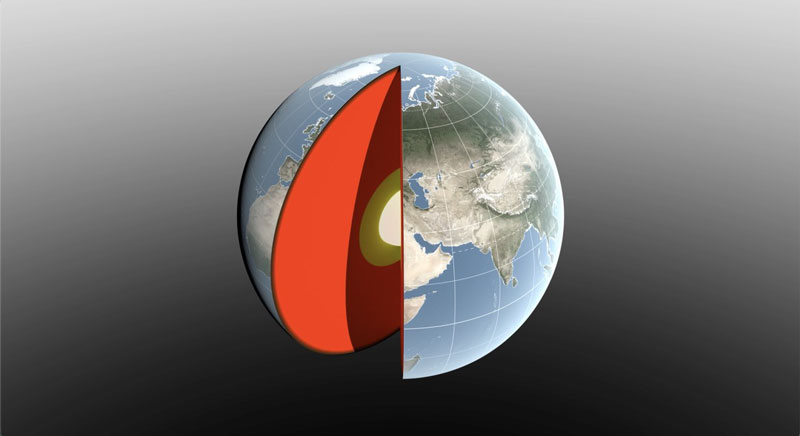
Image source: NASA
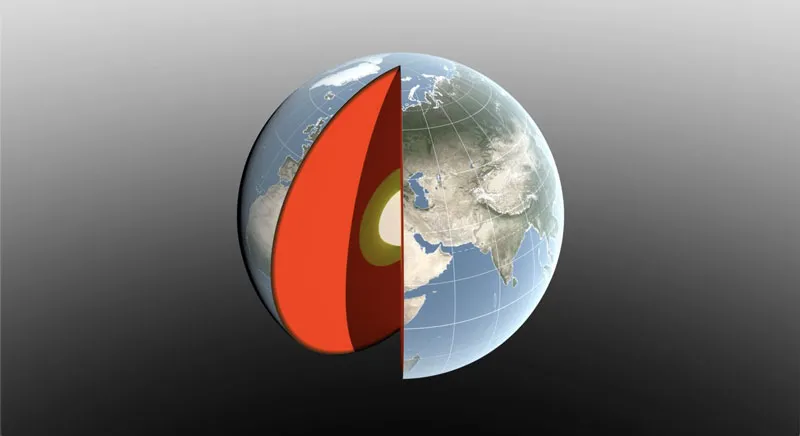
In particular, NASA scientists have developed a new method of determining the position of the Earth’s center of mass, making it possible to track its seasonal displacement with an accuracy of a few millimeters. The center of mass, or Earth’s center, does not overlap with the planet’s geometric center: the motion of the massive water, ice and atmosphere causes it to move a few millimeters in different directions. This isn’t just important for geophysics – the position of the Earth’s center is used as a reference point for satellite navigation, cartography and altitude measurements. Previous international estimates for 2017 and 2023 differed by 7mm, which was comparable to the measured effect itself.
The method, developed by geophysicist Donald Argus and colleagues at NASA’s Jet Propulsion Laboratory, is based on ultra-precise satellite tracking. Because satellites move around the Earth’s center of mass under the influence of gravity, the smallest changes in their orbits can determine where the Earth’s center has moved. Unlike traditional laser observations from the LAGEOS satellite, this new technology combines GPS observations with orbital data from multiple low-Earth orbiting vehicles. In addition, the researchers took into account the deformation of the crust under the influence of seasonally changing water and ice loads, which compensates for errors related to ground station displacements.
Calculations show that annual fluctuations in the center of the Earth are about half what was thought eight years ago. Major contributors are oceans, atmosphere, and continental waters, including snow, glaciers, lakes, rivers, soil, and groundwater. For example, the maximum snow accumulation in North America and Eurasia in March moves the center of mass toward the North Pole by about 3 millimeters. In April, rain quality in the Amazon reached approximately 2400 Gt, which moved the Earth’s center toward South America by approximately 2.2 mm. In autumn, large amounts of meltwater and precipitation increase the mass of the ocean, with the Pacific Ocean contributing particularly significantly.
The results are consistent with independent measurements from the GRACE-FO space mission, launched in 2018. The mission’s two satellites fly in formation and continuously measure changes in the distance between them: As the lead craft passes over an area of increased mass, such as a water-filled river basin, the increased gravity slightly changes its distance from the second satellite. Over the course of a month, such measurements made it possible to map the redistribution of mass on the Earth’s surface. NASA plans to continue this nearly 25-year observation record with the next GRACE-C mission, scheduled to be launched in late 2028.
If you find an error, select it with your mouse and press CTRL+ENTER.