


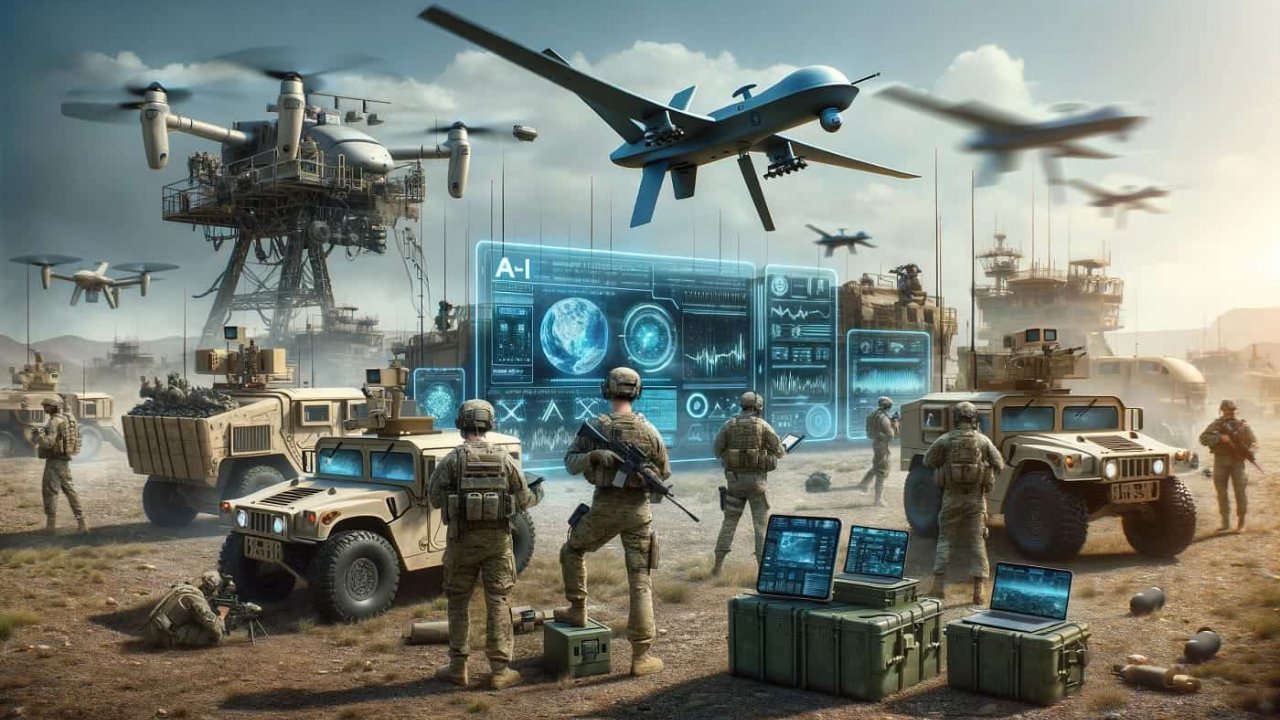
For days, artificial intelligence seems to be causing more and more fear. Some think it will somehow “kill us all” while others think it will Simple, exaggerated and unrealistic scenarios to the terminator. Regardless, it’s almost undeniable that there are risks, especially if things get out of control and humans fail to ensure proper safety measures. This time, U.S. and Chinese security experts urge Washington and Beijing to Establishing red lines similar to those in the nuclear fieldwarned that in the absence of tight human control, autonomous systems could accidentally lead to military escalation.
New proposals for military use
According to a report by top U.S. and Chinese security experts, a single glitch in artificial intelligence could lead to… triggering a truly catastrophic military escalation within minutes. To be more precise, researchers at the Brookings Institution and Fudan University urged near the summit between Donald Trump and Xi Jinping Adopt safety measures equivalent to those for nuclear power. Strict controls (human controls, of course) should also be implemented on military AI. The goal is Prevent automated systems from making irreversible decisions.
The proposal was drafted by Melanie Sisson, a senior fellow at the Brookings Institution, and Jiang Tianjiao, a professor at Fudan University. Worryingly, even though autonomous systems have significantly faster reaction times than humans, Even automated responses to false positives can be disastrous or what appear to be deliberate acts of war. Errors of judgment are, as always, the focus of the entire issue, then Don’t imagine a suddenly evil artificial intelligence Who decided to wipe out the entire planet.

Anyway, the red line should Ban artificial intelligence from autonomously launching nuclear weapons Or targeting the nuclear command infrastructure of a hostile nation, a requirement that may seem banal and obvious to some, but should not be underestimated at all. In short, governments must continue to assert human authority over such important cyber operations, and then They must not rely on automated decision-making processes.
Direct flights between the United States and China
The proposal provides for the establishment of a Sino-US military hotlinestrictly dedicated to artificial intelligence related events. If a system operates uncontrollably (or suffers unauthorized damage), military officials can Clarify the situation before either party orders retaliation. At the same time, neither government has issued any statement on the matter.
AI agents can now report to each other and report risky behavior

Beijing manages AI through the Foreign Ministry’s arms control unit, while Washington delegates AI security to the Pentagon, State Department, and National Security Council. Therefore, clarification is needed on what will be received in return during formal talks. Trump, meanwhile, dismisses such concerns as unfounded and exaggerated and has no plans to slow his technological and economic momentum.