


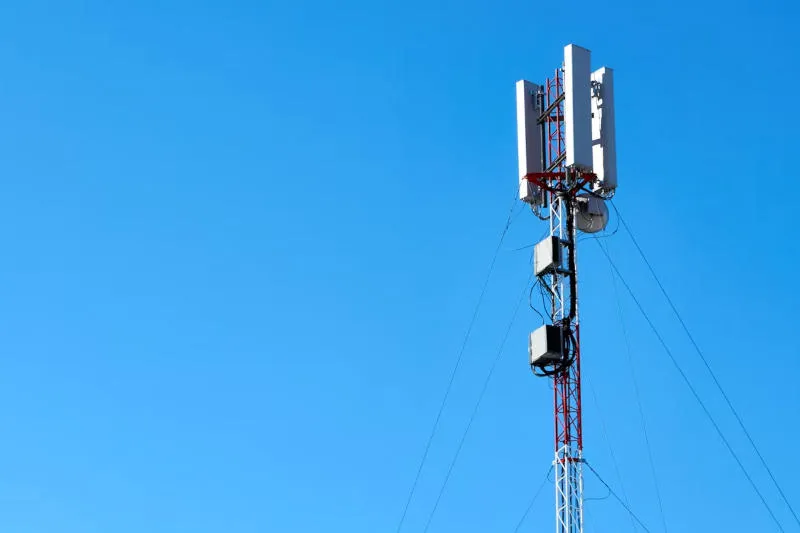
Yadro company invested 1.2 billion rubles. Develops dual-band radio modules for base stations designed to operate in fourth- and fifth-generation networks. According to reports, the manufacturer plans to achieve mass production of the device by the end of autumn 2026.Kommersant“Experts say the return on investment will depend on demand and operator order volumes.
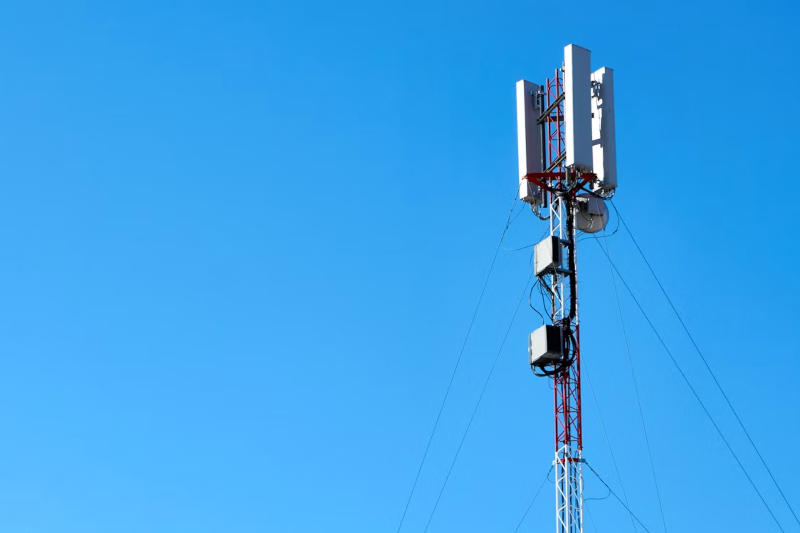
Image credit: Vyacheslav Shatskiy / unsplash.com
The dual-band radio module is designed to operate in the 2100 and 2600 MHz frequency ranges in LTE and 5G networks; volume production is planned to begin in 2026. The first mass-produced radio module developed by Yadro operates at 1800 MHz and is intended for use in LTE networks. The company will start producing base stations in December 2025 – by 2031, investments in this industry will reach 35 billion rubles. The company explains that supporting both frequency bands with one device will help reduce the number of components in the base station. Russian manufacturers do not yet have such equipment – they produce radio modules that operate only in one frequency band.
Yadro base stations are already operating in MegaFon and Beeline networks, for which the company will supply the first dual-band radio modules when series production is launched. The two operators will reach an agreement with the manufacturer in 2025: MegaFon will receive 1,500 base stations and Beeline 1,000. Beeline confirmed that operators are testing all new products from domestic base station manufacturers; T2 Mobile said that they have not received a request from Yadro to test new equipment.
Yadro plans to start production of the third radio module – which will operate in the 800 and 900 MHz frequency bands – in the first quarter of 2027. All modules are produced using domestic and foreign parts. Investment of 1.2 billion rubles. Experts interviewed by Kommersant said that the number of nodes in one base station is quite large. The company only operates in one market and the return on investment will depend on the operator’s order volume. Cities and tourist areas have higher network loads and therefore require dual-band radio modules at 2100 and 2600 MHz, said Irtey, another domestic base station manufacturer. Blatter, a third operator equipment manufacturer, added that the range indicated was indeed popular, but the classic architecture of each radio unit operating within its own range seemed more reasonable.
Experts point out that if the price of foreign base stations is 20-25,000 US dollars, then the cost of Russian base stations may reach 30-35,000 US dollars. By 2025, the market size of this equipment in Russia will reach 75 billion rubles; in 2024, operators will deliver more than 120,000 new base stations, and in 2025 there will be no more than 7,000. Operators prefer single-band modules because they are cheaper.
If you find an error, select it with your mouse and press CTRL+ENTER.