


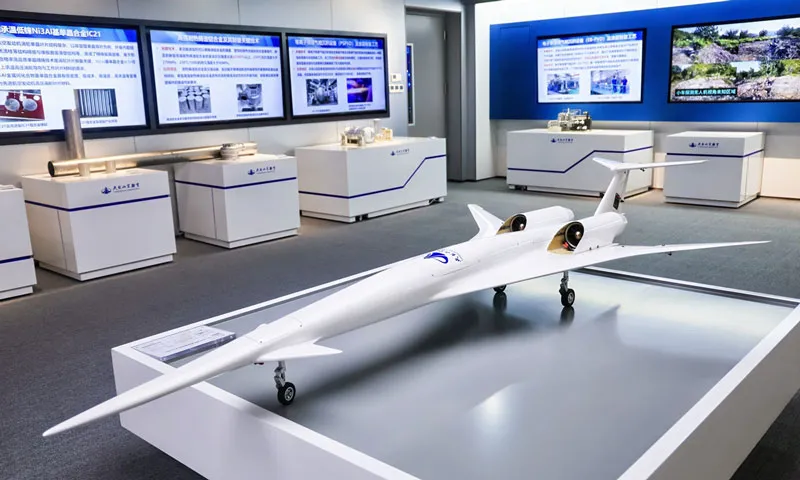
Aviation Industry Corporation of China here we go By the time of final assembly of the TMS-10 supersonic demonstrator, the aircraft should become a platform for testing future supersonic passenger transport technology. The aircraft is built as a quiet supersonic aircraft: the main tasks of the project are to reduce the intensity of the sonic boom when breaking the sound barrier and to test a new generation of aerodynamic solutions for civil aviation.
Image source: Tianmushan Laboratory
One of the main features of the TMS-10 is the optimized shape of the fuselage and wings, designed to control the distribution of shock waves. Unlike classic supersonic aircraft, which produce sharp sonic booms when flying over land, modern aerodynamic concepts aim to produce weaker, longer-lasting sonic booms.
For example, a similar project for NASA’s X-59 aircraft uses the reflection of sonic booms toward the sky instead of the ground. The Chinese concept uses the plane’s three aerodynamic planes (wings and T-tail) to control shock wave damping and attenuation. On June 30, 2025, a prototype aircraft with a length of 3 meters, a weight of 12.5 kilograms, and a wingspan of 1.5 m conducted a subsonic test at Dingzhou Airport in Hebei Province. The demonstrator accelerated to Mach 0.2 (166 km/h), proving the maneuverability and controllability of the aircraft design.
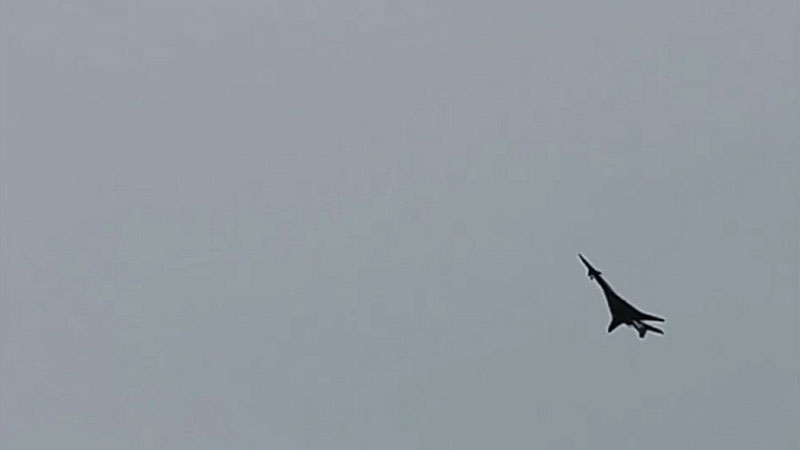
The sonic demonstrator will be tested before the end of the year, but its characteristics are still unknown. In principle, the TMS-10 project should lead to the creation of a business aircraft with a seating capacity of 10-15 passengers and a supersonic cruise speed of Mach 2. At subsonic speeds, it will be able to accelerate to Mach 0.9. Flights from Beijing to Shanghai will take 30 minutes instead of the current 2 hours.
The development of the TMS-10 reflects an overall global shift from first-generation civilian supersonic aircraft designs to more complex concepts that consider environmental, noise and efficiency constraints. In addition to aerodynamics, future supersonic airliners will also need to address issues such as reducing fuel consumption, creating compact and reliable propulsion systems, and revamping airport infrastructure.
If you find an error, select it with your mouse and press CTRL+ENTER.