


yuan company✴ Announced the launch of Petal Cable, billed as “the first 1 Pbps transoceanic system.” The total length of the transatlantic cable is approximately 7,000 kilometers Will tie knots The United States and France, commissioning is planned for 2029. The cable will employ 24 fiber pairs, but Petal’s distinguishing feature will be the use of twin-core fiber on a transoceanic scale.
This would double the maximum capacity compared to the current transatlantic system, e.g. aurora Also known as Yuan✴planned to be laid between the United States and Denmark. At the same time, the new cables will not result in a tripling of energy consumption and associated physical infrastructure. You can also compare cables to systems Yuan✴ Anjana is 24 pairs and also provides about 500 Tbit/s.
Due to this fiber structure, efforts must be made to reduce signal attenuation while maintaining the standard outer diameter of the fiber at 125 microns. Additionally, it is necessary to minimize crosstalk between cores. For this purpose, ultrapure synthetic quartz and several other technical solutions are used. Sumitomo Corporation of Japan is responsible for fiber production. Each core carries traffic in only one direction, from France to the United States or from the United States to France. C and L bands are used for data transmission.
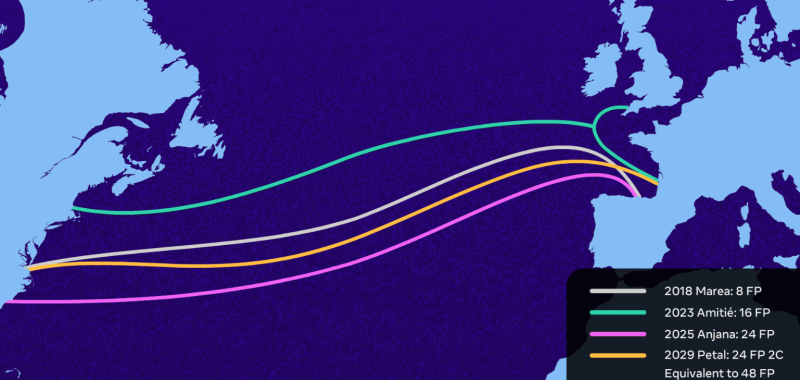
Image source: Meta✴
The company also develops advanced amplifier repeater systems. Typically, a 7,000-kilometer route requires about 100 modules. The repeaters used in Petal have 96 amplifiers. The signal of each fiber core is output and amplified separately, and then “sewn” into the optical fiber again. At the same time, the repeaters are compatible with existing 18 kV power subsystems. NEC was selected as the main contractor, while Orange was responsible for delivering the cables to the French shore.
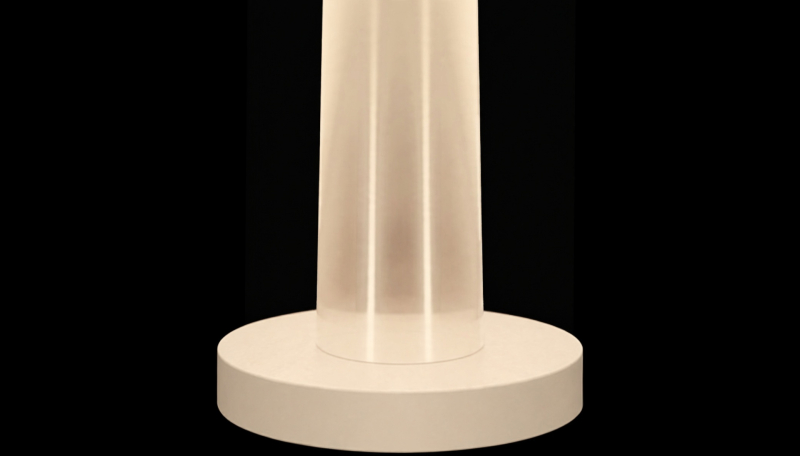
Image source: Sumitomo Electric
Yuan✴ It is claimed that 1 Pbit/s is enough for about 3/4 of the world’s population to listen to music through streaming audio services at the same time. It is also important to emphasize that the new high-throughput solution reduces material consumption and the carbon footprint associated with laying out the system compared to building two 500 Tbit/s systems.
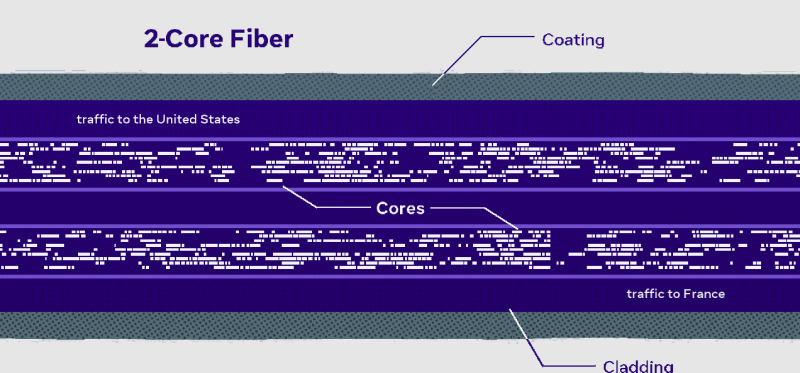
Image source: Meta✴
Yuan✴ It’s not the only one launching big projects recently. It was recently announced that EXA Infrastructure has undertaken the laying of 6,552 kilometers of submarine cables connecting New Jersey (USA) and Breen (UK). cable EXA meridian It is a system consisting of 24 fiber pairs with a total throughput of approximately 500 Tbit/s. It is expected to be put into operation in the fourth quarter of 2029.
source: