


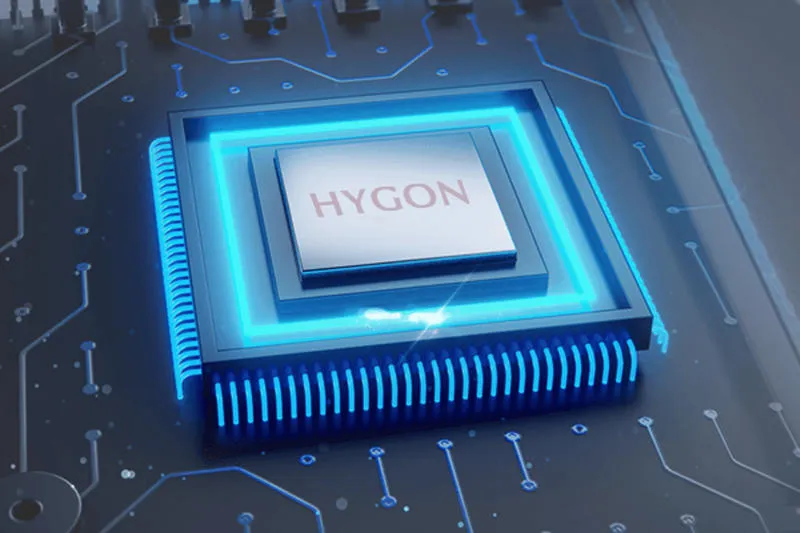
Chinese chipmaker Hygon Information Technology has launched its Hygon 1000 series of central processing units for use in robotics and industrial equipment. The company decided not to limit itself to the cloud and enter the rapidly growing “physical” artificial intelligence market.
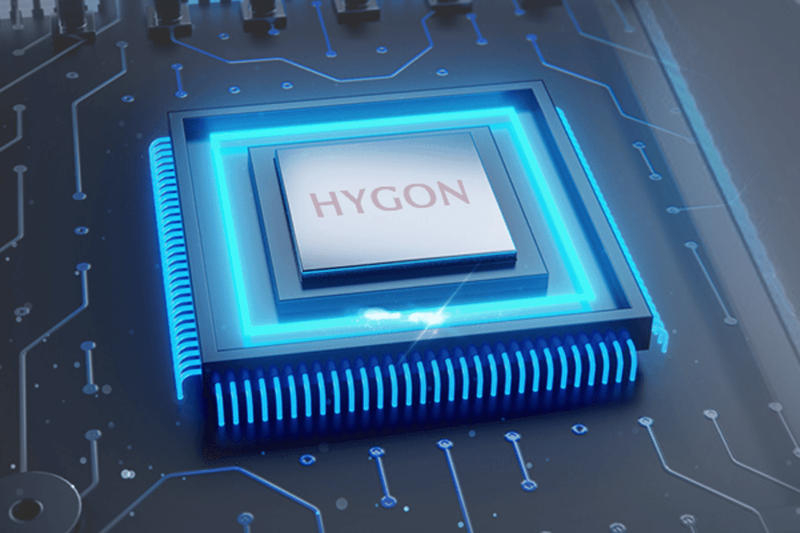
Image source: Haiguang.com
The Hygon 1000 processor is designed for use in industrial automation systems such as robots or factory controllers – it will help perform calculations and graphics processing directly on the device itself. Quad-core processors supporting eight-core processors are based on the x86-compatible Hygon C86 architecture and support DDR4 and DDR5 memory standards. The chips, which sell for between $40 and $80, are the company’s first processors with integrated graphics. The Hygon 1000 has the most compact form factor in the company’s lineup – it’s almost half the size of the 3450M laptop model introduced last year.
“We are seeing a clear shift in computing power from the cloud to edge computing and on-device computing. Artificial intelligence will not only play a role in data centers, but increasingly in the physical world – from factories and power plants to rail transportation and medical equipment.”Haiguang CEO Chang Sha Chaoqun said in a speech in Shenzhen.
Data center processors prioritize raw performance, while robotics and edge chips must meet stringent requirements for real-time processing, low power consumption and security in unpredictable environments. Hygon 1000 chips are designed to meet the needs of integrating artificial intelligence technology into industrial robots and smart manufacturing. The company’s product portfolio already includes accelerators for workloads in the artificial intelligence space.
Hygon is one of China’s leading developers of x86-compatible processors. It produces 7000 series chips for data centers, 5000 series chips for mid-range enterprise cloud solutions, and the 3000 series – which is targeted at the budget market. The company began developing its own line of x86 chips with direct involvement from AMD. In 2016, the American manufacturer signed an x86 technology licensing agreement with a Chinese partner, leading to the launch of the Hygon Dhyana processor in 2018. They were based on the first-generation AMD Zen architecture, which largely replicated the design of AMD’s EPYC server processors at the time.
At the same time, Dhyana is not an exact copy of AMD processors: the architecture has been adapted for the Chinese market, specifically adding support for the national cryptographic algorithm. After companies related to the project were blacklisted in the United States in 2019, AMD stopped transferring new technologies to the joint venture. Therefore, Hygon’s further development has embarked on the path of independently developing x86-compatible processors.
If you find an error, select it with your mouse and press CTRL+ENTER.