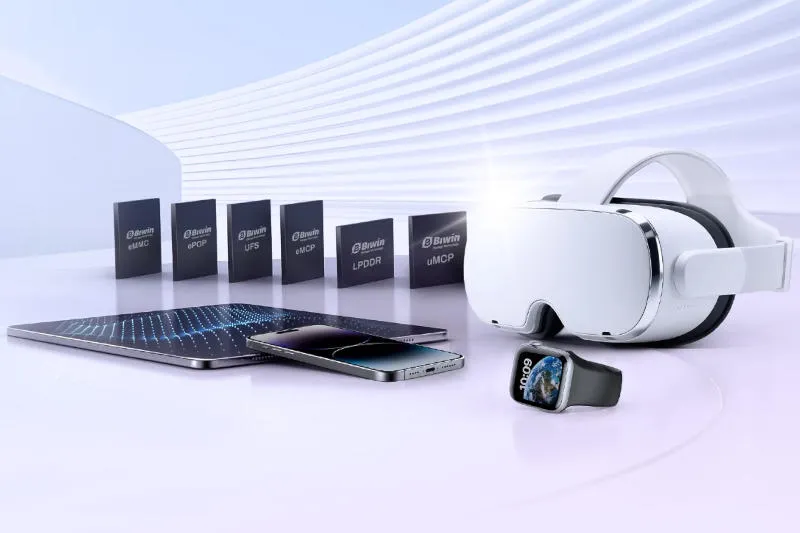
For a long time, Chinese hard drive manufacturers were limited to assembling SSDs from off-the-shelf chips and modules. But in recent years, they have begun packaging memory chips themselves and are now mastering more sophisticated microcircuit packaging and testing techniques. Baiwei Storage Technology has invested 4.5 billion yuan ($672 million) in a project to introduce advanced chip packaging technology.
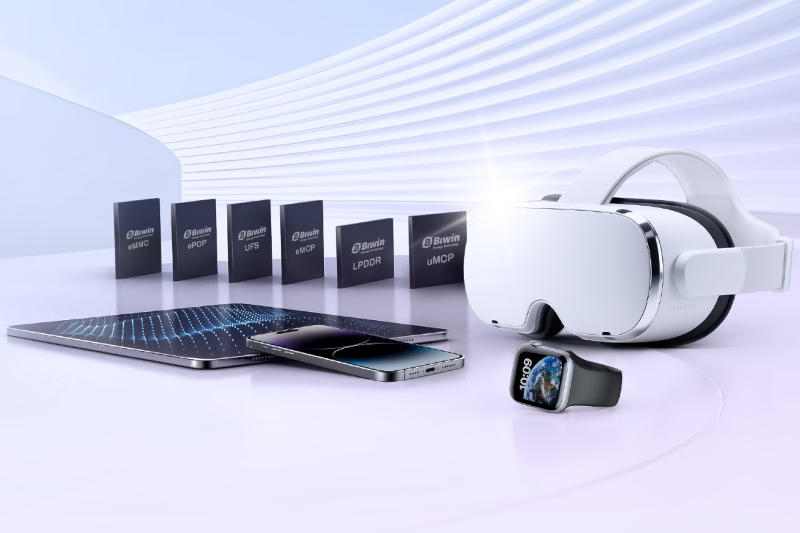
Image source: biwintechnology.com
Baiwei will use the funds to implement the third phase of the plan to develop advanced chip testing and packaging technology in Dongguan City, Guangdong Province in southern China – the first two phases cost a total of 3.09 billion yuan ($461 million). Although the project has not generated revenue through mass production, it is currently in the stage of providing samples, testing processes and small batch production to customers. But by the end of 2027, the plant’s monthly production capacity will more than triple to 10,000 pieces.
Baiwei already has a manufacturing base in Huizhou, Guangdong Province, where it uses traditional technologies to package and test memory and produce drives and other solutions based on this memory. At the same time, the company is working to improve its packaging solutions, including deploying fan-out technology for multi-layer storage dies and developing small die layouts of up to ten cells in a single package, which will allow the combination of storage and logic. Together with our customers, we are developing solutions that integrate optical components directly into the wafer body.
Other Chinese manufacturers are also working to solidify their positions. Shenzhen Desheng Semiconductor has brought wafer-on-wafer and packaged wafer testing processes in-house, but has not yet started packaging itself. Shenzhen Longsys Electronics said that the company has a monthly production capacity of more than 1 million micro SSDs. It uses SiP (system-in-package) technology to install controllers, flash memory, power management chips and other components in a chassis, which helps save space for hard drives in artificial intelligence PCs.
Analysts point out that Chinese memory module suppliers no longer want to be limited to a simple business model based on buying chips, assembling and selling products. Memory module makers have traditionally been at a disadvantage compared to silicon wafer suppliers and finished product assemblers, but their value is increasingly determined by: “Assess product performance, supply chain management and understand customer needs”. Chip packaging is no longer just a manufacturing step, but is becoming a factor that directly affects product performance, integration and reliability – important as AI hardware requires increased memory capacity and bandwidth, reduced power consumption and smaller size.
The global advanced chip packaging services market will reach US$46.1 billion by the end of 2024, and this number will reach US$79.4 billion in 2030; the main growth drivers are expected to be artificial intelligence and high-performance computing.
If you find an error, select it with your mouse and press CTRL+ENTER.