


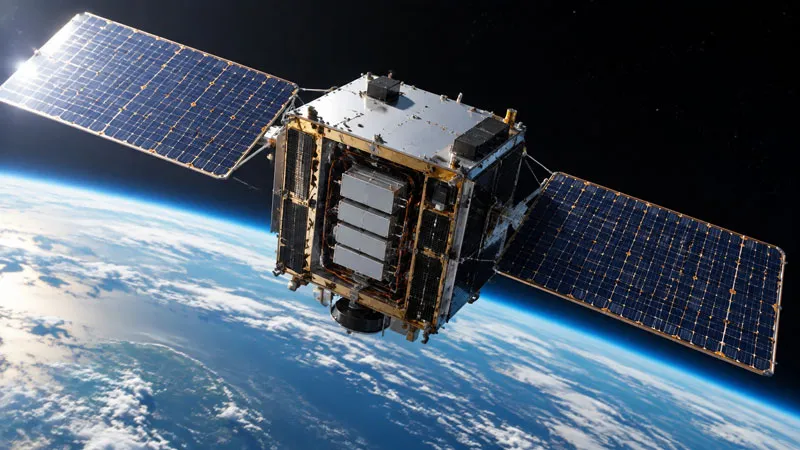
Google chef The first orbital experiment in the Suncatcher project will be designed to test the feasibility of placing artificial intelligence computing infrastructure in space. The company will evaluate how the TPU booster handles startup loads, radiation and temperature changes, and will also test the performance of the cooling system in a vacuum. For server equipment, this will be testing under conditions that cannot be fully reproduced on Earth.
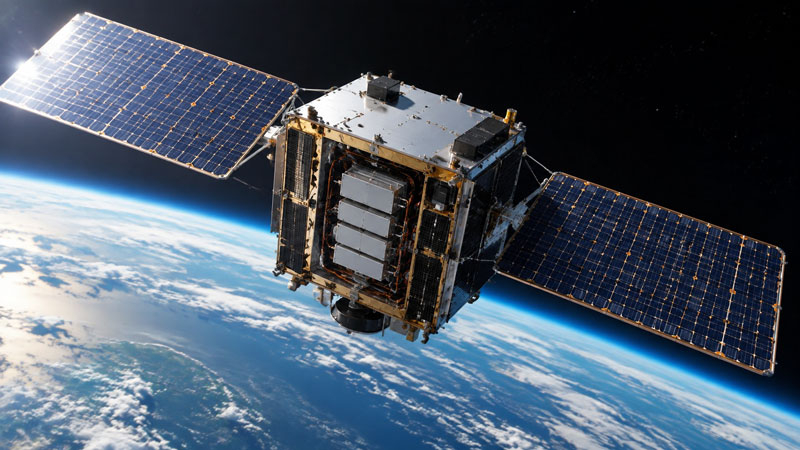
Image source: AI Generation ChatGPT/3DNews
The launch is scheduled for October 1 as part of the SpaceX Transporter-18 mission. A Falcon 9 rocket takes off from Vandenberg Space Force Base in California. Developed in conjunction with Planet, the satellite will serve as a test bed for four Google TPU (tensor processing unit) accelerators, which the company uses in its data centers to perform machine learning tasks and run artificial intelligence models.
The main goal of this mission is not to achieve high performance, but to test the operation of on-orbit computing equipment. By terrestrial data center standards, four TPUs are a modest set of accelerators. The satellite’s solar panels will be able to generate about 1 kilowatt of electricity. This is sufficient for short-term computing tasks, including executing Gemini models for testing.
Continuous operation of the accelerator was not provided during this experiment, not least due to limited power supplies. There is no air in space to conduct heat away from the device, so cooling becomes a major engineering challenge. TPUs can perform calculations for about 15 minutes at a time, after which they must be shut down to cool down.
Google developed a special system to remove heat. Through the thermal interface, heat from the TPU will flow to the aluminum and copper components and then to the heat sink panel, which radiates it into the surrounding space. The operation of the system has been tested in a thermal vacuum chamber, but orbital experiments will show how well it works under real-world conditions.
The second serious problem is radiation. Charged particles can cause errors in electronic devices, including changing bit values in memory from zero to one or vice versa. During ground testing, Google exposed its TPU accelerators to proton beams and reported that they experienced a higher-than-expected total radiation dose during their five years in orbit. Now the company must monitor the chip’s operation directly from space.
Google views the upcoming launch as a first step in creating orbital computing infrastructure, rather than a test of an existing space data center. The company had previously planned to start testing its equipment in orbit in 2027, but has now decided to conduct additional experiments. Plans for 2027 remain: Google plans to test two satellites and laser communications between them.
If you find an error, select it with your mouse and press CTRL+ENTER.