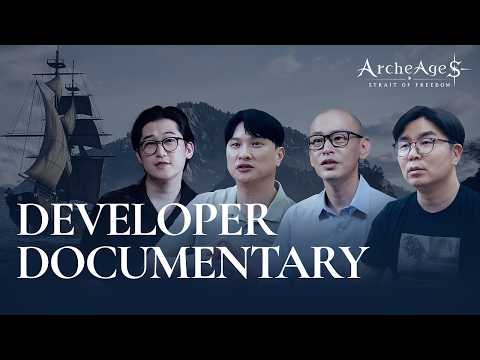


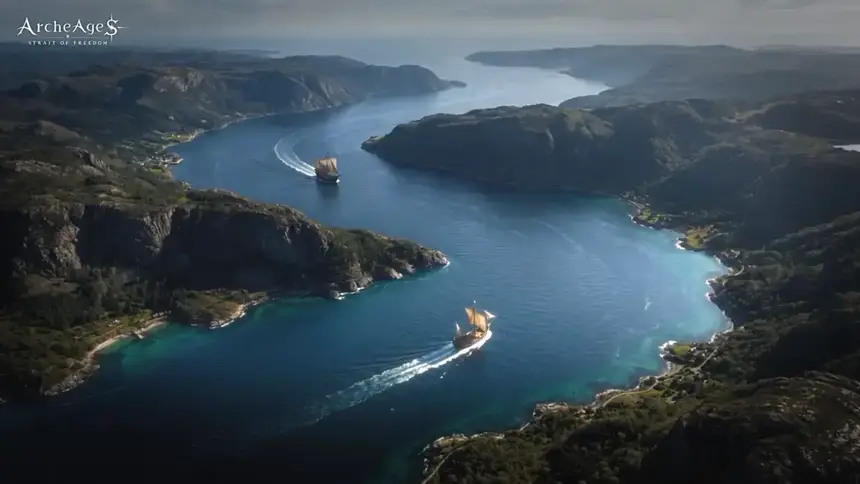
The developers of the MMORPG ArcheAge S: Free Straits have released the first video, in which they talk about the key principles of game design and explain what problems they intend to solve for the original ArcheAge. It mainly emphasizes the relationship between character development, combat system, economy, competition between players and large-scale battles.
Executive producer Kim Kyung-tae, who led the development of the original ArcheAge from concept to release, noted that the game’s main feature has always been the interaction between players. However, it is the desire for real-life gaming worlds that raises many systemic issues.
In particular, the limited number of plots led to competition for territory and created barriers for newcomers. The economy faces a glut of production resources and a lack of demand, and the ability to freely trade equipment through auctions encourages players to repeat the most profitable activities. Coupled with monetization, this also leads to the issue of pay-to-win.
In ArcheAge S, the developers intend to connect all major game systems into a single sequence, with character development gradually leading to conflicts between players and large-scale PvP.
Character development and equipment
Players will be able to independently shape their own fighting style, combining weapons and armor regardless of class. Each weapon offers four combat skills, and the armor also has its own skills. As your character develops, the available equipment and skill sets will expand.
The developers have also modified the equipment acquisition system. In the original antiquity, crafting was the primary way to develop equipment, and free trade allowed you to focus on the most efficient sources of in-game currency.
The new game offers several directions for progression: open world hunting, dungeons, resource gathering and production. Some materials require directly completing the corresponding content to obtain them.
Combat system with isometric camera
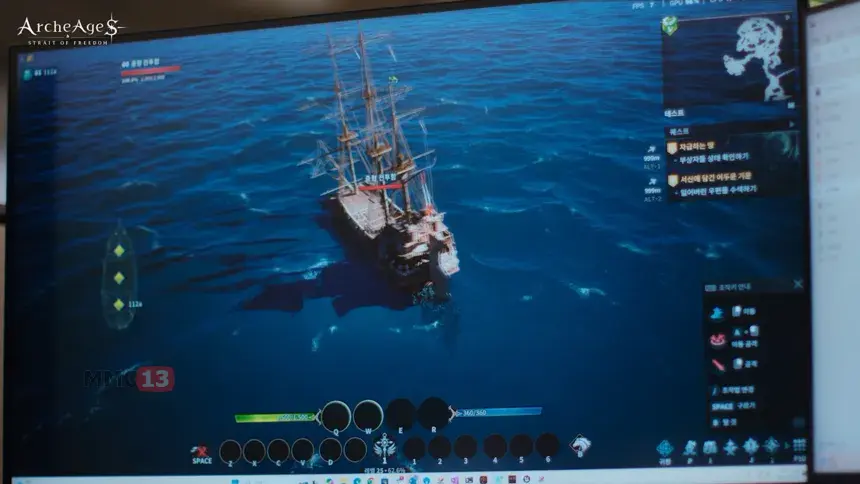
In ArcheAge S, the developers decided to abandon the complex control of a large number of skills in favor of a more familiar QWER scheme, controlled by mouse or moved on WASD. According to their thinking, this should reduce combat fatigue while leaving room for tactical decision-making.
The isometric camera was chosen to allow players to assess situations in both small encounters and large-scale battles. When developing the combat system, special attention was paid to the responsiveness of controls: skills are triggered immediately after pressing the button, and aiming in the aiming direction is precise.
There are also some interesting solutions. For example, player buffs and debuffs are displayed directly on the character. According to the developers, this allows you to quickly determine your opponent’s status directly based on what’s happening on the screen, without having to constantly check the effects bar.
Personal housing and resource economy
One of the most significant changes is the elimination of competition for plots of land. Each player receives a personal home associated with their account and can equip it at their own discretion.
There is also a small area for a vegetable garden, which became one of the key elements of the original game. However, production will be limited to maintain its scarcity and value.
Players will be able to focus on producing resources on their own land and enter the open world to find lost materials. The resources gained will be used to create and improve equipment as well as trade. But not all valuable materials can be sold at auction and require direct participation in game activities.
Developers say that differences in game preferences will affect the flow of resources between players and gradually lead to conflicts of interest.
Confrontation between players within the server and between servers
ArcheAge S offers multiple types of PvP, covering different activities and player counts. At the server level, players will be able to participate in small conflicts between groups and guilds (for example, cargo pack battles), while large-scale battles will take place in a server-versus-server format. Moreover, cross-server PvP opponents will change periodically.
In addition, the team is considering the possibility of global PvP battles in a single sea area, where players from servers in different regions will be able to participate. Now we’re talking about plans, not confirmed features at launch.
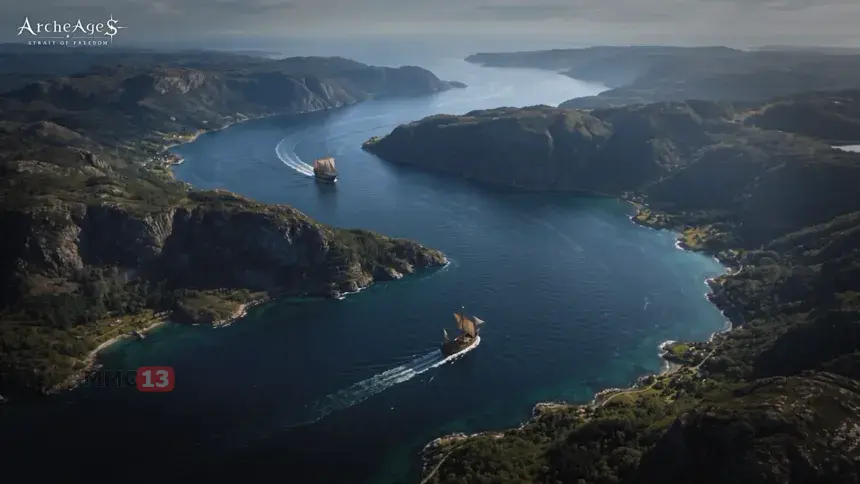
The developers describe the intended progression of the conflict as follows: Players start with trade shipping and resource extraction, then seek to expand production, acquire their own base and join a guild. The next phase was territorial wars and fortress sieges and, in the longer term, the struggle for control of sea lanes.
Therefore, naval warfare should become an extension of economic and territorial competition rather than a stand-alone activity.
monetization system
Currently, the development team suggests that the game’s monetization will be based on subscriptions, battle passes, apparel, and “other cosmetic items.” Several costumes are shown as examples.
musical accompaniment
At the end of the film, the main composer Yin Shang talked about the creation of naval battle music. He believed that the works should simultaneously convey the sense of freedom and romance of sea travel, as well as the constant tension created by the possibility of sudden collision.
In addition, he said that the developers have worked the most on the ocean content, constantly discussing and finalizing various elements.
In the next issue of Q&A, the team promises to discuss the implementation of the presented ideas in more detail.