


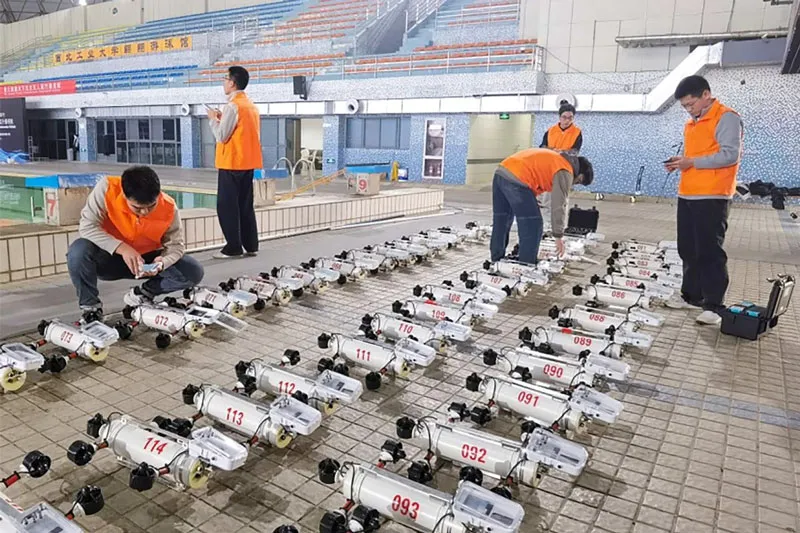
Chinese engineer Installed A world record for the number of autonomous underwater vehicles operating simultaneously in a swarm. A team from Northwestern Polytechnical University cooperated with Xi’an Tianhe Maritime Technology Company to submerge 116 half-meter drones into the water. The test took place on August 29 in a 50 × 20 m pool and under the supervision of Guinness World Records representatives, where the record was officially registered.
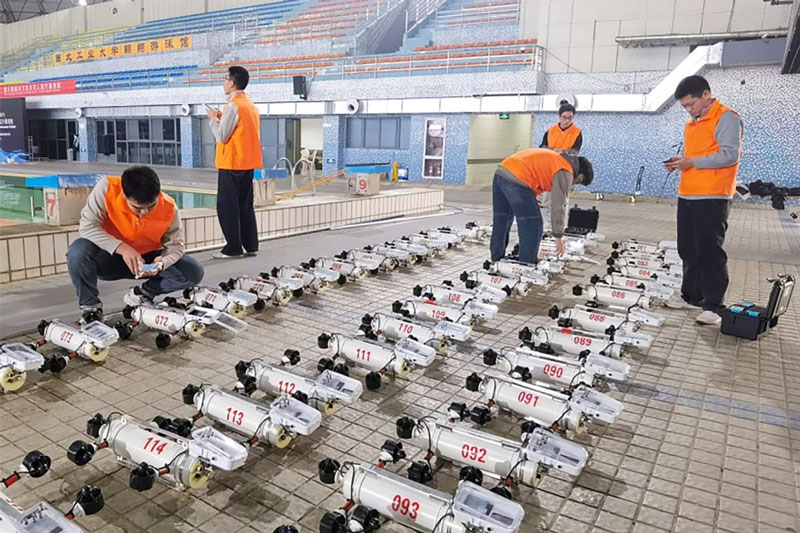
Image source: Northwestern Polytechnical University
The main feature of this test is its autonomy: the devices are launched into the water sequentially, after which they maneuver and navigate independently without human intervention. In 34 minutes, the swarm covered a total of 500 m along a predetermined route and using instant data. This teamwork requires each unit to not only determine its own position, but also to adjust its actions based on changes in the situation and the positions of other team members.
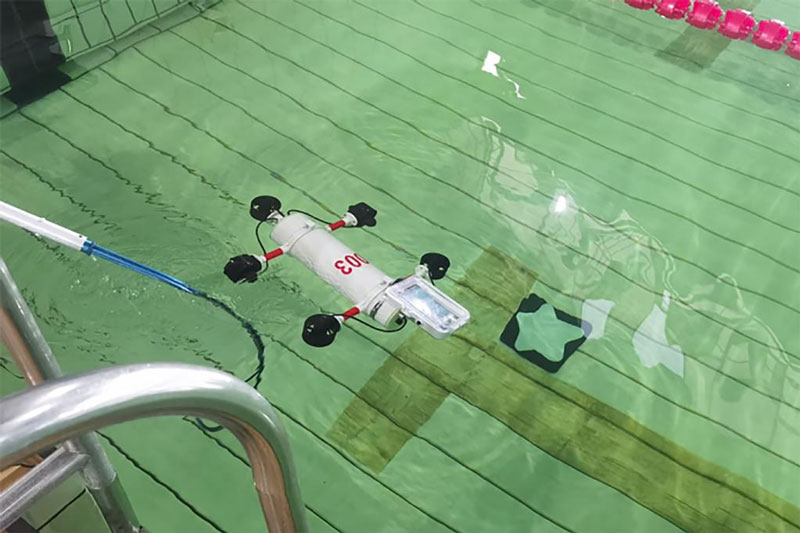
The TH-618 underwater drone is a relatively small underwater drone, 61.5 cm long, 20 cm wide and weighing 5.14 kg. According to the university, the device is capable of moving up to 30 kilometers from the launch point and has a battery life of more than eight hours. For navigation, a platform with computer vision cameras is used, which allows the device to monitor its surroundings and adjust a given route when exposed to external forces (waves, currents, etc.).
Extending the swarm behavior of underwater drones is a much more complex task than controlling multiple underwater robots simultaneously: there is no satellite navigation typical of land-based and airborne drones underwater, and radio communications are severely limited. As a result, swarms of hundreds of underwater autonomous drones must coordinate their movements based on local and immediate data, maintaining a stable formation without directly controlling each device.
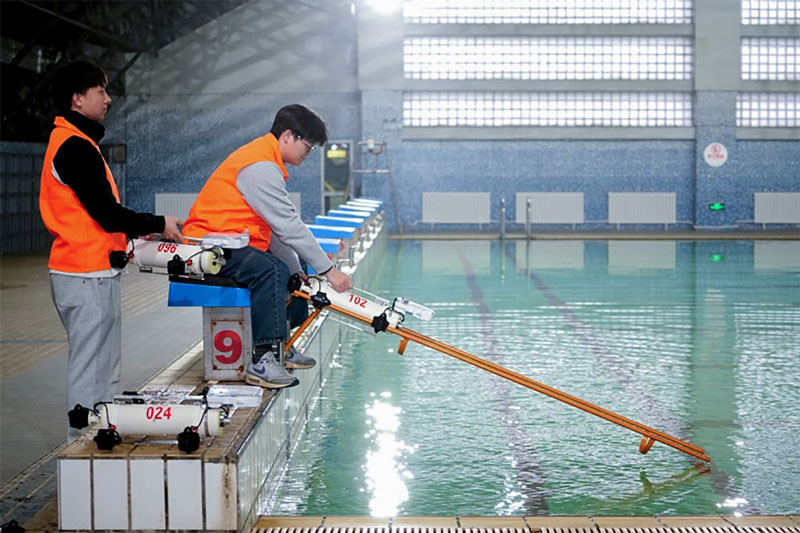
The Chinese team called the test a step toward large-scale coordinated autonomous underwater systems that could potentially be used for water monitoring, object search, mapping and other tasks that require large numbers of small vehicles operating simultaneously.
If you find an error, select it with your mouse and press CTRL+ENTER.