

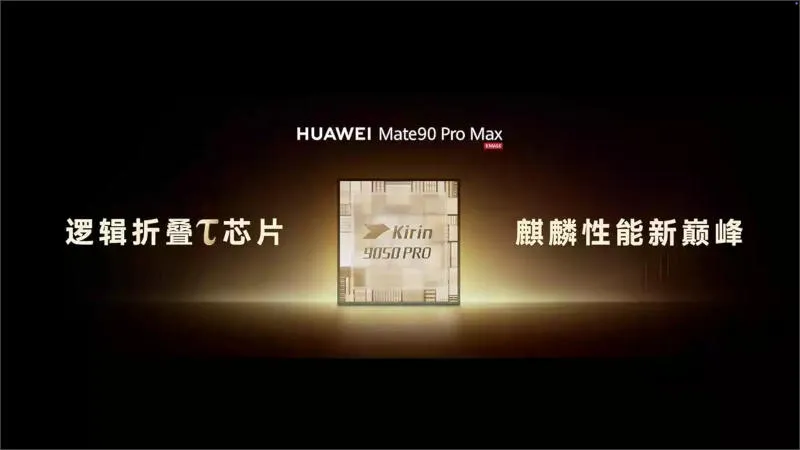
Huawei has launched the Mate 90 series of smartphones based on its flagship Kirin 9030 and 9035 chips, as well as its first processors produced with the latest Logic Folding technology – the Kirin 9050 and 9050 Pro models. The new chips offer higher transistor density and enable better performance and advanced artificial intelligence capabilities.
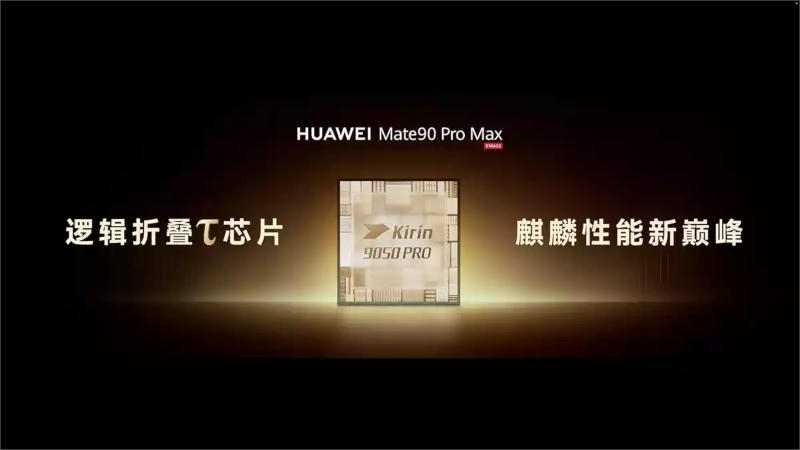
Image source: huaweicentral.com
“Huawei combines its most powerful Kirin chip and most innovative HarmonyOS system into the most powerful Mate smartphone ever.”– convey Huawei Center Words from Huawei CEO Richard Yu. He also showed the list of Kirin chipsets released by Huawei – starting with the Kirin 960 model and ending with the new Kirin 9030, 9035, 9050 and 9050 Pro.
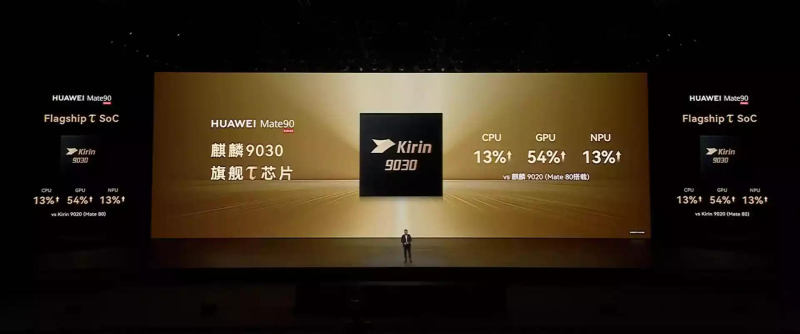
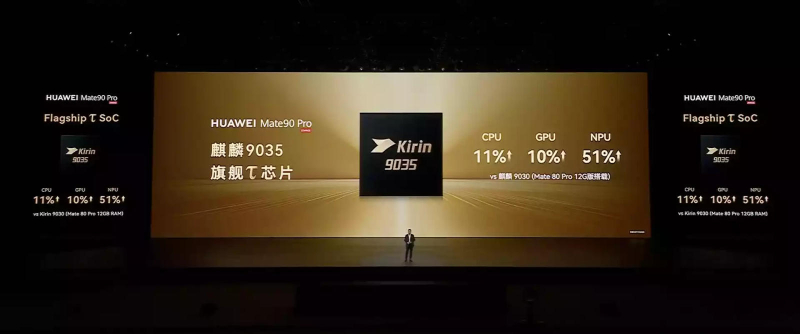
The flagship Huawei Kirin 9030 adopts the principle of vertical integration: software, device hardware, the chip itself and cloud solutions help improve overall performance by 27%. Compared with Kirin 9020, the CPU performance is increased by 13%, the graphics performance is increased by 54%, and the processor performance is increased by 13%. The more powerful Huawei Kirin 9035 also adopts the principle of vertical integration. Compared with the younger Kirin 9030, the CPU performance is increased by 11%, the graphics processor is increased by 10%, and the neural processor performance is increased by 51%.
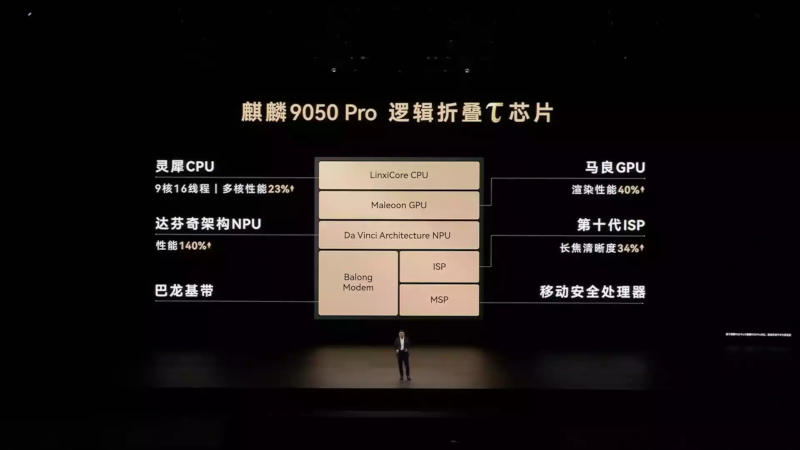
Huawei’s Kirin 9050 processor is the first model to adopt Logic Folding technology. It contains 238 million transistors, which increases its density by 28% – and improves overall performance by 31% compared to the flagship Kirin 9030. The nine-core CPU, thanks to hyper-threading technology, supports 16 execution threads – the multi-core performance of the CPU is 23% higher than the previous generation, the graphics processor is 40% higher, and the neural processor is 140% higher. The company stresses that this is currently Huawei’s most powerful mobile processor, but next year’s new model will be even faster.
LogicFolding technology involves a multi-layer chip structure with a higher number of transistors per unit area. In its raw form, this allows wafers with 5nm-scale features to be produced on SMIC equipment, but they are 40-50% more expensive than similar products from TSMC. Huawei’s approach is to fold a substrate with transistors in half and then connect them vertically to exchange signals along the shortest path. This increases LogicFolding’s transistor density by 55% and the chip’s energy efficiency by 41%.
“The Mate 90 series is a symbol of the new era of China’s semiconductor industry and an innovative achievement in the field of China’s operating system development. Thank you to every Mate user who has accompanied us along the way. Your trust and strong support are our strongest source of confidence. Let us move forward together and light the road to success!” ——Mr. Yu Chengdong added.
If you find an error, select it with your mouse and press CTRL+ENTER.