



The legal battle between Micron and Yangtze River Storage has entered a new stage. Now, the first one is trying to prove in court that the second one stole some technology from her and was able to patent it in her own name. According to Micron, related technology was leaked to Yangtze Storage along with some former employees.

Image source: Micron Technology
as mentioned before Tom’s HardcoreThis month, Micron Technology filed a lawsuit against China’s Yangtze River Storage, accusing it of poaching leading engineering experts in order to obtain from them the technology needed to produce NAND memory and register corresponding patents on its behalf. Micron claimed that Yangtze Memory accused it of using technology obtained from its former engineers.
Micron said in a statement that Yangtze Storage chose the easiest way not only to obtain the technology needed to develop its own business, but also to organize legal attacks on Micron itself. Yangtze Storage’s strategy is said to include hiring former Micron engineers and then filing for patents on behalf of the first company to describe the underlying NAND memory technology or design similar to Micron’s patents.
Experts transferred from Micron to Yangtze Storage allegedly made up seemingly legitimate personal excuses and sometimes did not even update their LinkedIn pages to reflect the fact that they had switched jobs. At the time, Micron did not suspect Yangtze River Storage of such activity because it relied on its former employees’ ability to abide by confidentiality agreements while ignoring potential competitive threats from the Chinese company.
Last month, we recall that Yangtze Memory won the right in a German court to ban the import of Micron products into the country because the latter infringed on two of the Chinese rival’s patents related to 3D NAND memory production technology. Micron currently hopes to challenge the decision through appeal. Conflicts between companies in the field of patent law date back to 2023 and involve multiple national jurisdictions.
Micron has been aggressively defending its interests in court since 2024; the company has successfully revoked seven Yangtze storage patents. The company filed suit in court this month, seeking to argue that Yangtze Storage’s counterclaims are based largely on patents filed by former Micron engineers after they joined the Chinese company. The latter suspected that Yangtze Storage had submitted a patent application similar to that developed by Micron Technology based on information provided by its former employees.
Micron Technology is trying to convince the court that it cannot be blamed for using the technologies because they were actually developed by it. In its statement of claim, Micron cited the names of its former Chinese-American employees who had reliable access to information describing technical secrets stored on servers at the manufacturer’s U.S. headquarters. Shortly after leaving Micron Technology, at least three of the above-mentioned employees went to work at Yangtze River Storage.
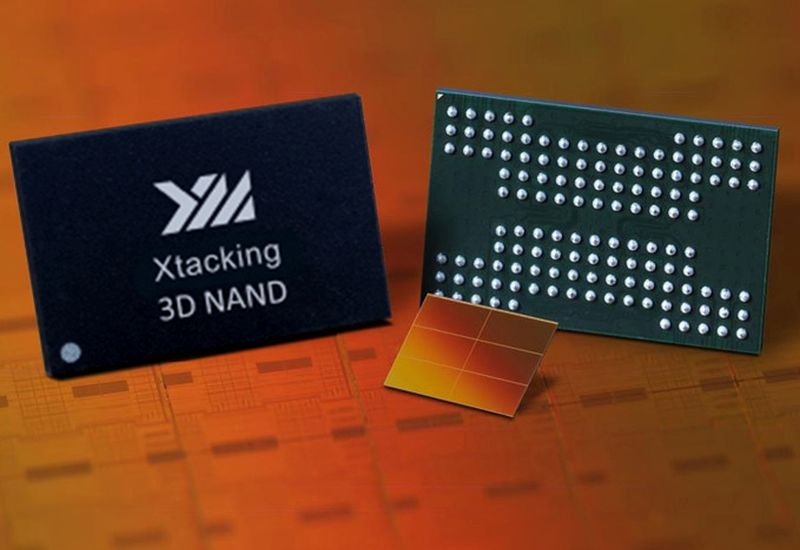
Image source: Yangtze River Storage
The plaintiff claims that all of Yangtze Storage’s innovative work in recent years is essentially based on information obtained from former Micron engineers. As Micron representatives believe, starting with 64-layer 3D NAND, the Chinese company can ensure that all its further technological advancements are based on Micron’s developments. In addition, the authors of some Yangtze Storage patent applications are former Micron employees.
Several Micron engineers who went to work at Yangtze Storage learned about various technical aspects of 3D NAND manufacturing, and their combined knowledge could greatly facilitate the Chinese defendants’ mastery of related technologies. According to Micron Technology, some of the developments registered on Yangtze Storage were initiated by their authors while working for the US company. She is now seeking through the courts to have the patents transferred from Yangtze Storage to her rights. She has previously succeeded in other controversial developments.
As stated in the lawsuit, Yangtze Storage and Micron each registered similar patents in different countries. In China, the first challenge was challenging eight patent applications registered by Micron Technology. As time passes, the situation becomes increasingly confusing, and hopes for a quick resolution to patent disputes evaporate before our eyes. Now Micron is trying to refute Yangtze River Storage’s counter-allegations, hoping to prove that the disputed inventions actually belong to it and therefore have no grounds to accuse Micron of infringing its own patents.
In July this year, Micron filed a lawsuit against Yangtze River Storage in Germany, accusing it of selling products that illegally used its development results. The co-defendants in the lawsuit are Apacer, Lexar and Ultron, all involved in the sales of related products. In the UK, TeamGroup, which manufactures solid-state drives, is also facing a similar lawsuit.
Last month, a German court ruled that Yangtze River Storage was correct on two patent claims but did not consider three other patent claims that the Chinese company was counting on. Regardless, parts of Micron’s product line based on this may be banned from sale in German retail chains – even as part of more complex devices such as off-the-shelf PCs.
In December 2022, U.S. authorities added Yangtze Storage to the sanctions list, making it more complicated for the Chinese company to obtain U.S.-origin equipment and technology. In response, Chinese regulators in May banned the use of Micron memory as part of critical infrastructure within the country, deeming it a threat to national security.
If you find an error, select it with your mouse and press CTRL+ENTER.