



In the third quarter of 2026, global smartphone shipments fell 20% year on year, reaching the lowest level for that quarter since 2012. This is evidenced by preliminary estimates of the Market Monitor analytical service from Counterpoint Research.
The continued rise in prices for DRAM and NAND memory, coupled with rising prices for other components in the third quarter, led to a sharp increase in the cost of materials (BOM), an exacerbation of supply shortages and, as a result, disruption of product shipment schedules by original manufacturers (OEMs). In turn, manufacturers have passed on increased costs to consumers, causing global smartphone retail prices to rise 20% since the start of 2026 and the average selling price (ASP) to continue to rise.
Counterpoint senior analyst Shilpi Jain noted that acute memory shortages are forcing the smartphone market into a more selective demand phase, which is changing manufacturers’ strategies and even consumer behavior. Users are now using their devices longer than expected, are more likely to consider purchasing refurbished devices, and are choosing more expensive models.
In turn, manufacturers adjust their assortment, pricing policies and market strategies in an effort to maintain profitability. The mass segment is under pressure, while demand in the premium segment remains relatively stable. This widens the gap between the premium and price-sensitive segments of the market, the analyst said.
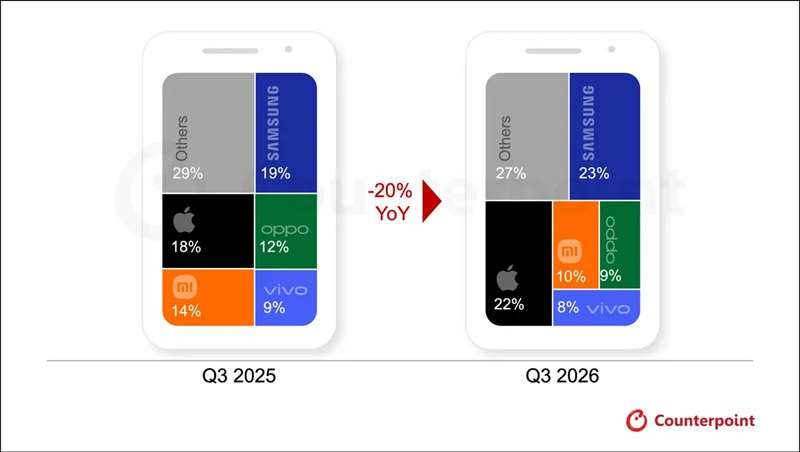
Samsung still leads the market. Despite a 3% year-on-year decline in shipments, its market share rose to 23%, the largest gain among major producers. Thanks to a strategy focused on increasing average selling price (ASP) and revenue growth, the company increased revenues despite the decline in shipments in quantitative terms. This was facilitated by the premiumization of the product range and successful sales of folding smartphones. The Galaxy Z Fold8 series recorded strong demand at launch, and stable supply of components supported sales of mid-price devices (A series) in emerging markets amid the decline in the presence of some Chinese brands.
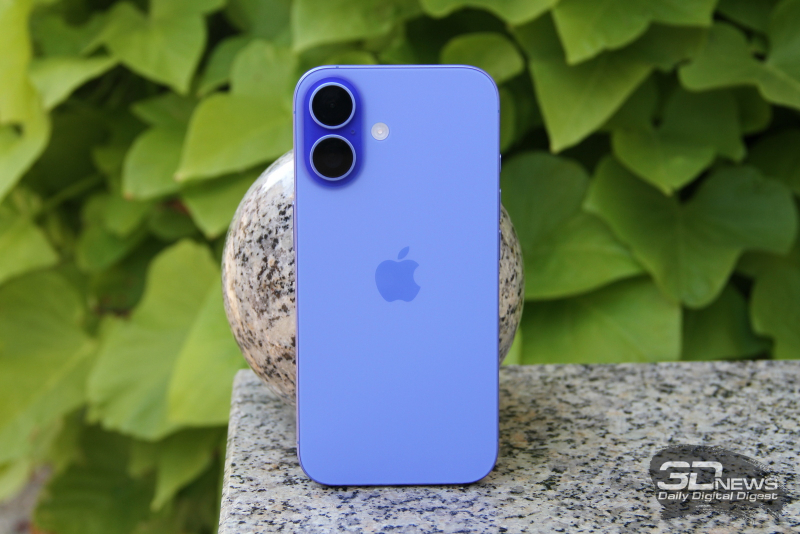
Apple’s share exceeded 20% for the first time in the third quarter, reaching 22%, despite a decline in year-over-year shipments. Analysts believe the decline was largely due to the unavailability of the base iPhone 18 model, which resulted in smaller sales channel fills during the launch month compared to the full iPhone 17 lineup.
Apple, like other vendors, raised prices, although this factor only affected the results of the last weeks of the quarter. The iPhone 18 Pro models were off to a better start than their predecessors – especially in China and India – and continued demand for the iPhone 17 series helped partially offset the overall drop in shipments.
Xiaomi saw a sharp drop in shipments in the quarter, down more than 30% year-on-year, causing its market share to fall to 10%. The company reduced its presence in the low-price segment and in secondary foreign markets, while increasing its average selling price (ASP) and revising its supply plans. At the same time, it has strengthened its position in the upper mid-range and premium segments of the Chinese market thanks to the Xiaomi 18 series and foldable models. The use of our own XRING O3 chipset also contributed.
Oppo and Vivo’s shipments fell more than 20% year-on-year, with their market shares falling to 9% and 8% respectively. Oppo has streamlined its product portfolio and operations across its Oppo, Realme and OnePlus brands. The company has also redirected supplies to higher-margin markets and models.
Vivo is prioritizing its key markets of India and China by strengthening the position of the Y Series while expanding its premium lineups of the X, V and S Series.
Analysts say the outlook for the remainder of 2026 remains challenging, with OEMs increasingly prioritizing profitability over supply volumes amid high component costs and declining purchasing power. Counterpoint Research believes that until the situation with supplies and prices for components improves, a significant increase in supplies should not be expected.
If you notice an error, select it with the mouse and press CTRL+ENTER.


