



Intel officially introduced the D-series graphics accelerators at the Open Compute Project (OCP) 2026 summit. Previously known under the code name Crescent Island, the new product is now listed on the company’s official website as the Intel GPU D270. The accelerator is built on the Xe3P architecture and is designed for AI inference (inference) tasks, and not for games.
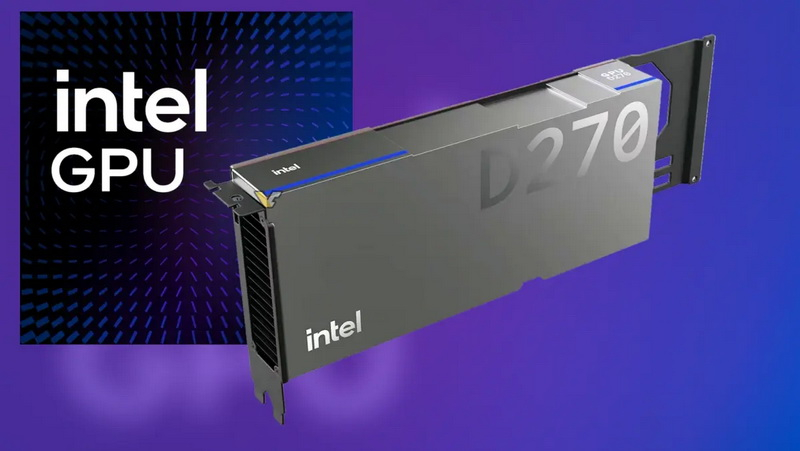
Image Source: VideoCardz/Intel
Intel has confirmed the performance figures of the D270. The graphics processor in its composition provides computing power up to 1.3 Pflops (in FP8 format) and memory bandwidth of 1.5 TB / s. These data complement the technical specifications previously announced by Intel at the Hot Chips 2026 conference.
From the preliminary announcement it became known that Crescent Island is equipped with 32 Xe3P cores, 256 XMX blocks and 32 MB of unified L2 cache. Intel abandoned the use of hardware units for traditional 3D graphics and ray tracing in this device, allocating the freed-up chip area for computing operations.

The reference version of the accelerator from Intel with a PCIe interface will be equipped with 160 GB of LPDDR5X memory. At the same time, manufacturing partners (ODM) will be able to create configurations with a memory capacity of up to 480 GB. The accelerator uses the PCIe 5.0 interface, and its estimated power is 350 W. Intel has opted for passive air cooling and standard server infrastructure, abandoning specialized liquid cooling systems.
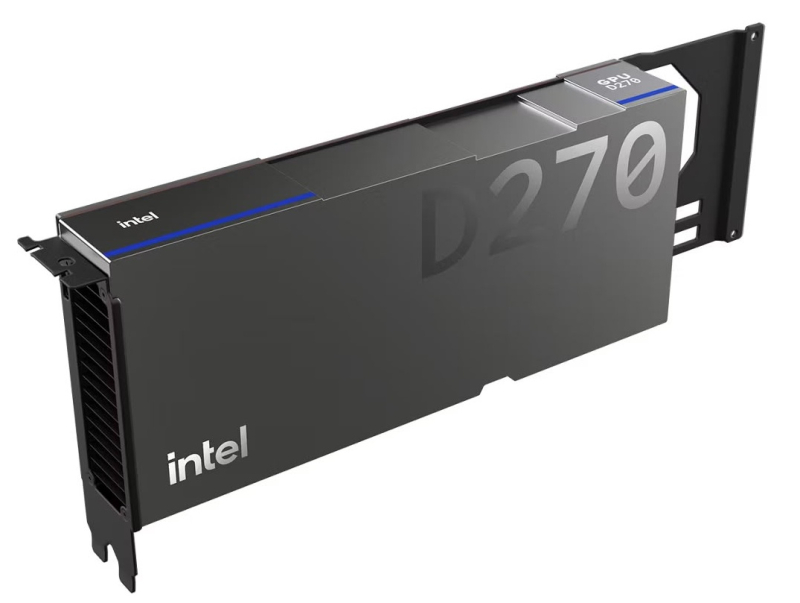
According to Intel, a single D-series accelerator can support AI models with up to 300 billion parameters. A system of eight such GPUs is designed to work with models with more than one trillion parameters. However, the company has not yet provided independent test results or detailed model configurations confirming these capabilities.
Intel also announced that shipments of D270 samples to customers have already begun. Information on the cost and timing of the product’s release into general sale has not yet been announced.
If you notice an error, select it with the mouse and press CTRL+ENTER.


