


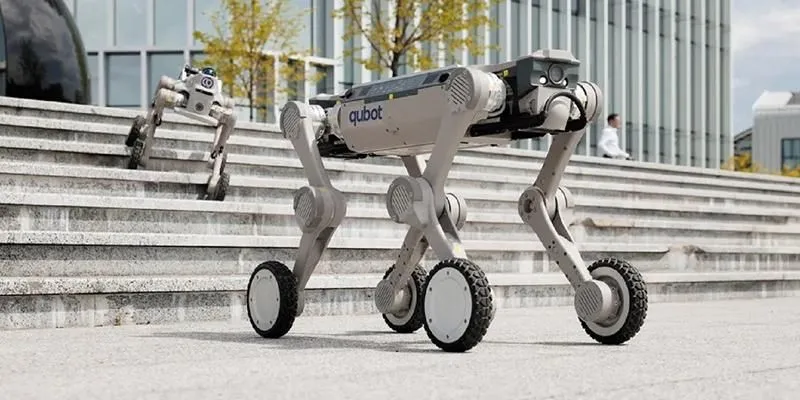
The company Q Group (a division of Qubot), a participant in the Robot Testing Center of the Moscow Innovation Cluster Foundation, has developed a robotic dog control system that can be used automatically to guard and patrol various objects.
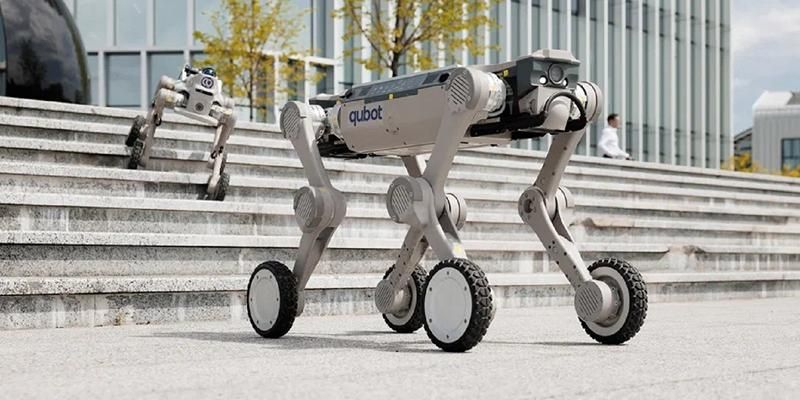
Image source: Press Office of the Moscow Ministry of Entrepreneurship and Innovation Development
The system allows you to control multiple robot dogs simultaneously and store interactive maps of up to 20 objects in memory. The operator activates a digital map of the object through a web interface, sets a route on it and indicates control points. After this, the system switches the robot to offline mode and sends it to complete the task. While patrolling the territory, the robot avoids obstacles, uses artificial intelligence and computer vision to analyze the environment, and instantly transmits detected emergency information to the operator’s situation center. The robot dog is capable of covering distances of up to 10 kilometers and operates in autonomous mode without needing to be recharged for up to 5 hours.
After identifying people in the protected area, vandalism, graffiti, no smoking, violations of parking rules and non-compliance with safety requirements, the robot records the place and time of the violation, along with a description of the photo and video material, which is immediately transmitted to the operator. The facts of the violation are displayed on the site map, stored in the archive and automatically included in the final report. In this case, the robot’s operating scenarios and the list of violations to be monitored can be configured according to the characteristics of the geography. When monitoring parking, the robot recognizes the vehicle and national registration number, identifies violations of parking rules and then transmits the information to the operator.
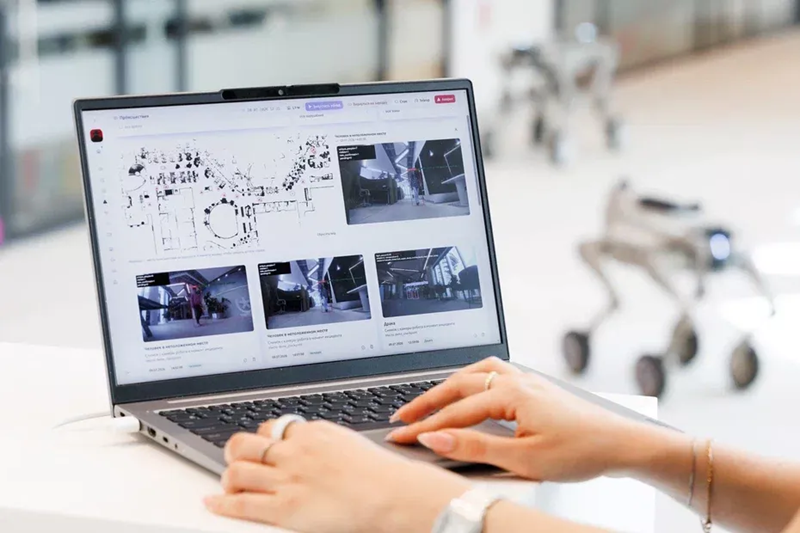
While patrolling, the robot can interact with people. When it detects someone entering a restricted area, it approaches him, sends a voice warning or automatically connects with the operator via two-way audio communication. Operators can connect to the robot through the network interface at any time, view the images captured by the camera, and control it. The system provides priority for manual control: first to the on-site operator, then to the remote operator, with the robot’s autonomous mode in third place.
The system has been tested at the Russian Academy of National Economy and Public Administration (RANEPA) under the leadership of the President of the Russian Federation.
If you find an error, select it with your mouse and press CTRL+ENTER.