


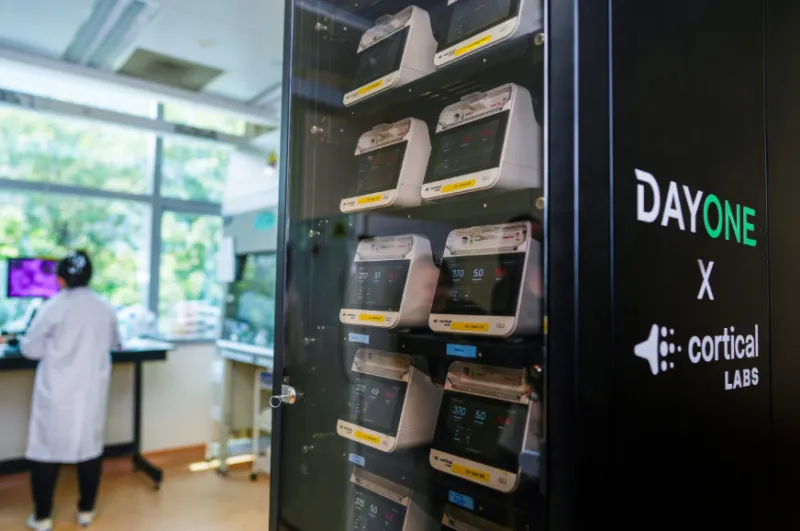
DayOne, with the participation of the Australian Cortex Laboratory and the National University of Singapore Medical School (NUS Medicine), commissioned the construction of the country’s first “biological” data center prototype. Report Data center updates. Previously, the two companies agreed to build data centers in Melbourne and Singapore.
The Singapore Biocomputing System consists of 20 CL1 units located within the active NUS Medical Research environment provided by DayOne. The CL1 system, launching in 2025, combines neurons cultured from human stem cells with a silicon solution. According to the company, we are discussing creating a “more advanced and environmentally sustainable form of artificial intelligence” – Synthetic Biological Intelligence (SBI) neural networks.
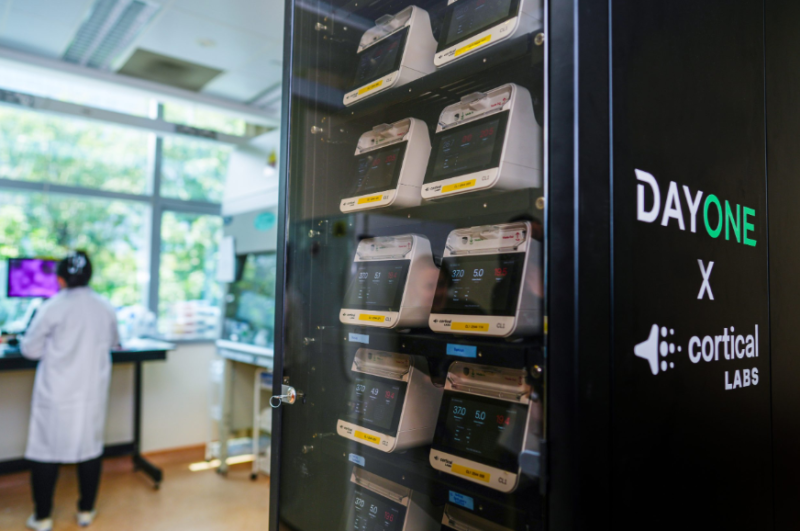
Image source: DayOne
The platform relays information about the surrounding virtual environment to neurons, which respond to the incoming information by generating impulses that affect events in the simulation. This integrated system keeps neurons alive for up to six months. CL1 is an upgraded version of Cortical Labs’ DishBrain biological computer, which uses a CMOS chip with 800,000 human and mouse neurons. He taught himself to play Pong, a 1972 computer game that simulated a table tennis match.
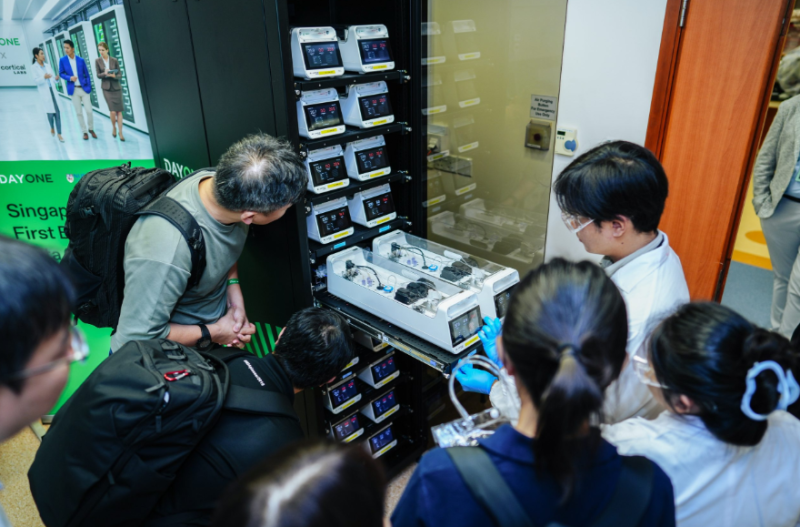
Image source: DayOne
A Cortical Labs representative said the new prototype is pushing biocomputing toward commercial applications. They can supplement artificial intelligence in areas where traditional artificial intelligence lacks data, because “biological” artificial intelligence can learn from a much smaller amount of information and adapt as conditions change.
Founded in Melbourne in 2019, Cortical Labs has raised A$11 million in funding. Investors include Horizons Ventures, Blackbird Ventures, LifeX Ventures, Radar Ventures and CIA-related In-Q-Tel. Singapore data center operator DayOne (formerly GDS International) has a data center portfolio with a total capacity of more than 500 MW. Currently Preparing for an IPO. In June 2026, the company raised $4.5 billion in funding.
source: