

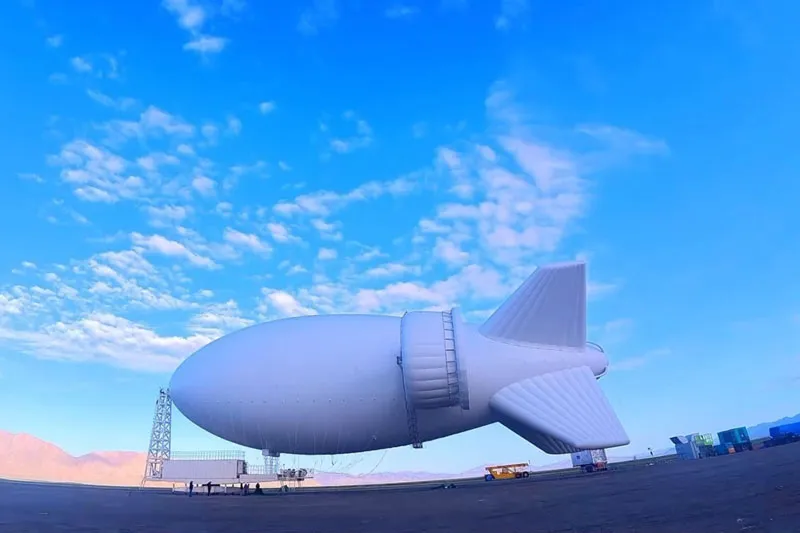
Chinese engineer first Lift the S4000 aerial power station to an altitude of 4,000 meters and obtain power with its help. The prototype completes a complete operating cycle: climbing, anchoring, generating energy and returning to the ground. The specified altitude of 4,000 meters is significantly higher than the altitude at which traditional onshore wind turbines operate, allowing for stronger and more stable airflow.
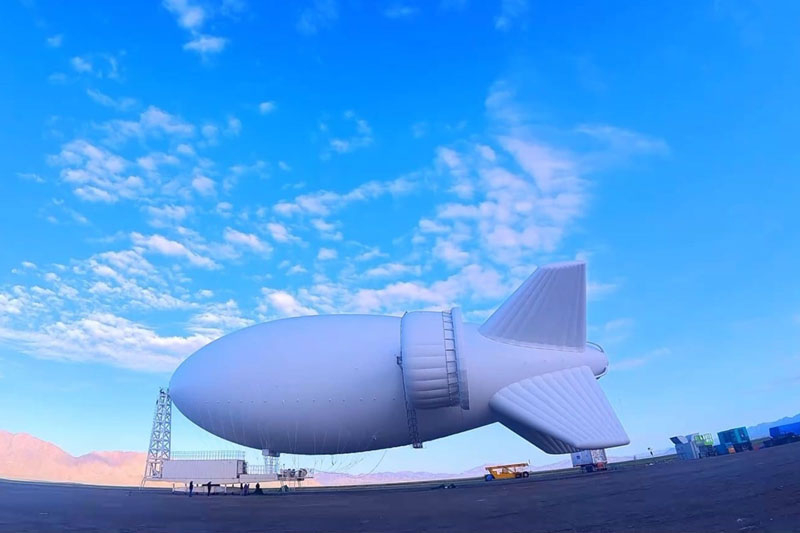
Image source: CCTV
In fact, the S4000 is a huge balloon the same size as a Boeing 747, with a length of 76 meters. The outer shell is filled with helium and provides lift, and a compact wind turbine installed on the aircraft converts the energy of the airflow into electricity. Unlike conventional wind energy, in this case there is no need for towers hundreds of meters high: the aerial platform itself lifts the generator to a place where the wind is always strong and stable. The electricity generated is transmitted to the ground through cables that are connected to cables that secure the equipment to a given area.
The main advantages of the project are not only related to the increase in height, but also to the quality of the wind. Air velocity increases on average with altitude and remains almost constant over time. Therefore, equipment utilization becomes as high as possible. At the same time, aerial platforms eliminate the need to build huge towers and foundations, which is especially interesting for deserts, mountains, islands and other remote areas. Another differentiator of the S4000 is its mobility: such a unit can be moved relatively quickly between areas where power is needed, such as when working in a disaster zone.
The testing of the S4000 platform is the next stage of China’s high-altitude airborne wind power program: the S2000 system has previously demonstrated grid-connected power generation at an altitude of about 2,000 meters. However, moving to 4,000 meters means a more complex task: it is necessary to simultaneously ensure the aerial stability of the large platform, automatically maintain its position, the safe operation of the turbine, and reliably transmit power to the ground through long cables. So far, we’re talking about demonstration prototypes, although SAWES Energy, the company that creates these celestial platforms, claims it has already secured orders for S1500 and S2000 systems worth tens of millions of dollars.
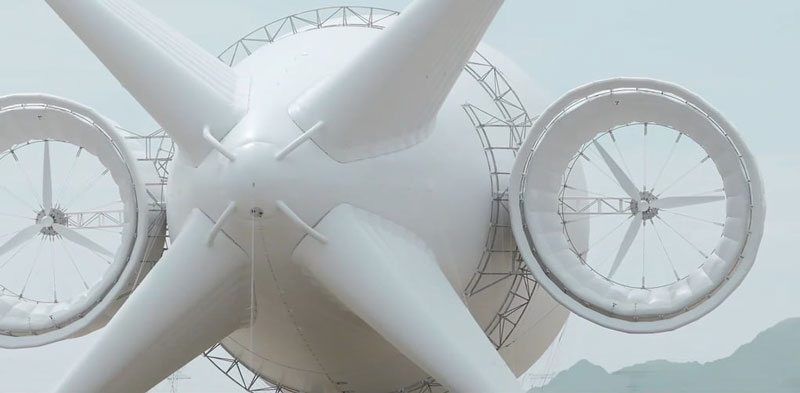
According to data, the total power of the generators on the S4000 platform reaches 3MW. Such high-altitude energy platforms have been included in China’s current five-year development plan and therefore receive support at all levels. Separately, high-altitude energy is being developed on giant kites that, when raised, pull on cables and spin the shafts of ground-based generators. The largest area is 5000 square meters2but that’s another story.
If you find an error, select it with your mouse and press CTRL+ENTER.