


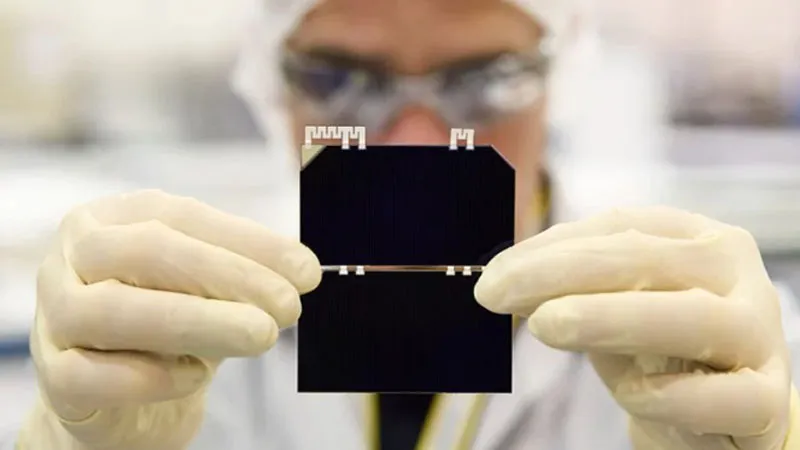
Rocket Lab, an American company with New Zealand history declare About the start of mass production of new solar cells IMM Apex, solar panels for satellites and spacecraft. A key feature of this development is the abandonment of germanium, which in recent decades has been used as the basis for efficient multi-junction solar cells for space applications but has now become a pressure tool in the hands of China.
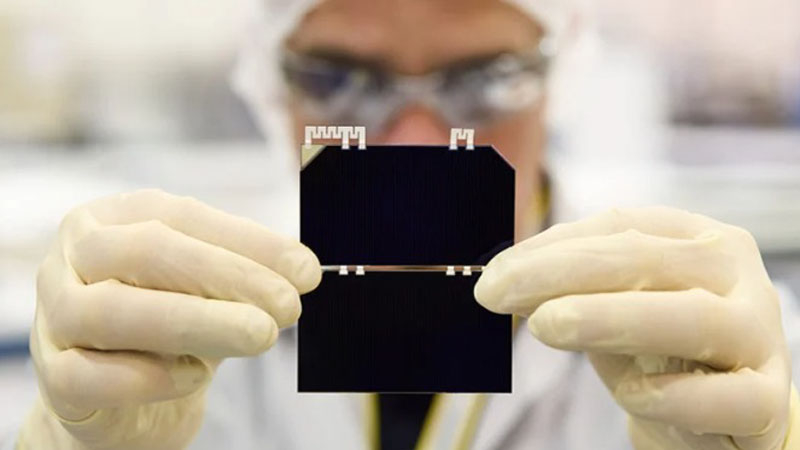
Image source: Rocket Lab
In conventional GaInP/GaAs/Ge triple-junction solar cells, the semiconductor layer is grown on a germanium substrate. Germanium provides a good crystal structure match for stacking, but a ban on germanium supplies from China from December 2024 is causing problems for the industry.
The IMM Apex technology proposed by Rocket Lab uses an inverted transformation architecture: the semiconductor layers are grown in reverse order, and special buffer layers are used between materials with different lattice parameters. After the structure is formed, the original substrate is removed. As a result, the working photocell retains the high qualities of the crystal, becomes lighter and does not require germanium.
According to Rocket Lab, the new cell achieves a laboratory-scale solar energy conversion efficiency of 31.5% and is approximately 40% lighter than conventional spaceborne triple-junction cells. Reducing mass is especially important for satellites: reducing the weight of solar panels can reduce the cost of launching a vehicle into orbit, or increase the power available for a structure of the same mass. Additionally, IMM Apex is designed to be a drop-in replacement component for existing space solar panels, eliminating the need for satellite manufacturers to completely redesign the power system.
The new technology builds on Rocket Lab’s experience with inverted metamorphic elements already used on space missions. Early versions of the technology powered NASA’s Ingenuity Mars helicopter and operated on satellites for more than a decade. IMM Apex is currently being manufactured at Rocket Lab’s facility in Albuquerque, New Mexico, where the company plans to produce hundreds of kilowatts of solar cells per year for commercial satellite constellations, scientific missions and government space programs.
If you find an error, select it with your mouse and press CTRL+ENTER.