


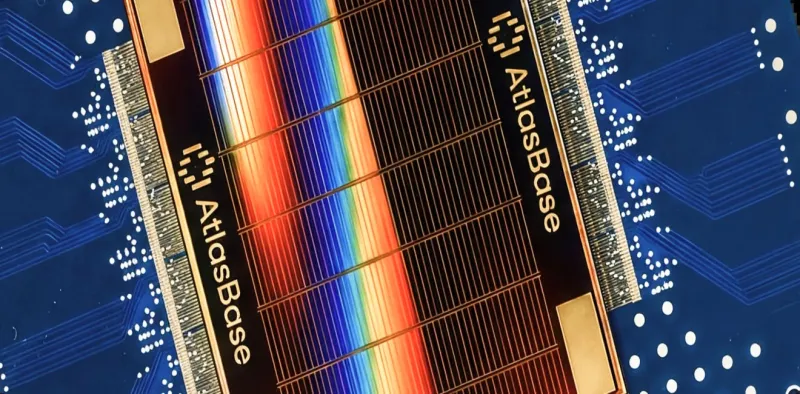
AtlasBase announced the launch of a molecular computing platform based on Thalia, a new patented CMOS chip capable of creating petabyte-scale synthetic DNA. By integrating biosilicon layers and electrochemical synthesis directly into a CMOS-based semiconductor architecture, Thalia contains 5.6 billion electrochemical synthesis sites, 700 times more than previously available DNA synthesis chips, breaking a key technology barrier for IT-scale molecular computing.
The company noted that in the context of the development of artificial intelligence, the amount of data generated and stored has increased significantly. The next generation of enterprise computing will require new storage and processing environments that complement, rather than replace, legacy silicon technologies. AtlasBase solves this challenge with a molecular computing platform that uses synthetic DNA for data storage and memory computing, enabling specialized data processing within the same molecular environment.
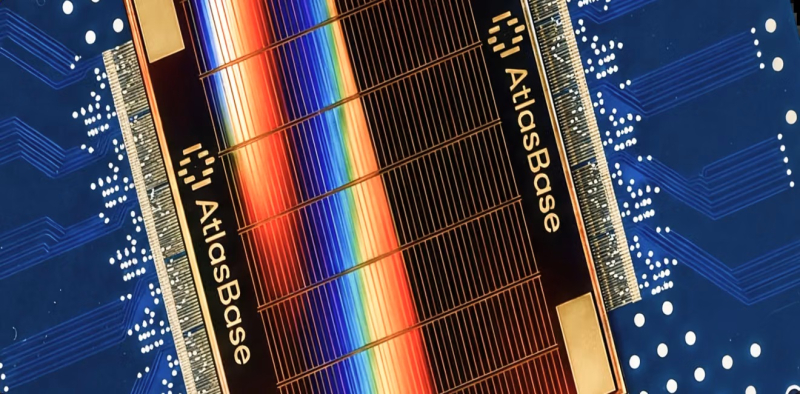
Image source: AtlasBase
Software codecs convert digital data into chains of amino acids – A, C, T and G – the building blocks of DNA. Once the encoding is complete, the code will be transferred to the AtlasBase biosilicon platform. Inexpensive copies of DNA can be created using a chemical process called polymerase chain reaction (PCR). The DNA is dehydrated and sealed in stainless steel capsules and stored at AtlasBase’s warehouses or customer locations. When it’s time to decode, commercial sequencers read the DNA and convert the A, C, T, and G codes back into a digital file.
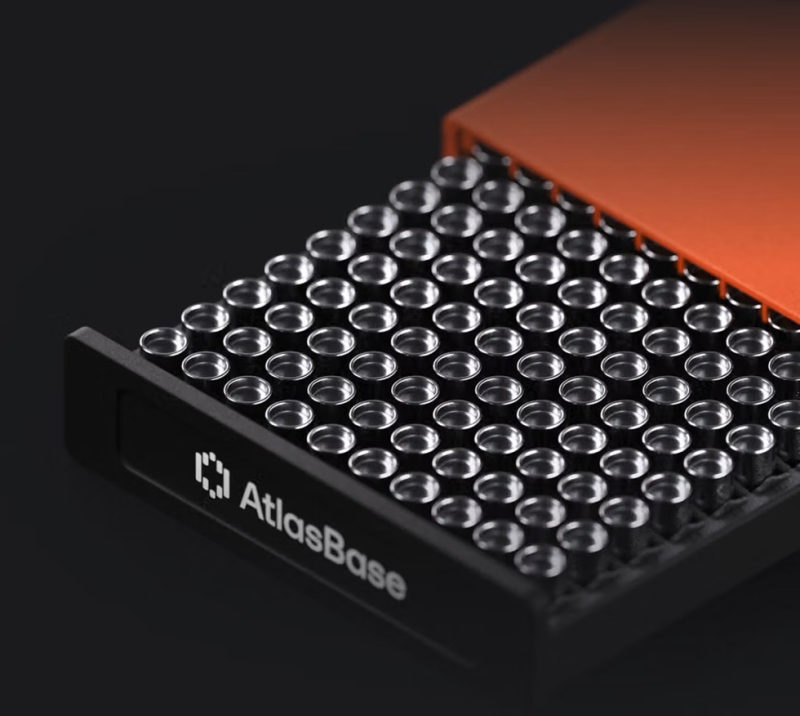
Thalia is built using existing mass production technologies and is scalable, enabling molecular infrastructure to be commercially scalable for enterprise IT systems and hyperscale data center projects. The platform can efficiently archive large amounts of enterprise data into synthetic DNA to achieve ultra-high density and durable storage. It can also be used in DNA-based computing to solve specialized optimization and data exploration problems that benefit from efficient massively parallel processing.
It is reported that the petabyte-sized archive is placed in a capsule measuring 7 × 18 mm. AtlasBase says storage capacity starts at 100 TB per footprint (LTO format) and can be expanded to 5 EB in the same footprint. For comparison, this is equivalent to the capacity of one LTO-10 tape (including compression). The LTO roadmap initially called for the release of LTO-14 with capacities up to 913 TB (compressed), although Linear Tape Open (LTO) adjusted Their plans are downward. However, the resource states that we are talking about an order of magnitude more capacity than LTO at the same system size blocks and files.
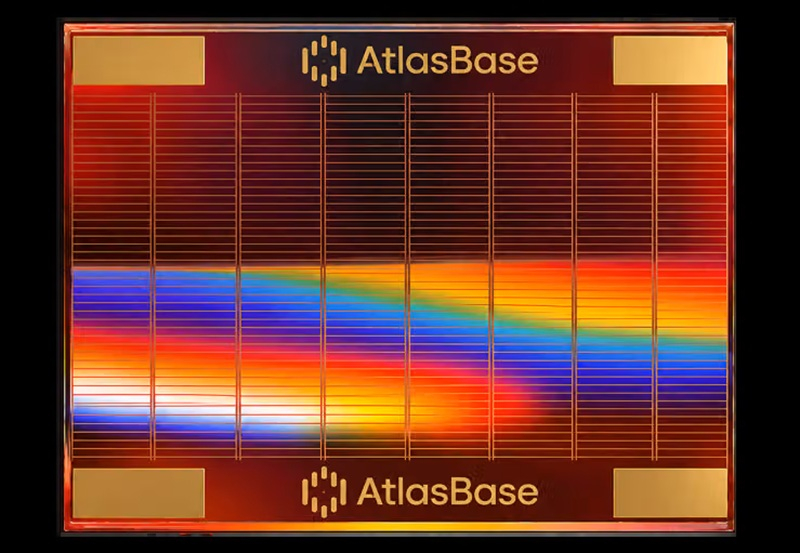
AtlasBase says it can create synthetic molecular data at scale using its 3-layer biosilicon device, which uses CMOS sensors to control biochemical processes.
Bill Baggelaar, former chief technology officer of Sony Pictures Entertainment, pointed out that AtlasBase is not limited to archiving: it transforms DNA into a molecular platform that can both store data and perform calculations in new ways.
AtlasBase offers early access plans for molecular computing and molecular data storage to select partners and customers on its molecular computing platform. Initial applications include digital data preservation, corporate archives, and complex optimization problems in industries such as media, financial services, logistics, manufacturing, scientific research, and mineral exploration.
source:


![There are 2 games coming to Game Pass today – Premium and Basic [25 сентября]](https://www.aroged.com/wp-content/uploads/2026/09/There-are-2-games-coming-to-Game-Pass-today-360x180.jpg "There are 2 games coming to Game Pass today – Premium and Basic [25 сентября]")